


Last year the film world lost one of the true giants of visual effects, Douglas Trumbull, veteran of 2001: A Space Odyssey, The Andromeda Strain, The Towering Inferno, Close Encounters of the Third Kind, Star Trek: The Motion Picture, Blade Runner, The Tree of Life and director of Silent Running and Brainstorm.

His early work with the company Graphic Films included the To the Moon and Beyond, a space travel film shown at the 1964-1965 New York World’s Fair at the “Moon Dome” of the Transportation and Travel Pavilion which impressed director Stanley Kubrick who hired him to work on 2001: A Space Odyssey (1968). He initially worked on the “computer graphic” displays on the Aries and Discovery spacecraft, which were actually done optically by photographing drawings and animating them in a traditional manner. And he created the greatest optical effects of all time for the famous Stargate sequence at the end of the film.
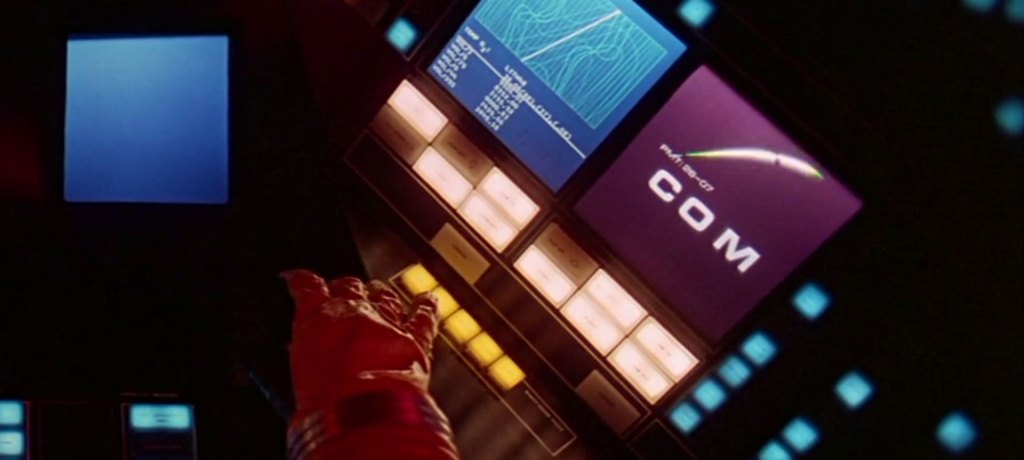
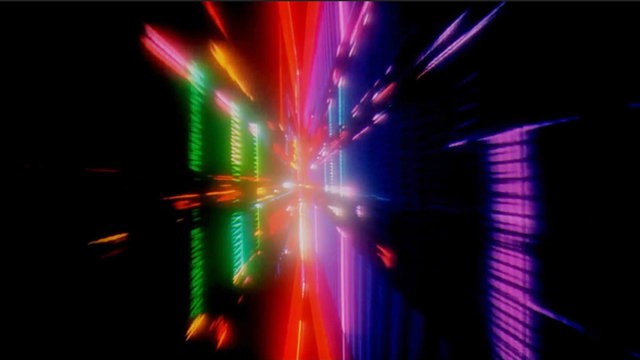
Influenced by earlier work by animation pioneer John Whitney, he used (among other techniques like fluid and solarized footage shots) what is known as the slit-scan photography process in which the camera dollied on a mechanized track toward a cylinder with a vertical slit through which back projected patterned gels are moved behind it. On its dolly, the camera shoots one frame of film which creates streaks which grow in size. The camera is then wound back and the process is repeated, a very time consuming process which produces amazing results (https://en.wikipedia.org/wiki/Slit-scan_photography).
To this day it blows away even current CGI effects and as George Lucas himself said, “2001: A Space Odyssey is the ultimate special effects movie and always will be.”
For The Andromeda Strain (1971), he and his associate James Shourt produced the readout screens and electron microscope images using optical/animation techniques similar to the ones Trumbull had used on 2001.
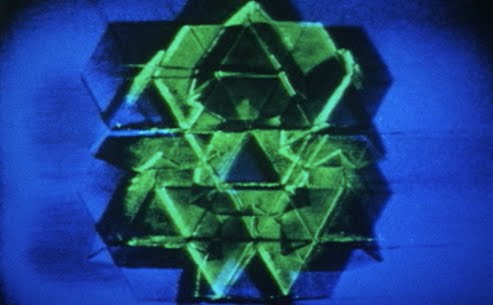
He created the initial treatment for Silent Running (1972), which he went on to direct, creating amazing effects and production values on a relatively shoe-string budget, including the amazing Saturn sequence.
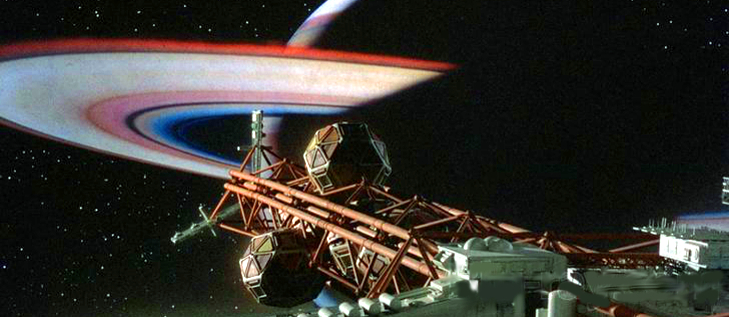
After trying to develop other movie projects after Silent Running, Trumbull found himself in the much dreaded Hollywood “development hell” so he went back to specializing in VFX. As Visual Effects Supervisor on Stephen Spielberg’s Close Encounters of the Third Kind (1977), he advanced motion control photography techniques.
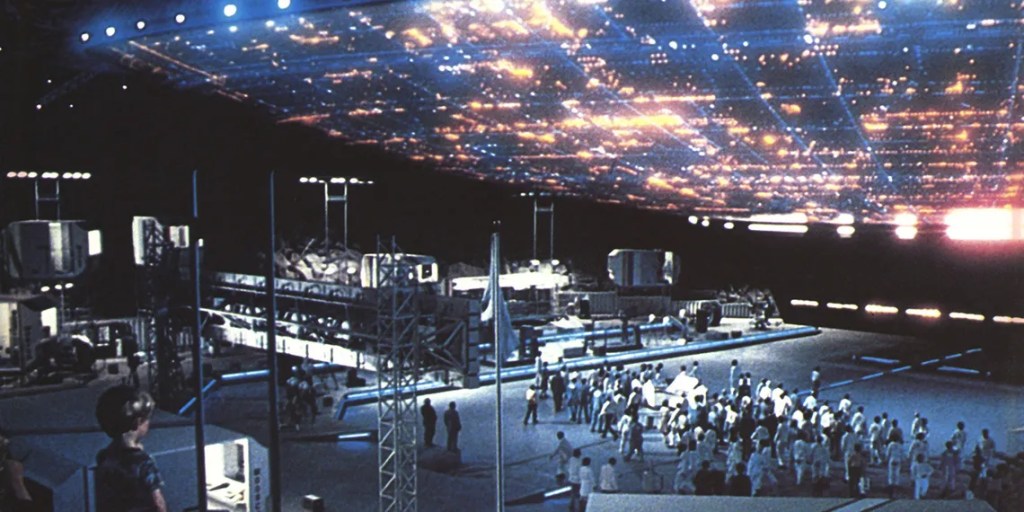
Trumbull was hired as Special Photographic Effects Director on Star Trek: The Motion Picture (1979), after the visual effects house Robert Abel and Associates failed to deliver the FX shots they were contracted to. He rewired the Enterprise and Klingon cruiser (which was used for all three Klingon ships) models to achieve more realistic lighting, created the V’Ger Cloud, photon torpedo effects, and a modified slit-scan technique for the Enterprise achieving warp speed, among many contributions to the film (even story ideas).
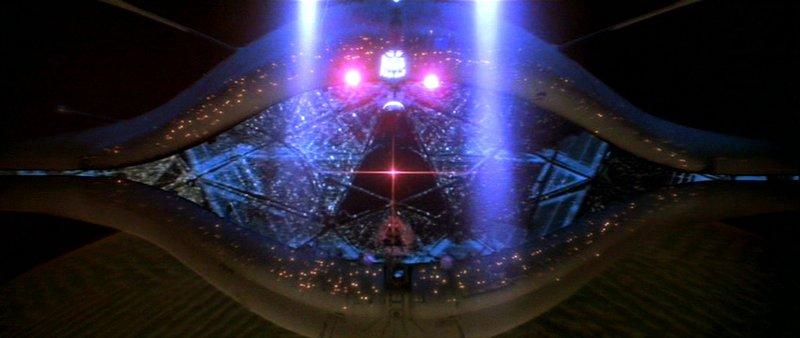
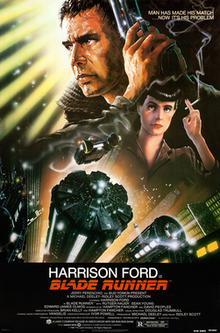
As Special Photographic Effects Supervisor on Blade Runner (1982), he helped realize Concept Artist Syd Mead’s dystopian future Los Angeles with its oil refinery appearance, building sized electronic billboards (done optically with 35mm projections), misshapen blimps advertising “Off World Jobs”, the Tyrell building, and the overall look of the film, although it is true that he left the film halfway through in order to concentrate on pre-production of his next directorial feature, Brainstorm (David Dryer took over as Special Effects Supervisor).

In Brainstorm (1983), Trumbull had intended to reverse the prevailing filmic idiom of contrasting “reality” and “dreams”: “In movies people often do flashbacks and point-of-view shots as a gauzy, mysterious, distant kind of image”, Trumbull recalled, “And I wanted to do just the opposite, which was to make the material of the mind even more real and high-impact than ‘reality’”. He intended to achieve this by utilizing his new Showscan film process, which used 70mm film stock shot at 60 frames per second for the internal mind recordings and standard 35mm shot at 24 fps for the “normal” exterior footage. But at the time theater owners balked at the idea of having to invest in new expensive equipment and so the entire film was shot on 35mm/24 fps.
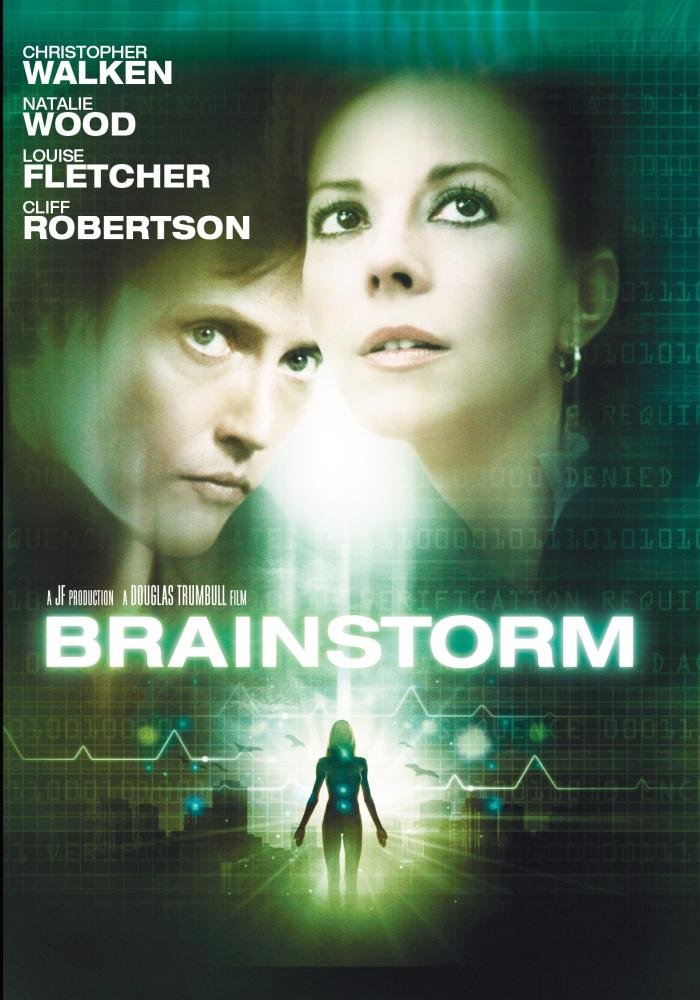
During the filming star Natalie Wood drowned in a mysterious incident and MGM shut down the production and hoped to collect the insurance money on the unfinished film. Trumbull was ultimately able to finish the movie and get it released but a division had been created between him and MGM.
Fed up with Hollywood at this point, he moved to the Berkshire Hills of Massachusetts to form a new company, Trumbull Studios, to develop new technologies and techniques for the film, exhibition, and theme park ride industries. As he said, he was tired of dealing with “the lawyers, the insurance agents, the creeps” in Hollywood. “The movie business is so totally screwed up that I just don’t have the energy to invest three or four years in a feature film.” This was a also a throw-back to when he co-founded Future General Corporation with Richard Yuricich in 1975 to create “the future of film.” Trumbull said, “We invented Showscan. We invented the first simulator ride. We invented the 3D interactive videogame. And we invented the Magicam process.” Magicam was a process whereby two cameras were synced to each other, one shooting the actors against a bluescreen and the other (a “periscope camera”) shooting miniature models in order to create proper synced motion and perspective. When he was one of the Executive Producers of the low-budget sci-fi TV series The Starlost (1973-1974), Trumbull wanted to use Magicam but because of technical problems had to resort to shooting static bluescreen shots (the Magicam process was later used on the original Carl Sagan Cosmos series). In 2014, he and his team at Trumbull Studios developed a new system called MAGI, which utilizes a frame rate of 120 fps, 4K resolution, bright projectors, and 3D for an even more immersive cinematic experience.
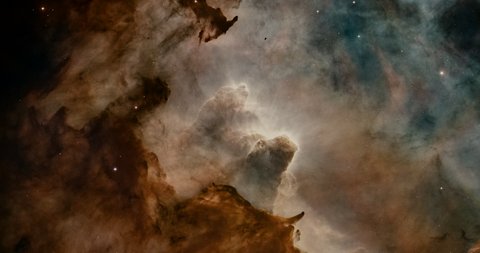
In 2010 , director and writer Terrence Malick contacted Trumbull to work on his latest feature film The Tree of Life (2011) since he was dissatisfied with the look of CGI effects. Trumbull asked Malick, “Why not do it the old way? The way we did it in 2001?” So in the capacity of Visual Effects Consultant, Trumbull worked with Visual Effects Supervisor Dan Glass on the “creation of the universe” sequence. “We worked with chemicals, paint, fluorescent dyes, smoke, liquids, CO2, flares, spin dishes, fluid dynamics, lighting and high speed photography to see how effective they might be,” said Trumbull.
Trumbull then was an Executive Producer and Visual Effects Artist on The Man Who Killed Hitler and Then the Bigfoot (2018).

He was in poor health in the last two years of his life and died on February 7, 2022.
On a personal note, I had attended the Massachusetts Production Coalition Expo in 2013 where Mr. Trumbull was one of the guest speakers.

It was one of those instances of finally getting to see one of my heroes in person and to hear him talk about the film business and VFX. He was one the greatest effects people in the business and leaves behind an amazing legacy of work that entertains millions worldwide.
 Munedawg Communications
Leave a comment