


Recently there have been some amazing announcements in science news. One of them was the National Ignition Facility at the Lawrence Livermore National Lab in California achievement of fusion power “ignition,” that is getting a net gain fusion reaction in their facility.
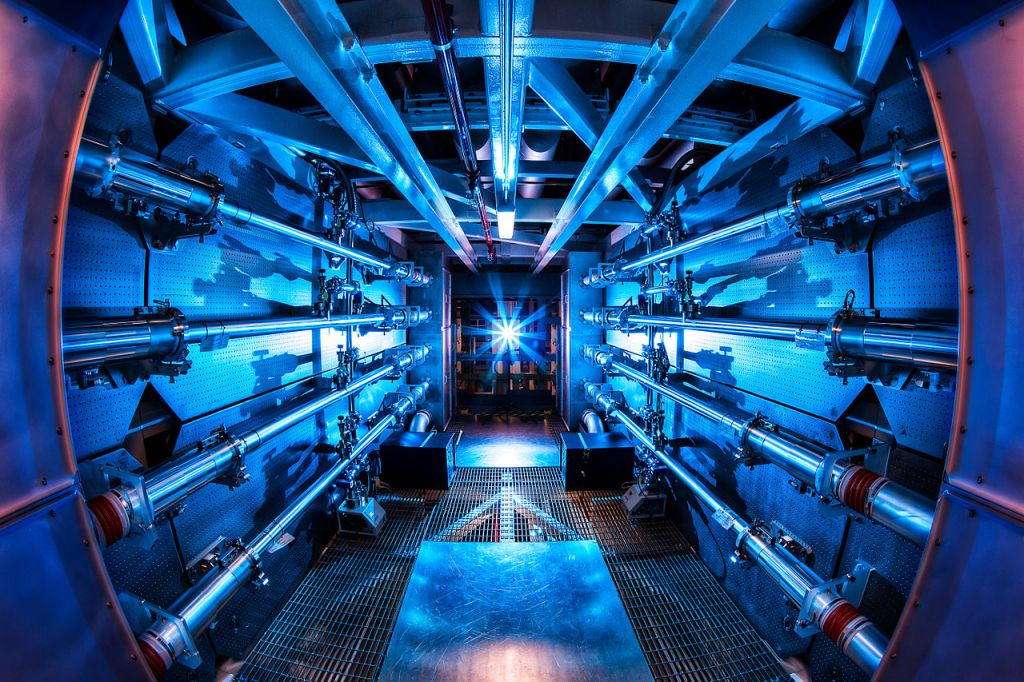
At the NIF they use what is known as inertial confinement fusion, which uses an array of 192 very powerful lasers which are aimed at what is known as a “hohlraum” which is a metal cylinder open at both ends which contains a pellet of deuterium (an isotope of hydrogen which has one proton and one neutron) and tritium (an isotope of hydrogen which has one proton and two neutrons). The laser energy hits the interior of the hohlraum which causes it to emit X-rays which then cause the pellet to implode creating a fusion reaction.
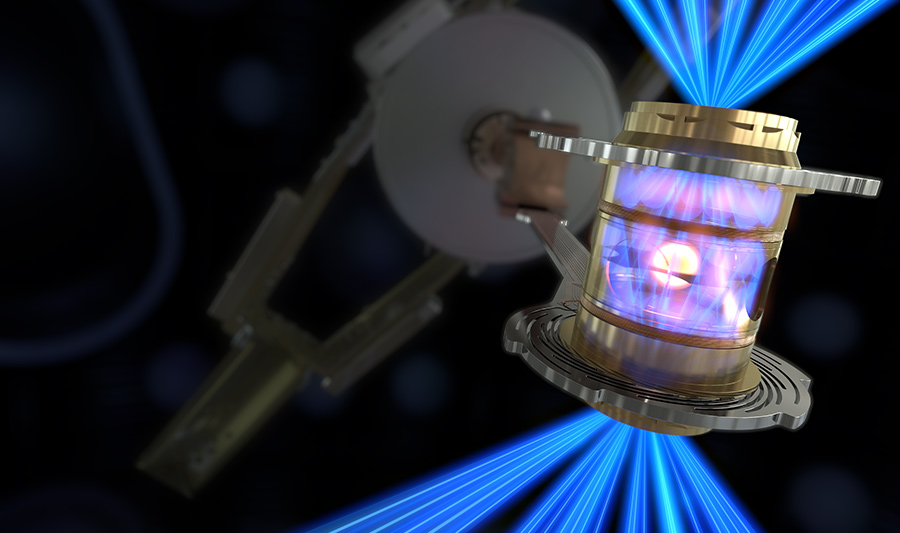
On December 5, 2022, NIF achieved ignition, that is achieving a fusion reaction that created more energy than was put in. Specifically, the experiment used 2.05 Mega Joules (MJ) of laser energy to produce 3.15 MJ of fusion energy. But, it took about 384-400 MJ of electricity to produce the laser energy, which is a net energy loss greater than 99%. So they have a long way to go. Furthermore, the system is designed as an experimental rig, and not really capable of a sustained fusion burn like in a tokamak design. In fact, the NIF rig can only produce one reaction a day.
Which actually leads into the largest fusion facility in the world, ITER (International Experimental Nuclear Reactor), a massive international project backed by the U.S., the EU, Russia, China, India, Japan, and South Korea and located in Cadarache France. The ITER project is a magnetic confinement plasma tokamak which is still under construction but is projected to achieve “first plasma” in 2025.
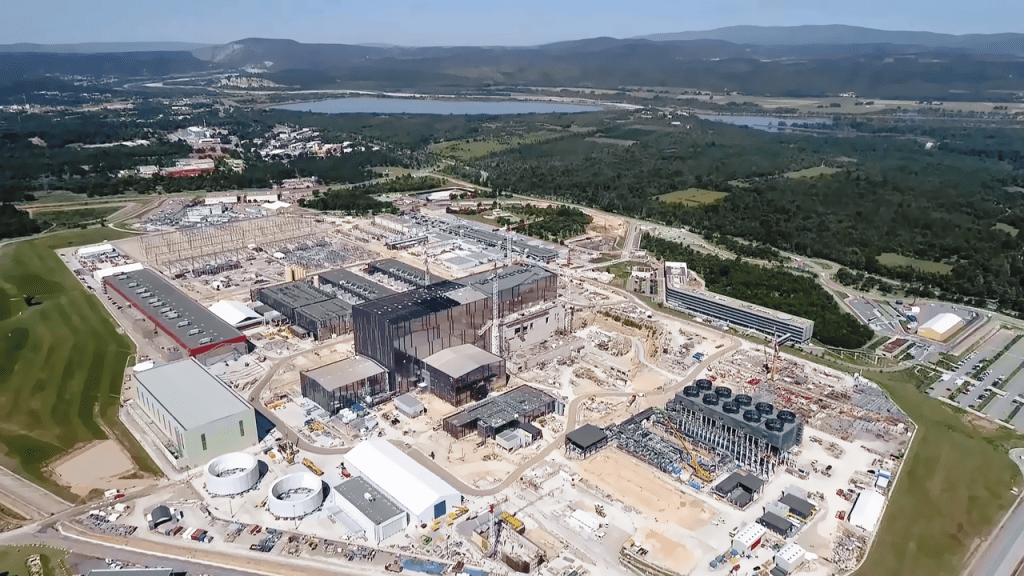

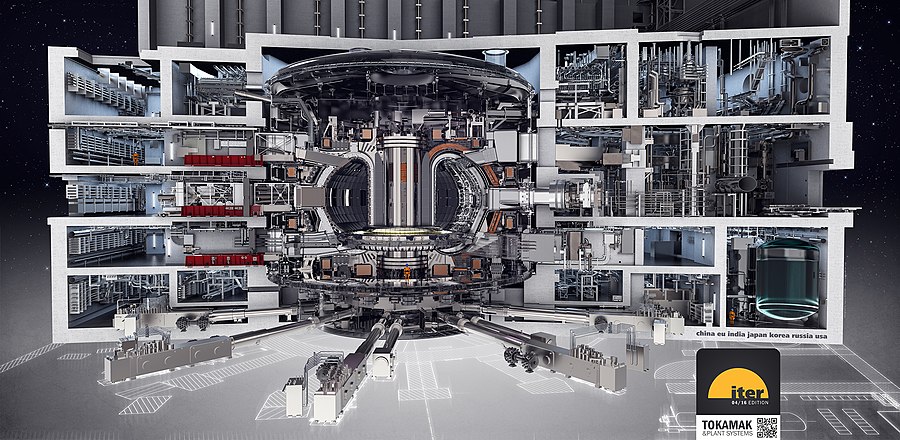
It is all very impressive but still suffers from the many drawbacks of actually trying to achieve controlled fusion on the Earth. It is predicted to produce 500 megawatts (MW) of fusion power in 2035 (that’s right, it will take that long to fully come online). The ITER tokamak reactor isn’t designed to produce electricity, but instead is intended as a demonstration plant of the technology. It has been touted (along with other fusion projects) as providing “free, limitless power” from seawater, etc. But as physicist Daniel Jassby points out in an article in the Bulletin of the Atomic Scientists website, these claims are really far from the truth (https://thebulletin.org/2018/02/iter-is-a-showcase-for-the-drawbacks-of-fusion-energy/). And Jassby is no light-weight, he has a PhD in astrophysics from Princeton University and was a principle research physicist at the Princeton Plasma Physics Lab. As he points out, the ITER project is probably going to end up costing $30 billion and has used incredible amounts of fossil fuels and materials in its construction. And when it is actually running it will use between 300 and 400 MW of electricity in the many auxiliary systems and the heating and maintaining of the plasma itself, and nobody knows if it will actually produce 500 MW of fusion power when all is said and done. Jassby also points out that because ITER is also a deuterium-tritium (D-T) reactor, it may have a problem in procuring enough tritium for its operation since although deuterium does occur naturally in ordinary water, tritium is a radioactive nuclide with a half-life of only 12.3 years and the limited global supply is produced in the heavy water used in so-called CANDU fission reactors.
There is of course the old joke that “fusion energy is 30 years away-and always will be” and unfortunately this does seem to be the case, if you consider the fact that the first fission nuclear reactor was functional in 1942 (“Chicago Pile-1”) and that the first human-made fusion reaction was created in 1952 with the “Ivy Mike” thermonuclear bomb, and we are still no closer to creating electricity with fusion power.
The second scientific announcement that has been taking the media by storm is the announcement on November 30, 2022 that a team from the California Institute of Technology had created a wormhole on a quantum computer. Led by Maria Spiropulu, Shang-Yi Ch’en Professor of Physics at Caltech, they used Google’s Sycamore quantum computer to create a quantum analogue of a General Relativity phenomenon, a wormhole. First predicted in 1916 by physicist Ludwig Flamm by drawing on physicist Karl Schwarzschild’s solutions to the field equations in Einstein’s General Relativity, the concept was expanded upon in 1928 by physicist Hermann Weyl, and famously in 1935 by Einstein himself in a paper co-authored with Nathan Rosen (the “ER” paper), coming up with the concept of the “Einstein-Rosen Bridge” connecting two black holes through a tunnel in space-time. And physicist John Wheeler coined the term “wormhole” in 1957 (he went on to coin the term “black hole” in 1967). Further research revealed that so-called negative energy would be needed to hold the wormholes open to make them traversable by spacecraft. But even though all this theoretical groundwork is amazing, no one has actually seen/detected a wormhole in the real universe (or maybe they have and didn’t realize what they were looking at).
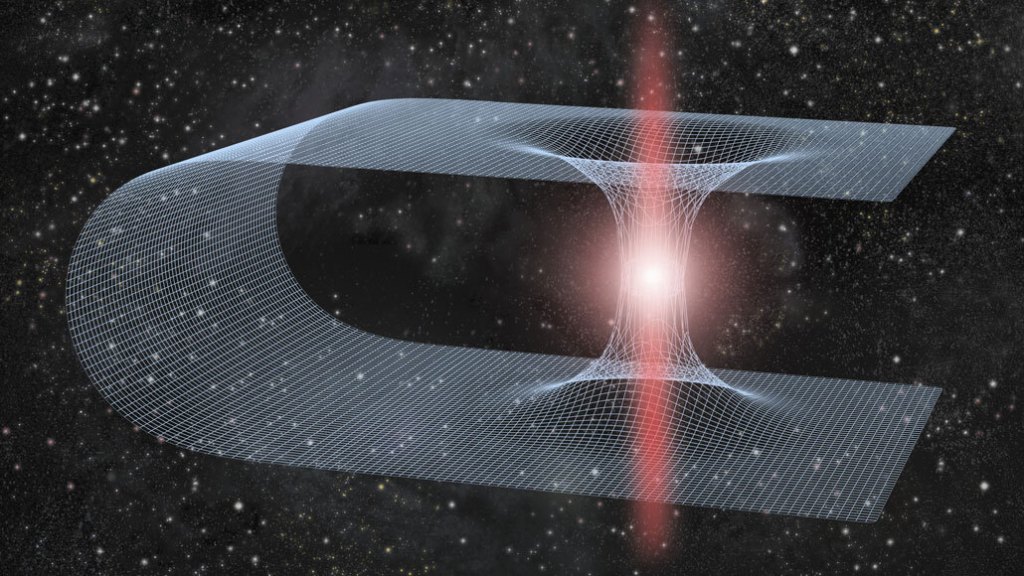
The tie-in with the recent experiment actually comes from another paper Einstein and Rosen wrote with Boris Podolsky, the so-called “EPR” paper which deals with quantum entanglement of particles, so-called by Einstein “spooky action at a distance” whereby two particles are entangled then separated. When the spin of one particle is measured the distant one automatically assumes the opposite spin instantaneously.
Starting in the 1980s some theoretical physicists posited the notion of the universe containing certain holographic aspects in that quantum particles at one level “project” space-time itself on a higher dimension. In 1994 Stanford quantum gravity theorist Leonard Susskind wrote a paper called “The World as a Hologram” expounding this idea.
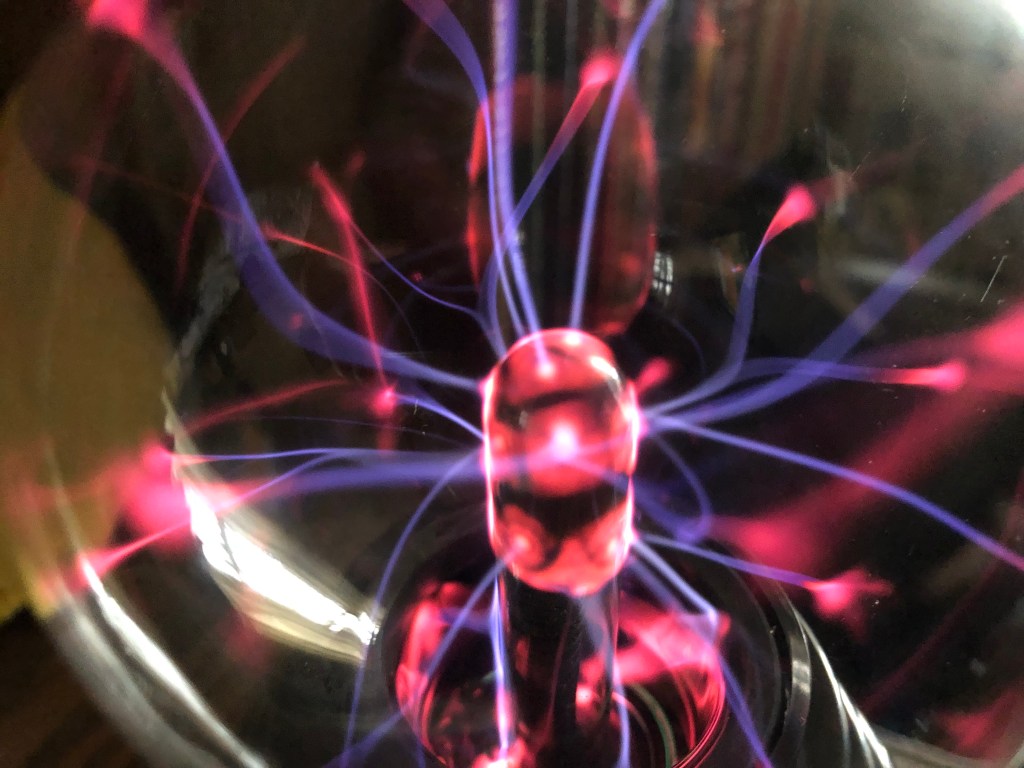
This actually is where I have to issue a disclaimer since I am not a scientist and this is where a lot of the concepts like “anti-DeSitter” (AdS) space and “Conformal Field Theory” (CFT) go over my head, but to be fair a do have a nifty plasma globe to play with and this gives me special insights into the secrets of the universe. 🙂
Susskind, along with Princeton (Einstein’s old stomping grounds) quantum gravity theorist Juan Maldacena came up with the ER=EPR Conjecture in which “We argue that the Einstein Rosen bridge between two black holes is created by EPR-like correlations between the microstates of the two black holes,” in other words, wormholes can be created by quantum entanglement. Harvard physics professor Daniel Jafferis postulated that by entangling two sets of particles and utilizing the “wormhole teleportation protocol” they could keep a wormhole open.
In the Caltech experiment, they utilized Google’s Sycamore quantum computer to test this. Instead of bits that represent either a 0 or a 1 that are used in normal digital computers, quantum computers use what are known as “qubits” or quantum bits that can exist in a supersition of 0 and 1 at the same time.
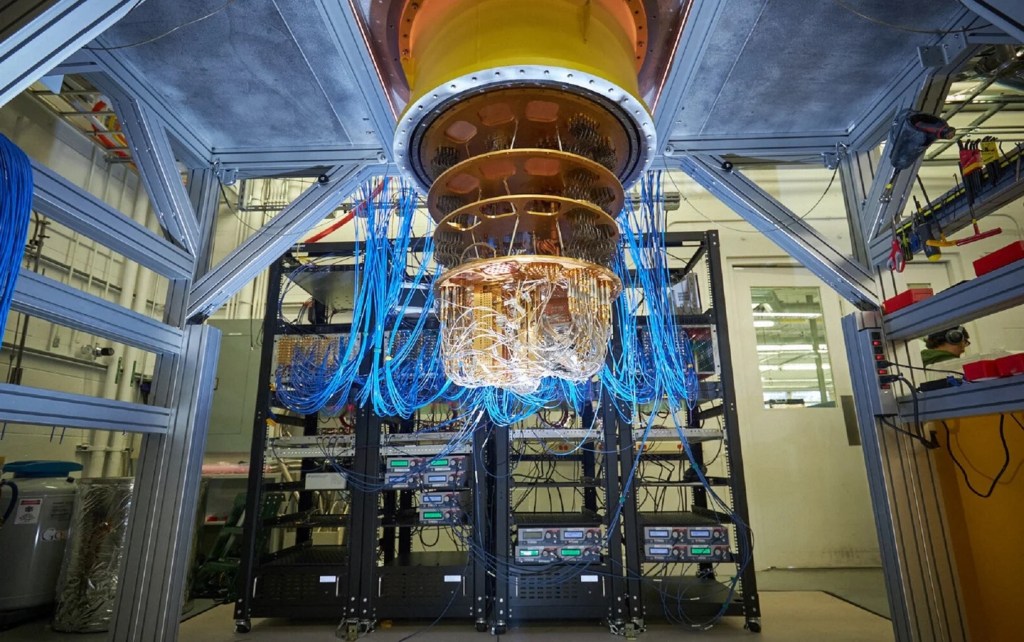
On the Sycamore computer, they used 7 qubits on one end and 7 qubits on the other end. They swapped out 1 qubit on the left hand side with an 8th qubit causing its information to spread to the other 6. Then by sending a magnetic pulse through the system, they managed to cause the qubits to rotate and claim that is analogous to sending a “negative energy shockwave through the wormhole” teleporting a qubit of information to the right.
Source: https://www.quantamagazine.org/physicists-create-a-wormhole-using-a-quantum-computer-20221130/
Now to me this still isn’t that impressive since successful quantum teleport experiments have been done before. And the fact that any of this actually relates to a wormhole in real life seems spurious. It seems like conjecture after conjecture and frankly I think they need to have something more tangible to announce to the world. And even though Spiropulu is no light-weight either (she was an experimental physicist on the CERN/LHC’s discovery of the Higgs boson) I’m inclined to agree with the super critical assessment of this experiment by astrophysicist Ethan Siegel on the Big Think website: https://bigthink.com/starts-with-a-bang/wormholes-quantum-computers/
 Munedawg Communications
Leave a comment