


I recently visited a local astronomical observatory and was able to marvel at the amazing technology that they use to probe the secrets of the cosmos. Although not in my field, I was able to recognize some things due to my knowledge of broadcast engineering and communications satellites.
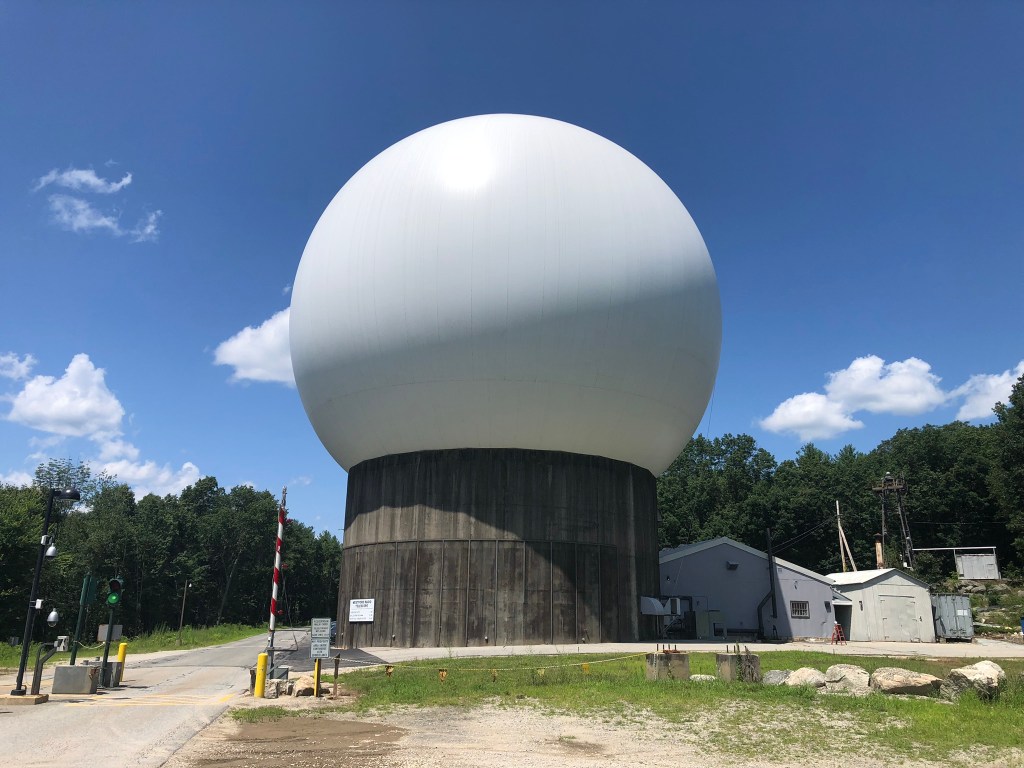
On the day, I was on my mountain bike and it was a workout going up the hill of the observatory complex, but it was definitely worth the effort. They have a radio telescope (in a radome) that is used for geodetic Very Long Baseline Interferometry (VLBI) which measures the locations of certain radio sources in the sky very accurately and can determine things like changes in the axial tilt of the Earth.
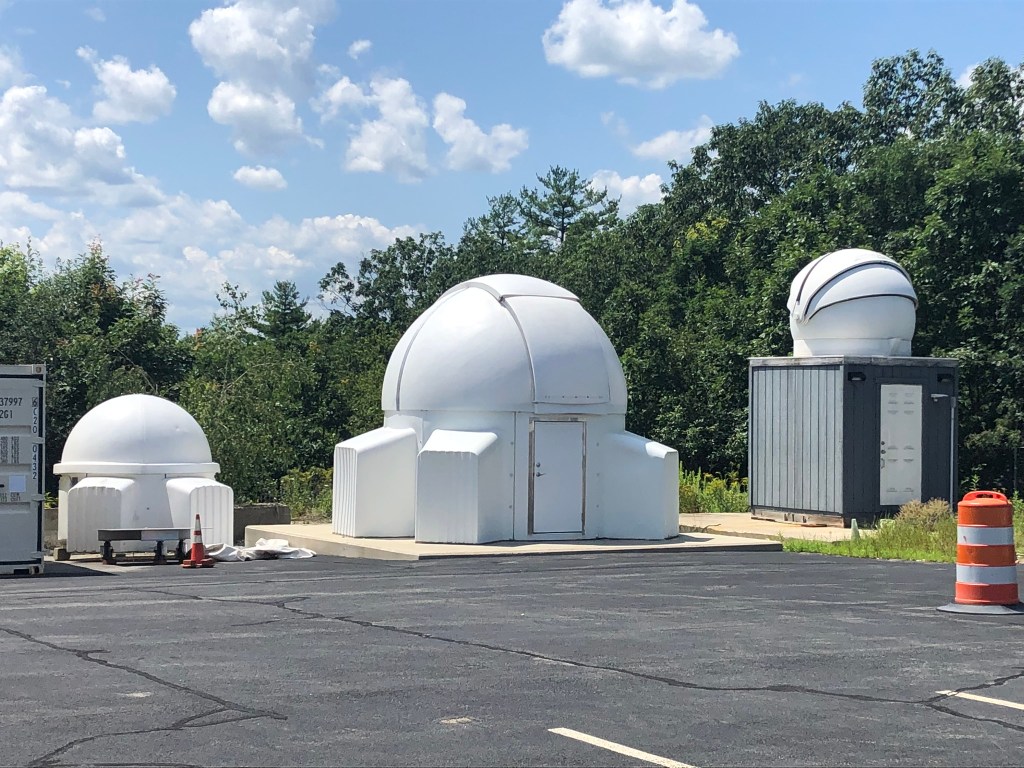
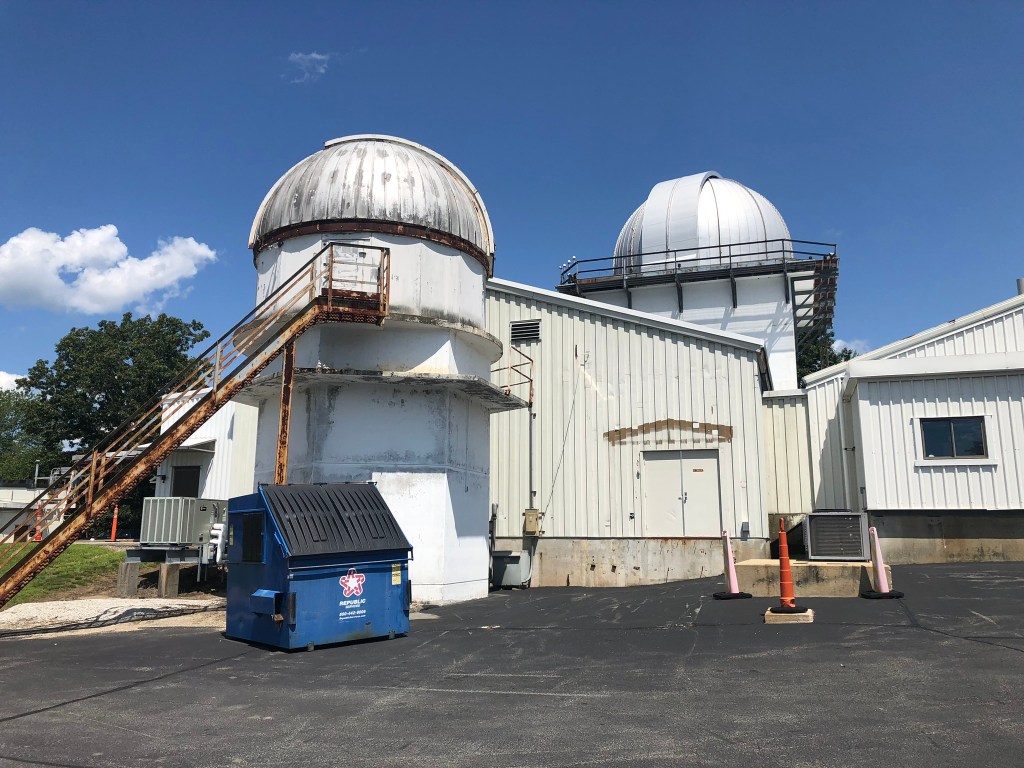
In addition to the radio telescopes, they have optical ones as well.
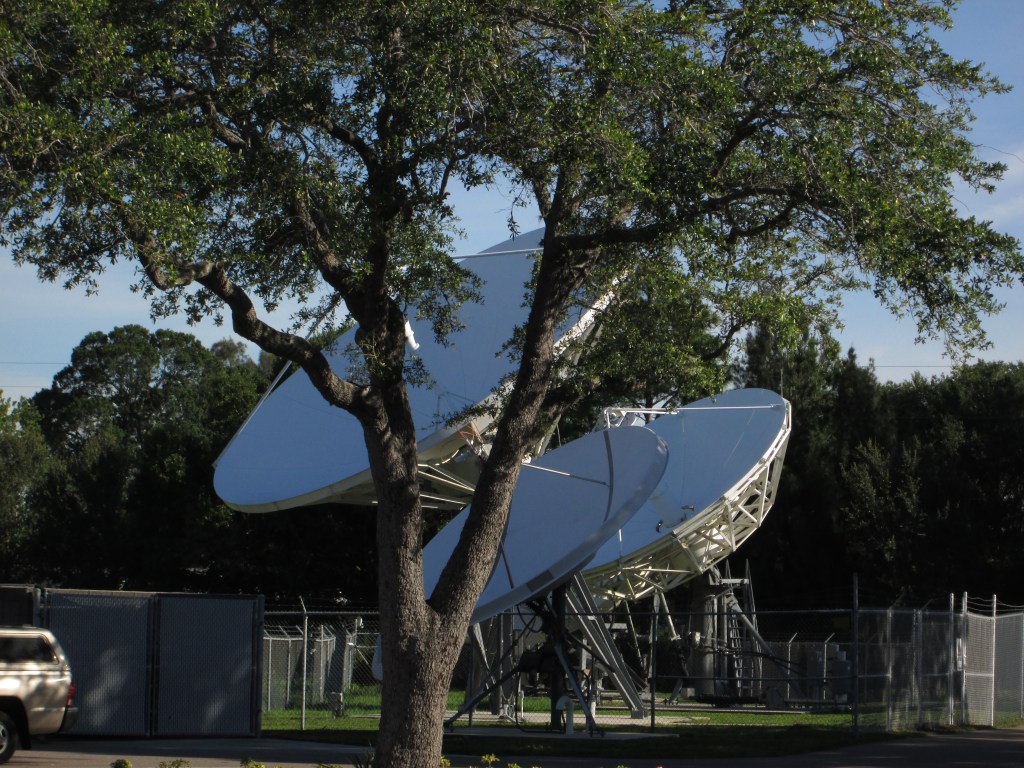
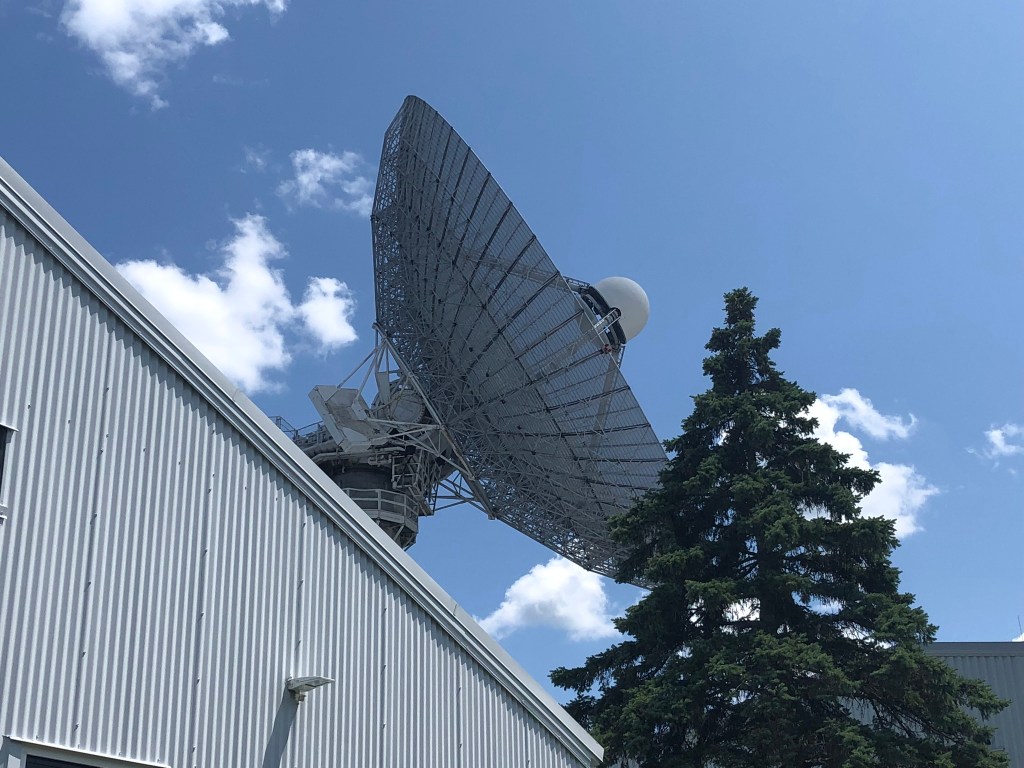
A steerable dish used for deep space RADAR.
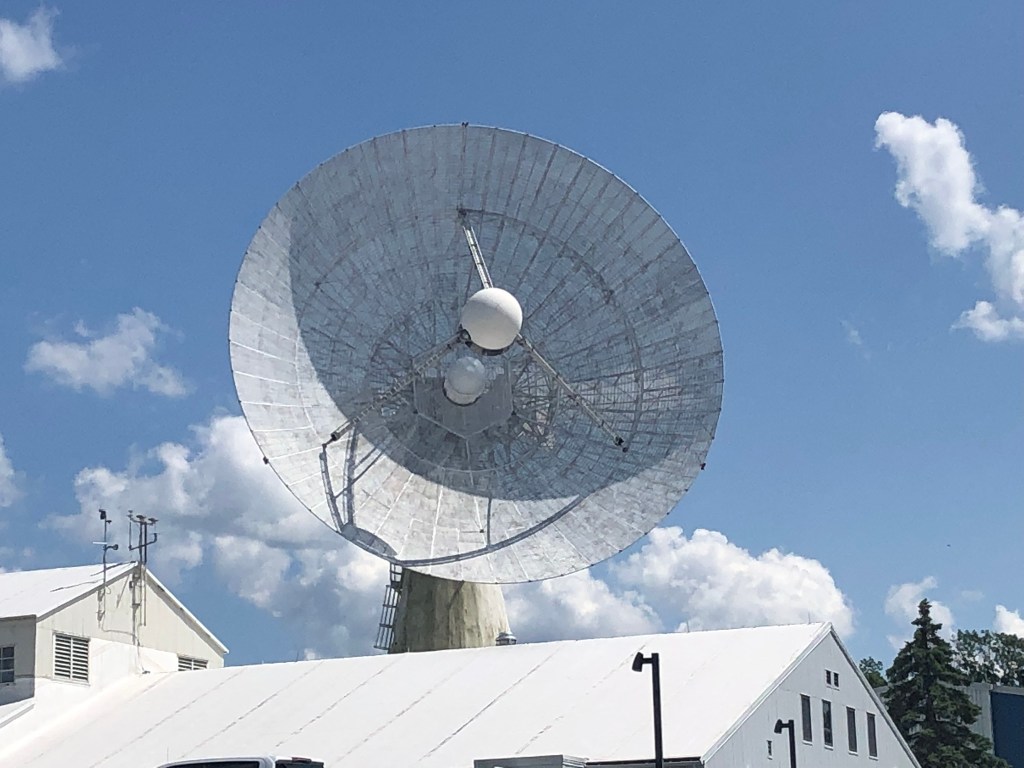
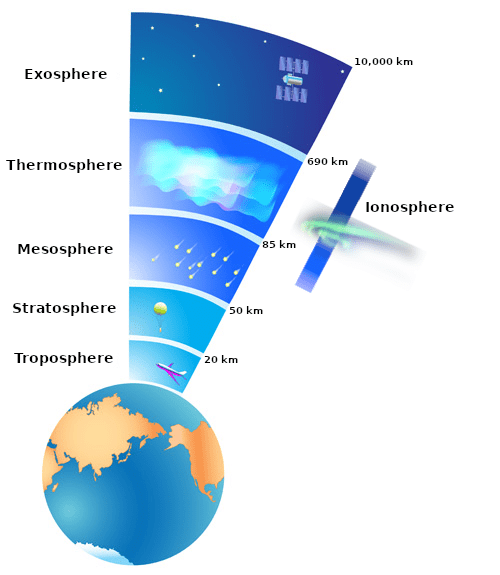
Also at that location on the hill, they have two incoherent scatter RADAR dishes, a fixed zenith antenna and a steerable one, which are used for upper atmosphere and ionosphere research.

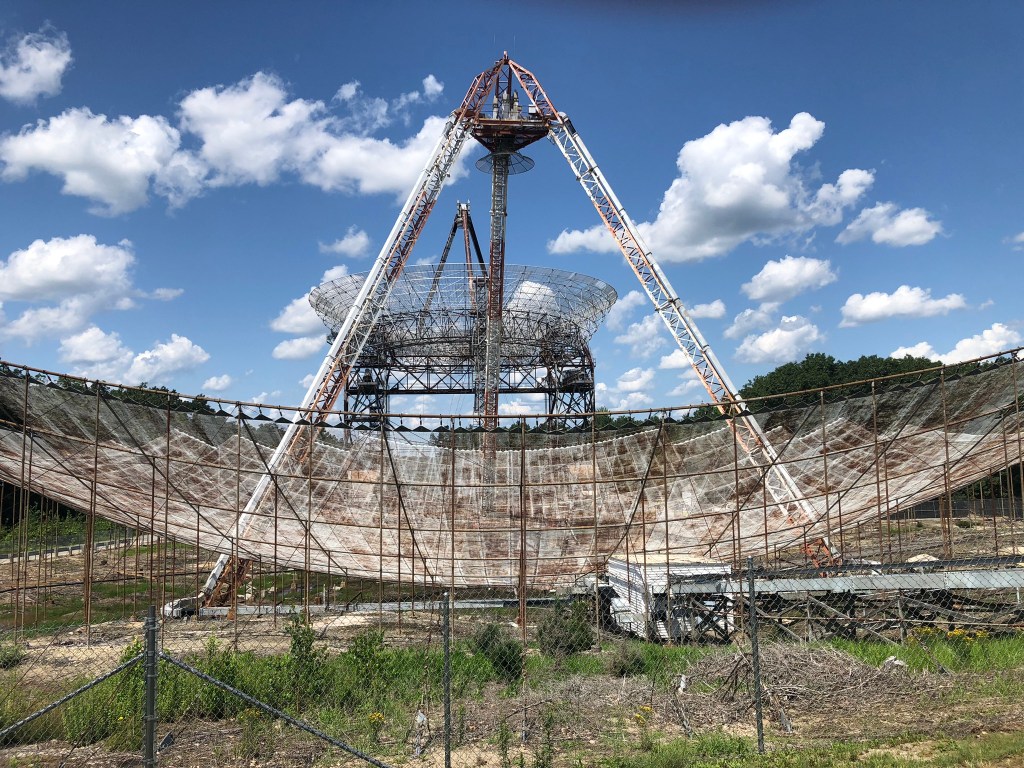
These puppies are pretty impressive up close. Because they are RADAR dishes, they have two waveguides feeding each dish with outgoing signals and incoming signals.

Finally made it to the top! 🙂
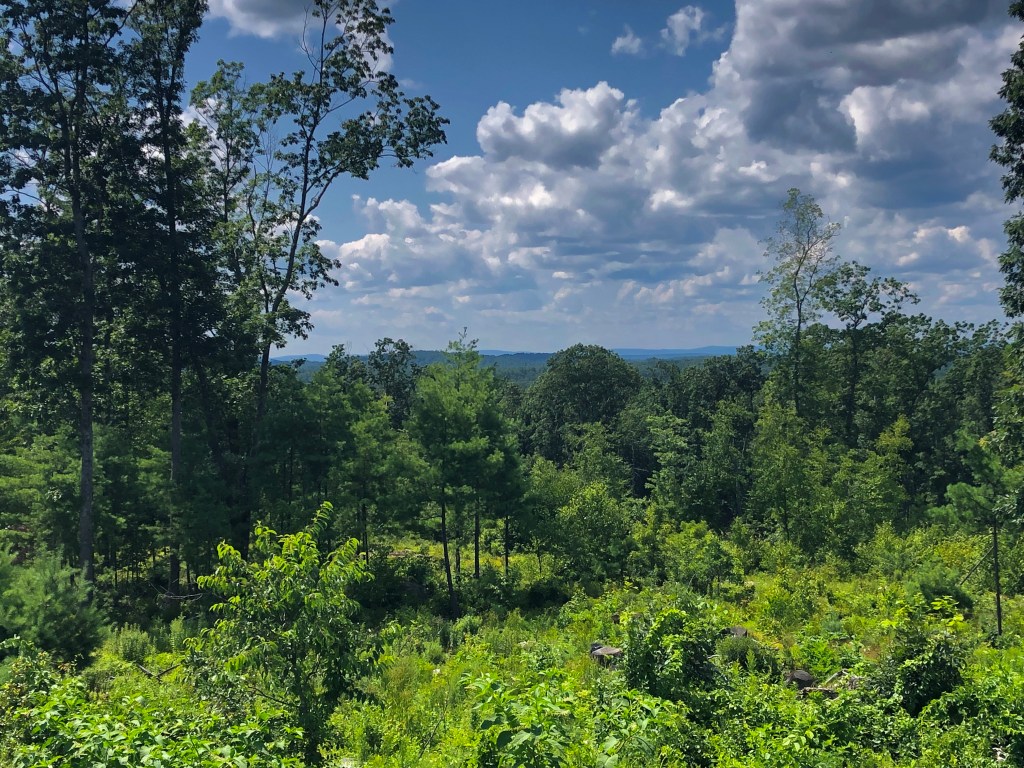
At the very top of the hill is the main 37 m (121 ft) parabolic antenna protected by a 46 m (151 ft) radome.
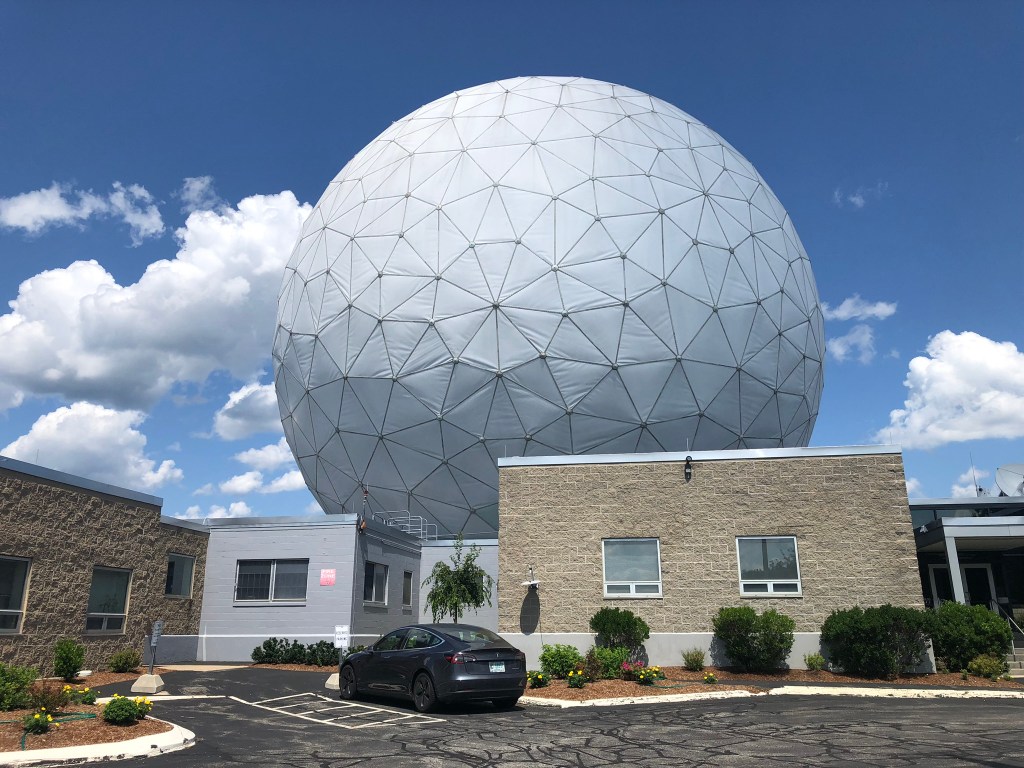
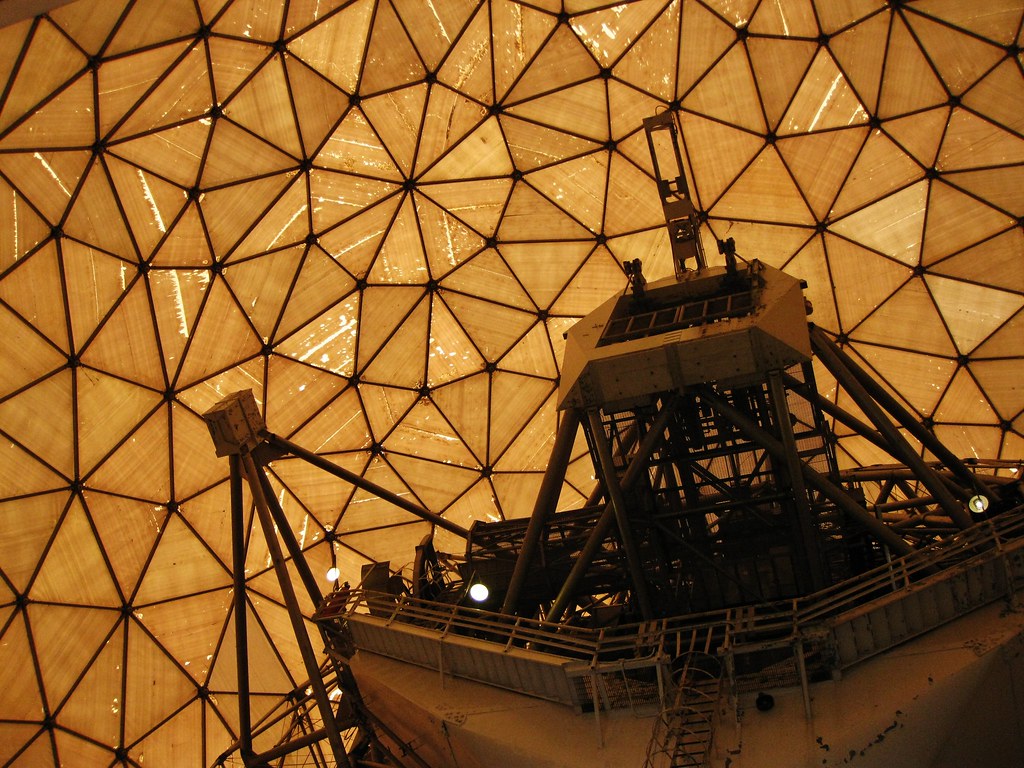
It is used for astronomy and can both passively image radio sources in the galaxy and in Long-Range Imaging RADAR mode can produce images of objects orbiting the Earth. Some of the active research projects at the observatory include studying star-forming regions in the Milky Way, radio stars, supermassive black holes in the centers of galaxies, galaxy formation in the early universe, and physical processes on the surface of the sun.
For me it was great visiting the site and seeing people actively doing science and getting real world data. In a sort of tie-in with this is the fact that I had recently joined experimental physicist Dr. Brian Keating’s website mailing list, admittedly in part because he was actually giving away pieces of the Campo del Cielo meteorite in a sort of raffle (people with .edu email addresses automatically won because he was giving a priority to students). And it got me to thinking that the world probably needs more experimental physicists and less theoretical ones! 🙂 I guess what prompted this thought is the increasing abstraction in some physics such as String Theory in which there is a lack of testable hypotheses, etc. Actually on a recent StarTalk podcast theoretical physicist Michio Kaku posited that if Dark Matter could be deciphered in a lab experiment, String Theory would get a much needed verification. Sure, but that’s another “if”. And when people start talking about the notion that we are living in a simulation I immediately tune out at that point because I don’t think that it is a very fruitful line of reasoning.
 Munedawg Communications
Leave a comment