


It sux right! The biannual aggravation of having to set your clocks forward so that you have to get up an hour earlier to go to work, school, massage parlor, gambling joint, race track, liquor store, marijuana dispensary, whatever you have to go to early😊. 6:00 am becomes 7:00 am and so forth. When did Daylight Savings start and why?

Well, in the past, societies were agrarian based, so that time-keeping and calendars were more tied to natural cycles. Because of Earth’s axial tilt orientation of 23.5 degrees and orbital variation throughout the year, the length of daylight varies from season to season. It is more pronounced the further north or south you move away from the equator.
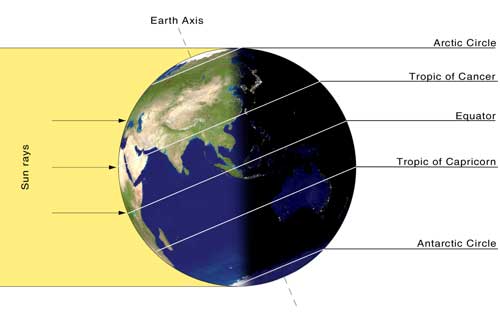
And there is the difference between a sidereal day and a solar one.

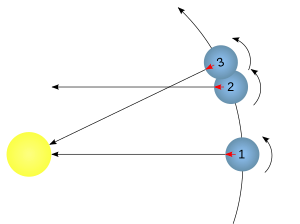
Technically a sidereal day is the actual rate of rotation of the Earth and is 23 hours and 56 minutes. It is measured by position of the stars throughout the day.

Conversely a solar day is 24 hours and is measured by the movement of the sun across the sky. It is caused the the lag factor induced by the combination of the Earth’s rotation and the Earth’s orbit around the sun.
And even that is changing because the Earth’s rotation is slowing down by approximately 1.8 milliseconds per century which means that the length of a day is gradually increasing by this amount over time, which is corrected by adding leap seconds to the official Coordinated Universal Time. According to the all-knowing Wikipedia:
A leap second is a one-second adjustment that is occasionally applied to Coordinated Universal Time (UTC), to accommodate the difference between precise time (International Atomic Time (TAI), as measured by atomic clocks) and imprecise observed solar time (UT1), which varies due to irregularities and long-term slowdown in the Earth’s rotation. The UTC time standard, widely used for international timekeeping and as the reference for civil time in most countries, uses TAI and consequently would run ahead of observed solar time unless it is reset to UT1 as needed. The leap second facility exists to provide this adjustment. The leap second was introduced in 1972. Since then, 27 leap seconds have been added to UTC, with the most recent occurring on December 31, 2016. All have so far been positive leap seconds, adding a second to a UTC day; while it is possible for a negative leap second to be needed, this has not happened yet.
Agrarian societies of course needed to use all available daylight in raising crops and livestock.


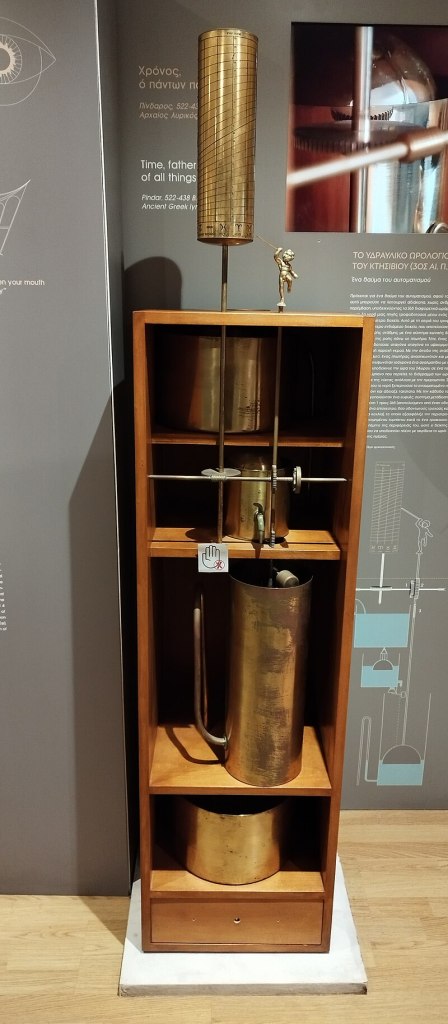
And actually in ancient Rome they adjusted their water clocks to increase the length of the hours in order to deal with the difference in daylight in winter and in summer. (And Monty Python had Owl-Stretching Time🦉🕒so go figure.)
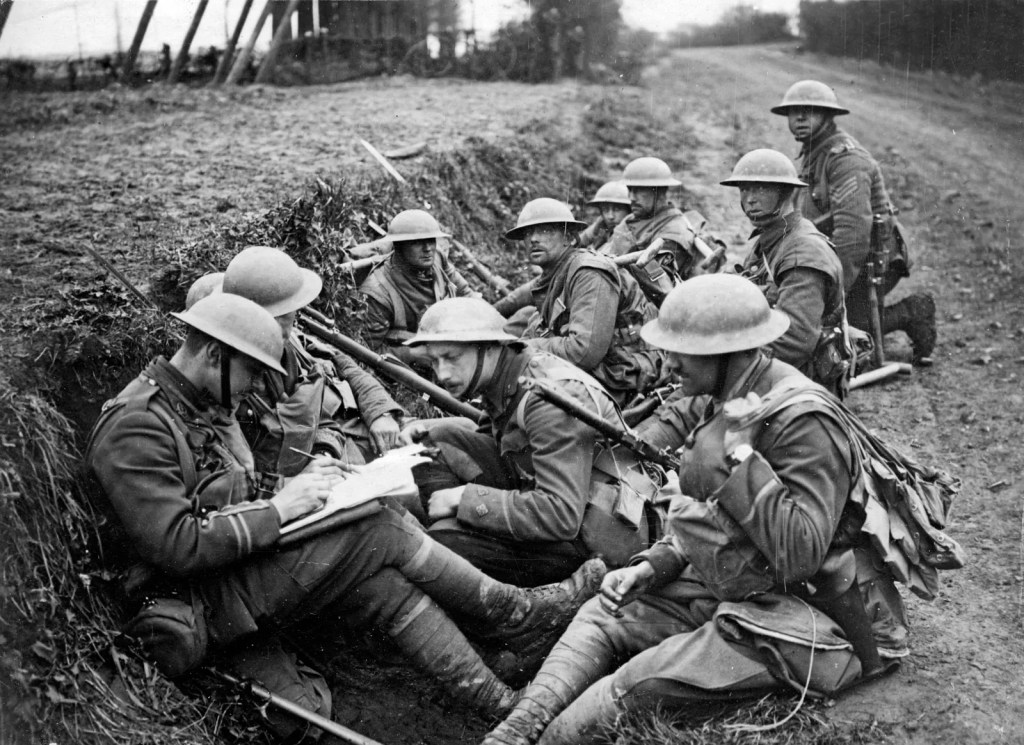
In the United States, Daylight Savings Time was introduced during World War I, which was a spot of bother in Europe that was caused by Gavrilo Princip, a Bosnian Serb who was unhappy with his grades that semester, assassinating Archduke Franz Ferdinand of Austria and his wife Sophie, Duchess of Hohenberg in Sarajevo.
According to the USAFacts website:
Daylight saving time was originally implemented over 100 years ago, in 1918 during World War I to help conserve fuel and power and extend the workday. Working during the sunlight hours meant burning less fuel, and the ability to work later into the day. The Standard Time Act of 1918, which established the time change, also established the nation’s official time zones.
So we’ve had this nonsense for a century! 😜 OK, you can tell by my tone which side of the current debate about DST I’m on! Yes, personally I do think it is time to ditch the whole stupid ritual. I’ve worked in broadcasting at TV stations and the amount of sheer aggravation it caused us twice a year having to manually adjust a lot of the times for some of our equipment and the program schedule as well drove us bonkers! 😕 And it is one more annoyance we have to deal with in our busy lives in this country!
I’m going bat-sh*t crazy because of it!🦇🤪 Well, actually I already am bat-sh*t crazy! 😂
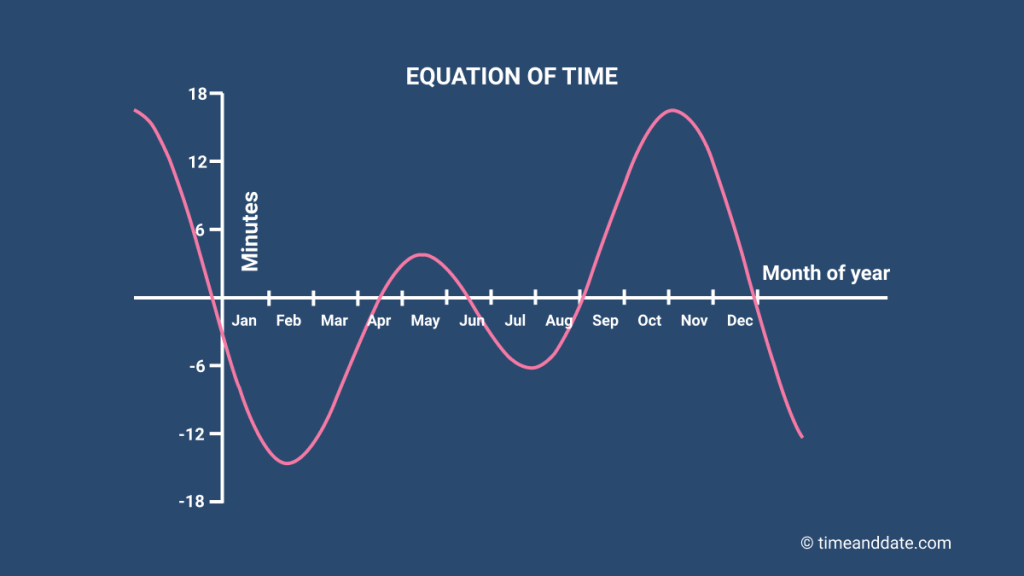
Personally I think we should just use solar time and if some businesses and institutions want to change their schedules to accommodate people, that’s fine. There is still a slight complication due to discrepancies within the whole notion of solar time and is resolved by the equation of time:
The equation of time describes the discrepancy between two kinds of solar time. The two times that differ are the apparent solar time, which directly tracks the diurnal motion of the Sun, and mean solar time, which tracks a theoretical mean Sun with uniform motion along the celestial equator. Apparent solar time can be obtained by measurement of the current position (hour angle) of the Sun, as indicated (with limited accuracy) by a sundial. Mean solar time, for the same place, would be the time indicated by a steady clock set so that over the year its differences from apparent solar time would have a mean of zero.
But we ain’t got time for that now! 😊
 Munedawg Communications
Leave a comment