

March 29 was a cold windy day in Massachusetts. I had taken the commuter rail into Boston and the Red Line subway to the JFK/UMass stop. Since, as usual I had drank too much coffee that morning and had to “use the facilities” as they say. In this case that was some convenient shrubs in front of a Santander Bank building on Morrissey Boulevard in Dorchester. The one thing I didn’t count on was the lady inside the bank who started yelling at me through the glass of the lobby, saying something like “what are you doing?!” To which I reasonably replied, “I’m peeing, what does it look like?!” I think she then said something like she was going to call the cops, but of course I just smiled at her and left the premises. That was incident number one this fine day. And trust me folks, there is actually an incident number two! 😜
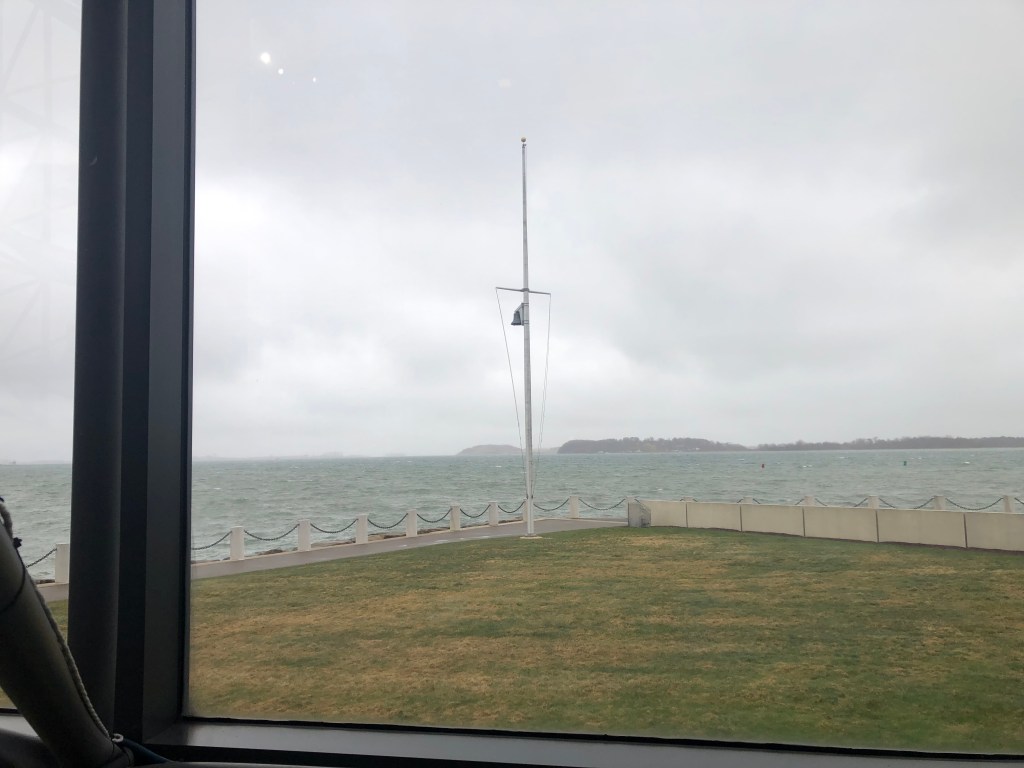
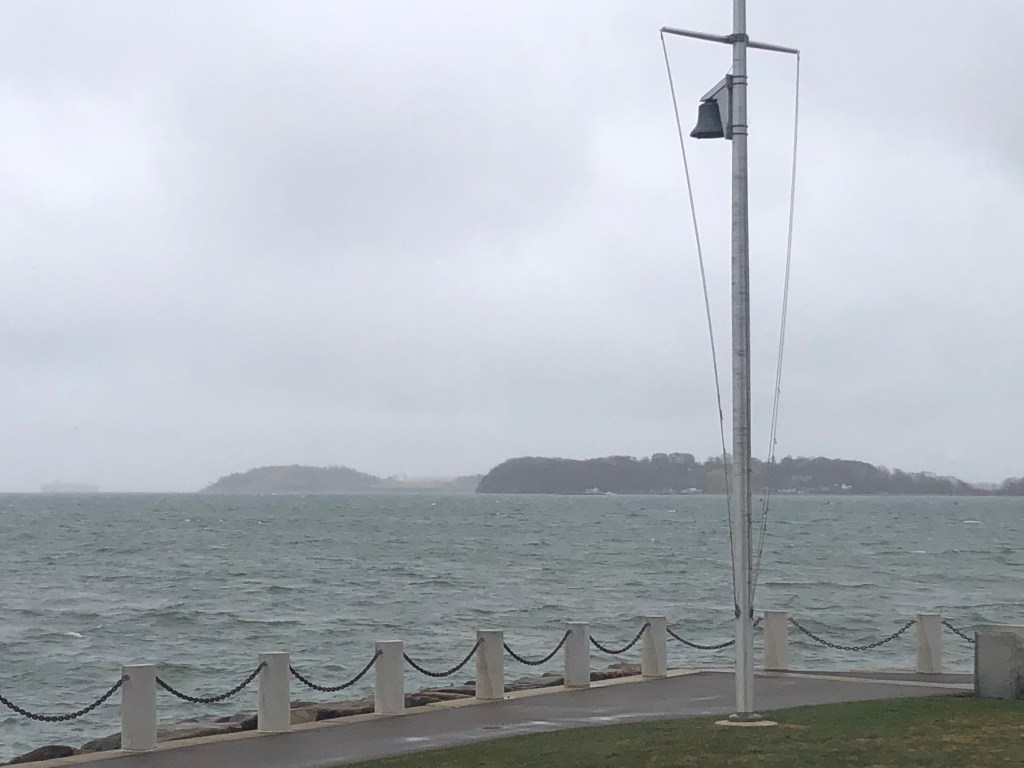
Luckily I was wearing my balaclava that day ‘cause it really was nasty walking out to the JFK Library, although it made for a really dramatic day with waves crashing against the shore of Dorchester Bay.
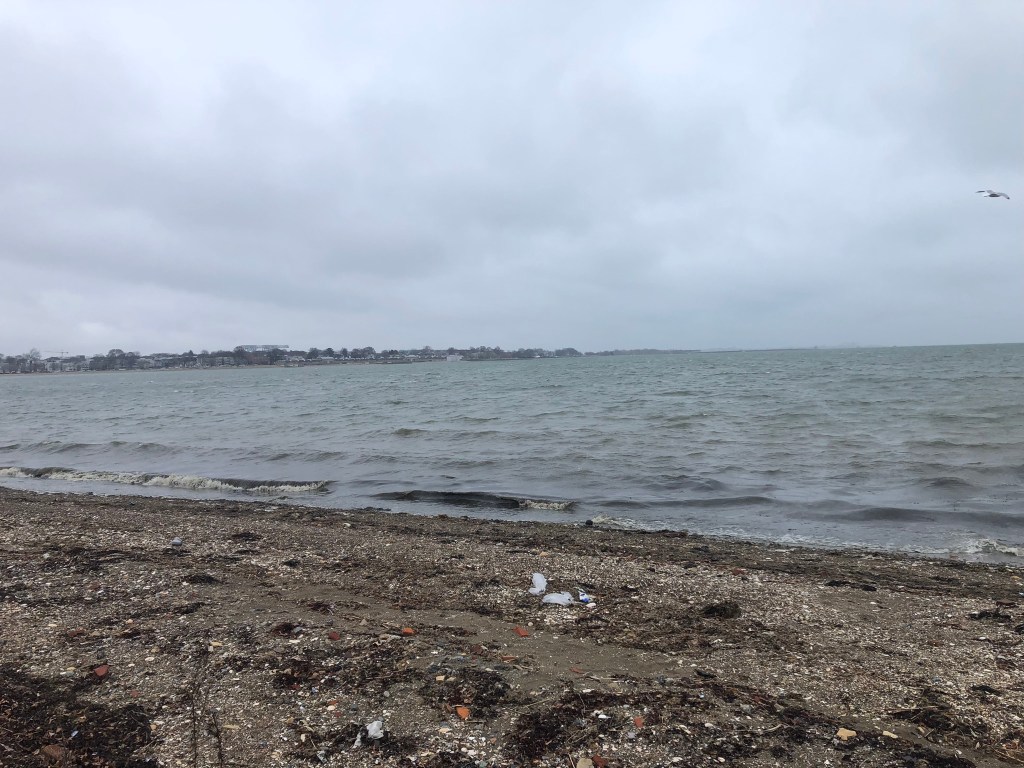
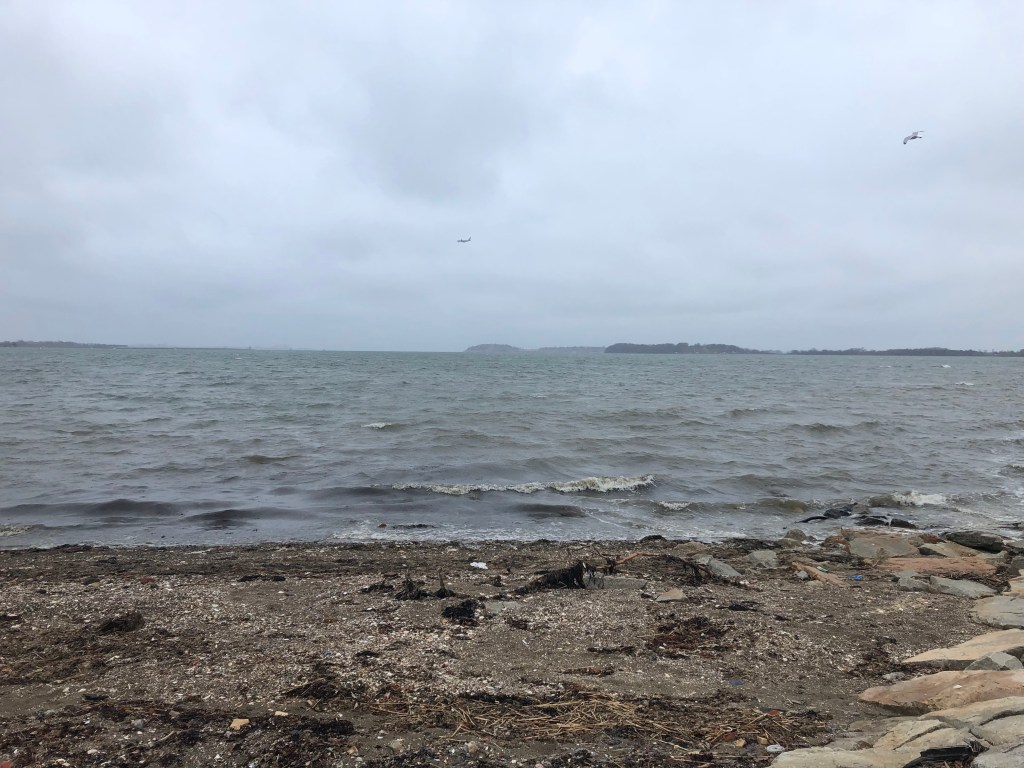
A good day for surfing, if you have a thermal wetsuit!

A nice view of the Boston skyline from Columbia Point.
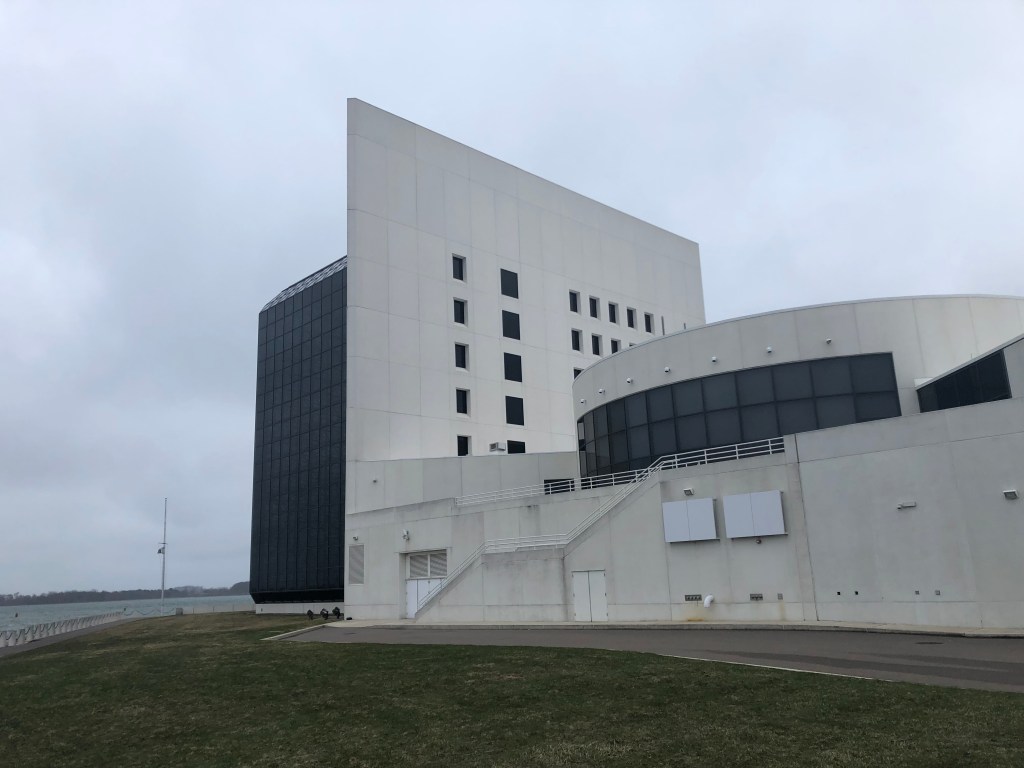
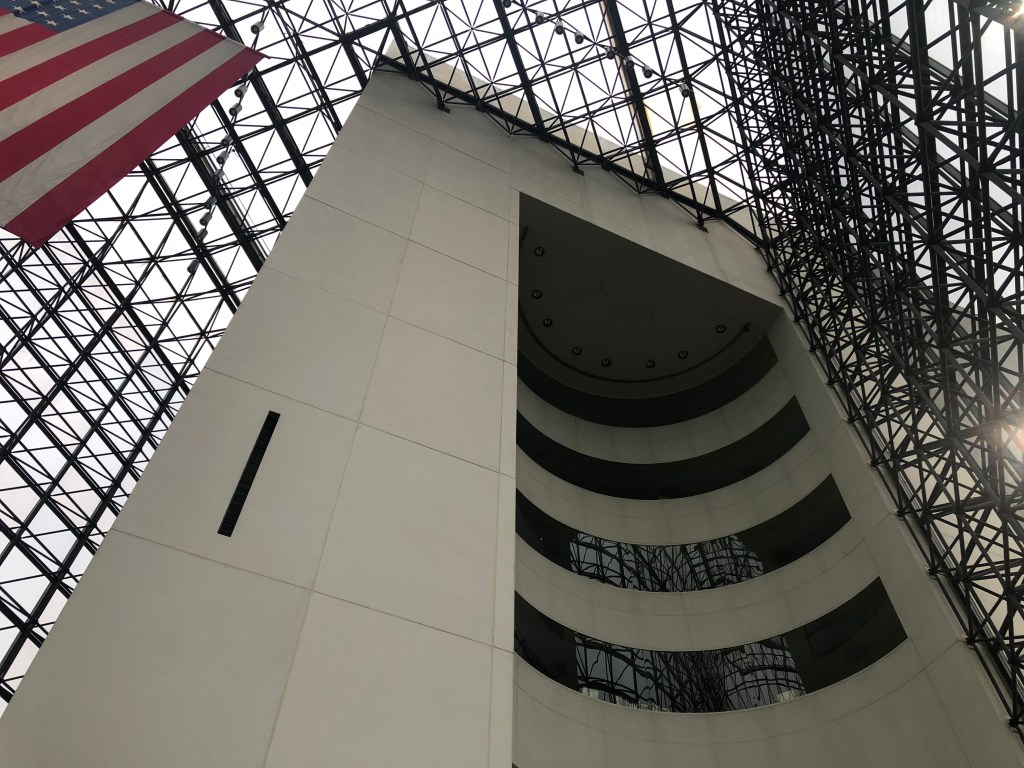
Finally reaching the library, I saw that it really is a dramatic structure designed by the famous architect I. M. Pei.
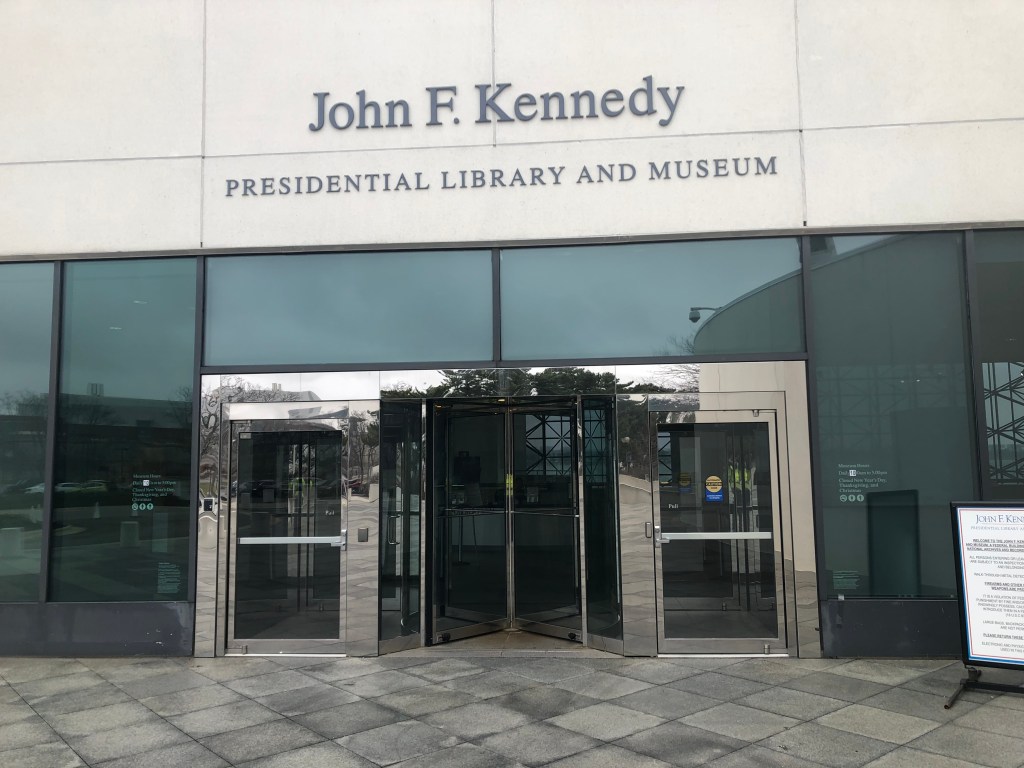
After warming up inside, I discovered that you had to pass a security screening, which makes sense since it is of course a presidential library. Of course in my rush that morning to get there I had forgot that I still had a pocket knife in a holder on my backpack! 🤷♂️🙄
So when I went through security I showed them the knife which of course they took into custody. Sometimes I wonder how stupid I can be sometimes! 🙄🤔 But after that incident things went smoothly and I was able to stow away my rain jacket in the coatroom but the staff advised me to keep the backpack on me because they said that nobody watches the coatroom. Just something to keep in mind if you plan a visit.
When you enter the museum, they first have you watch a film in a small theater which chronicles the early life of John F. Kennedy. It is really well done and informative. Then, after the film, you enter the Young Jack and 1960 Presidential Election exhibit area.
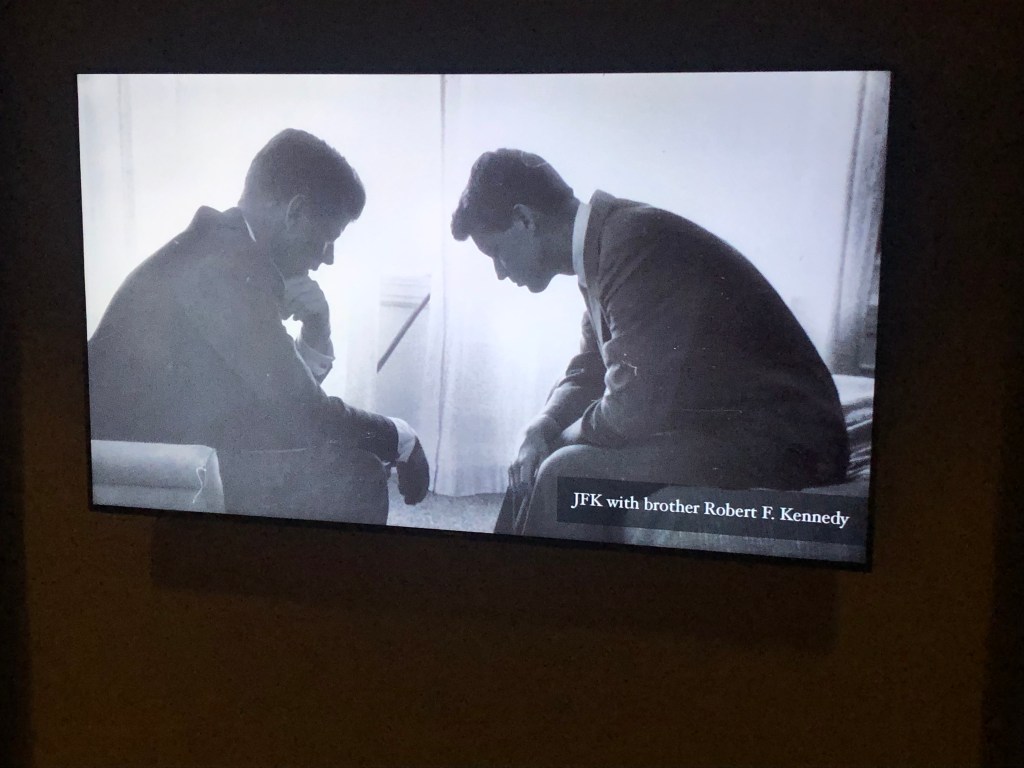
This is done very creatively and takes you back in time to 1960, when JFK ran against sitting Vice President Richard Nixon for the presidency. I was transported to the 1960 Democratic Convention with the sights and sounds of this historic event.
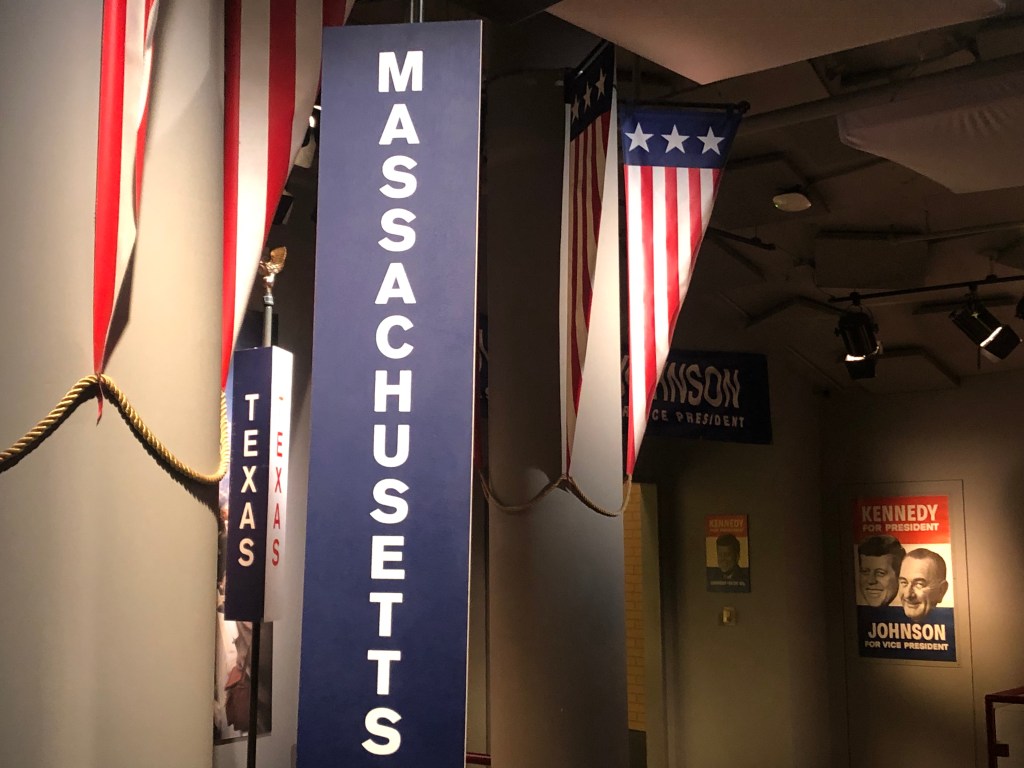

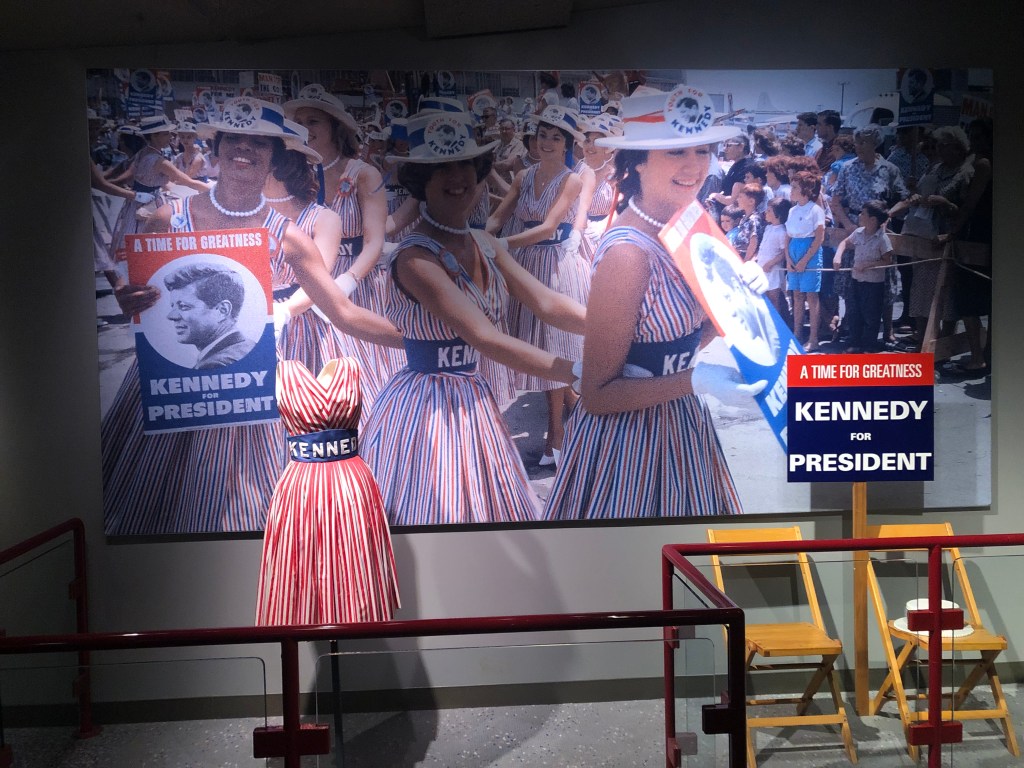
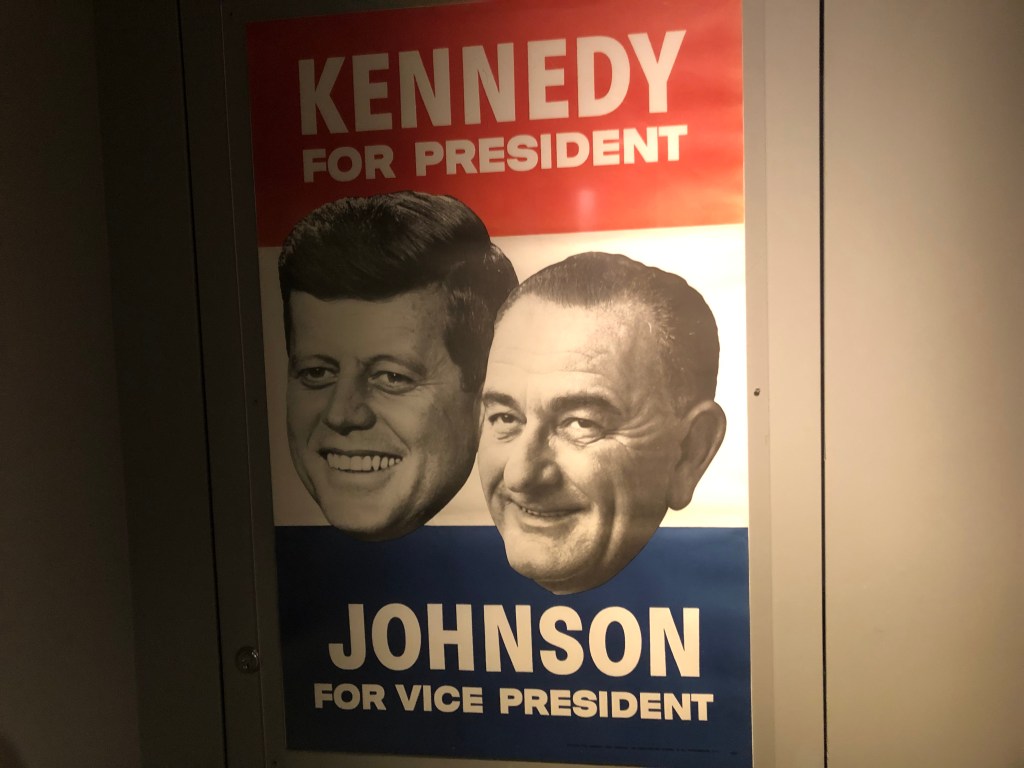
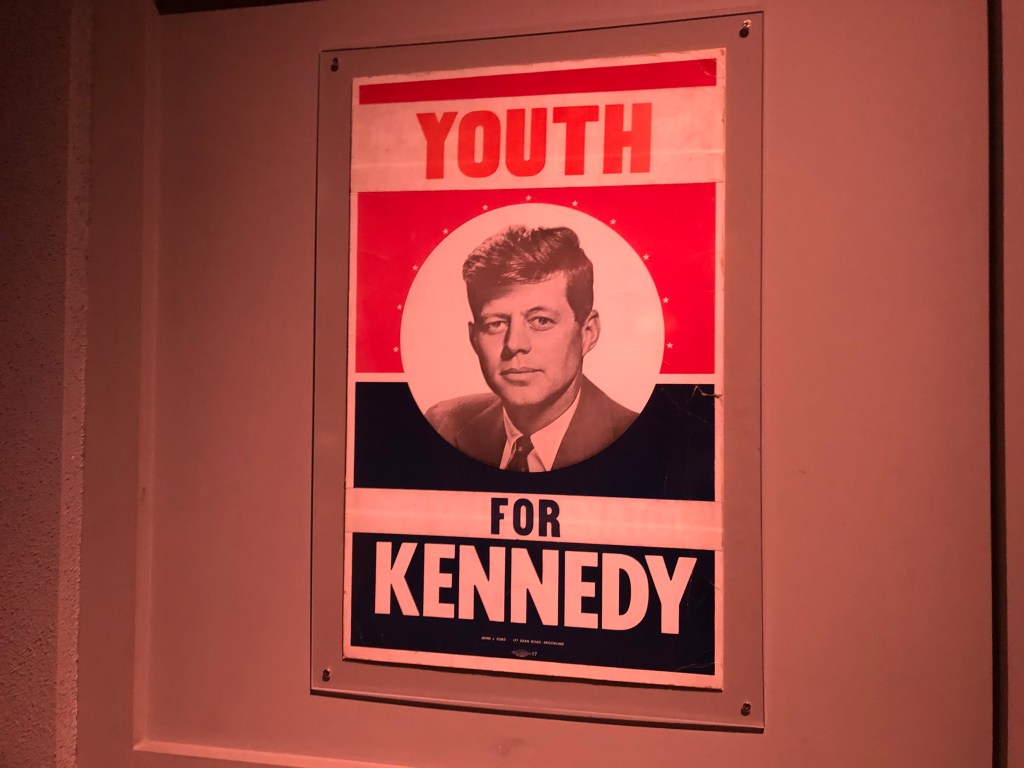
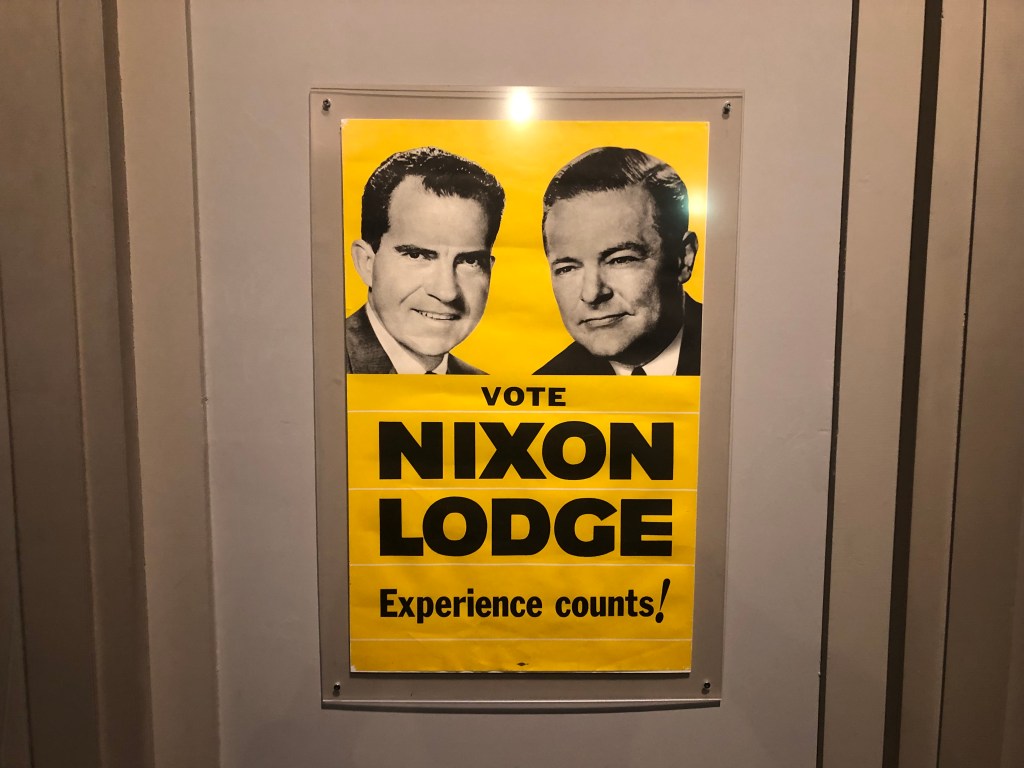
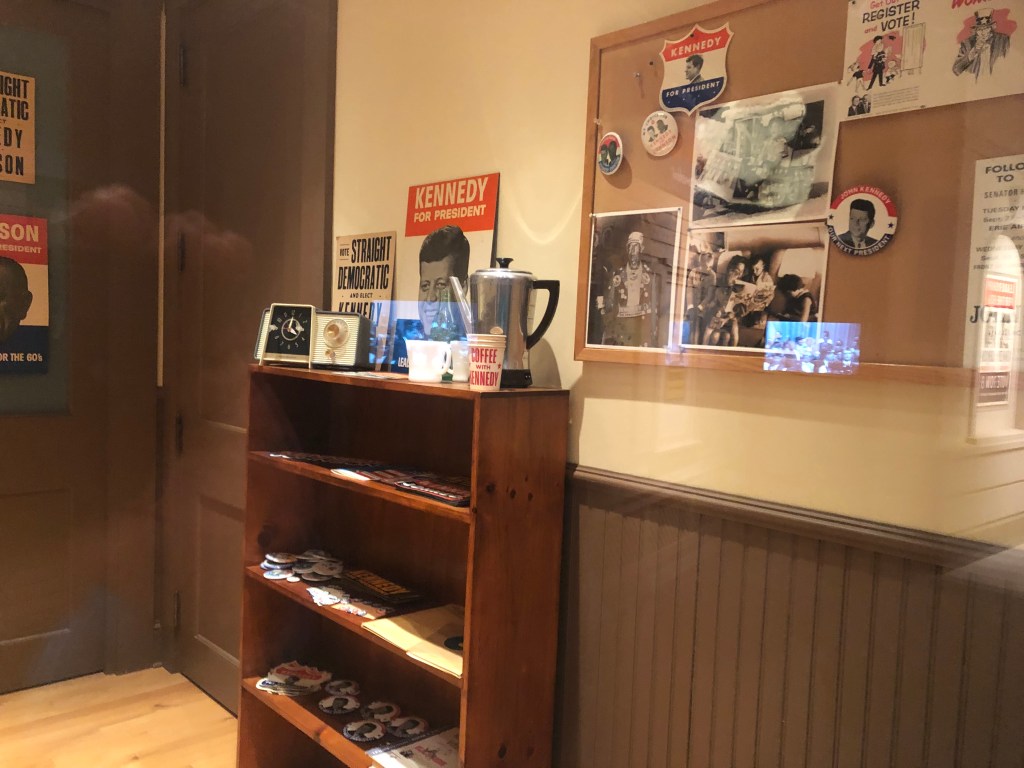
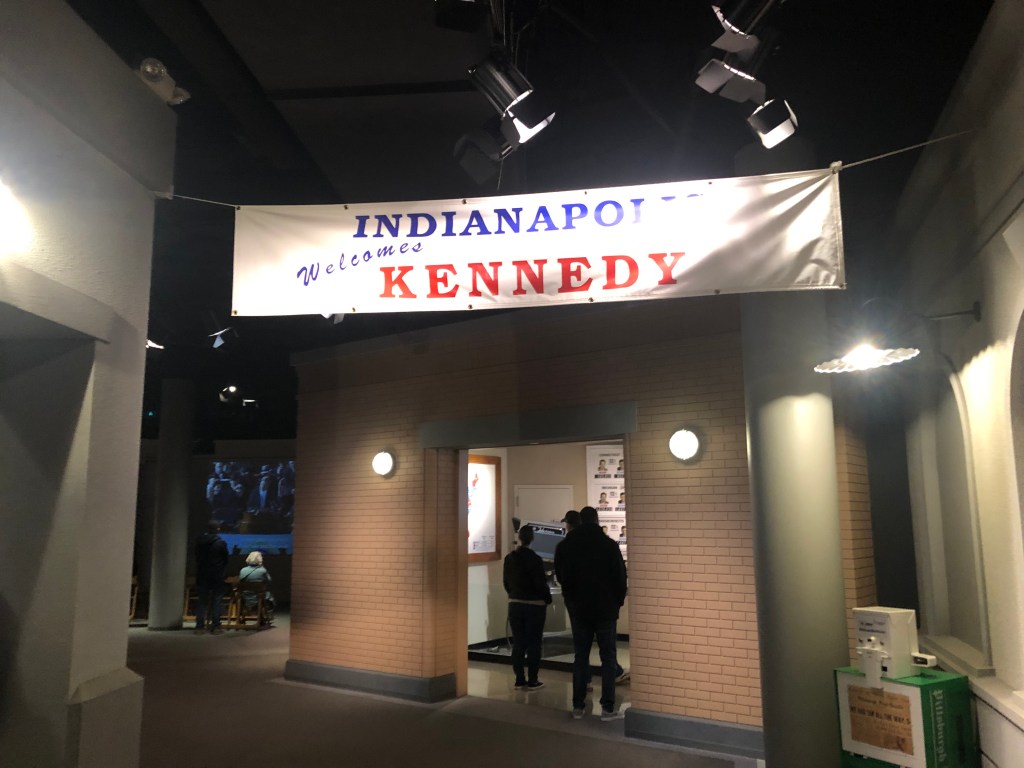
There were also storefronts that recreated the Main Streets of the country that both Kennedy and Nixon campaigned in. I love all the vintage artifacts that are on display.
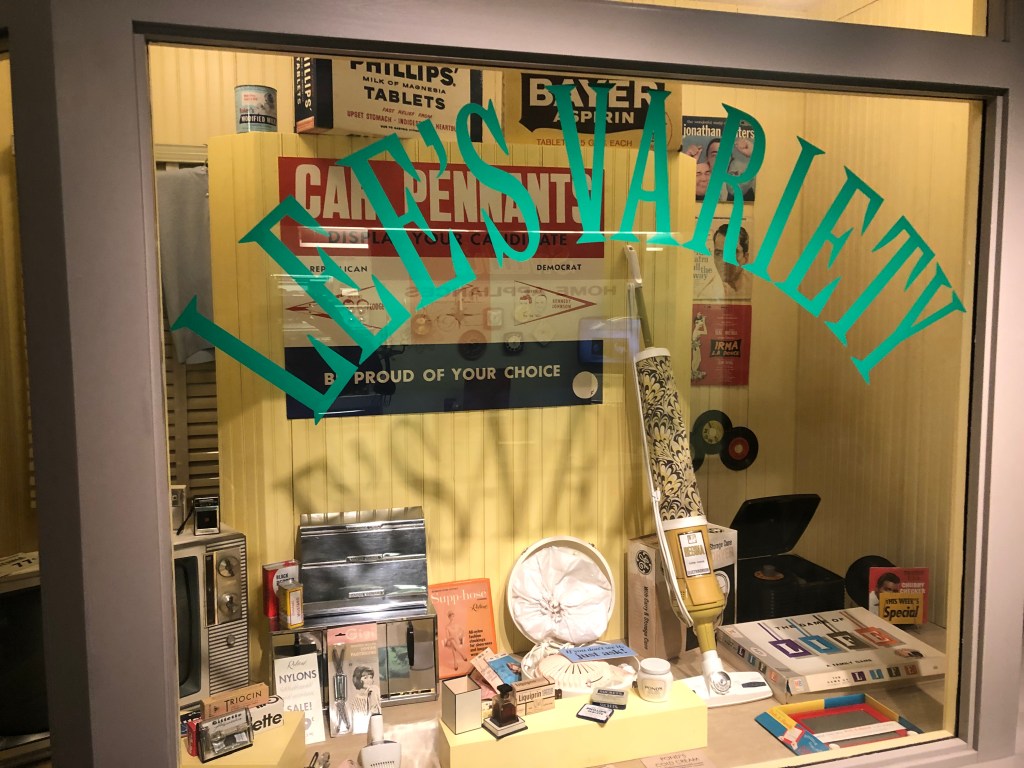
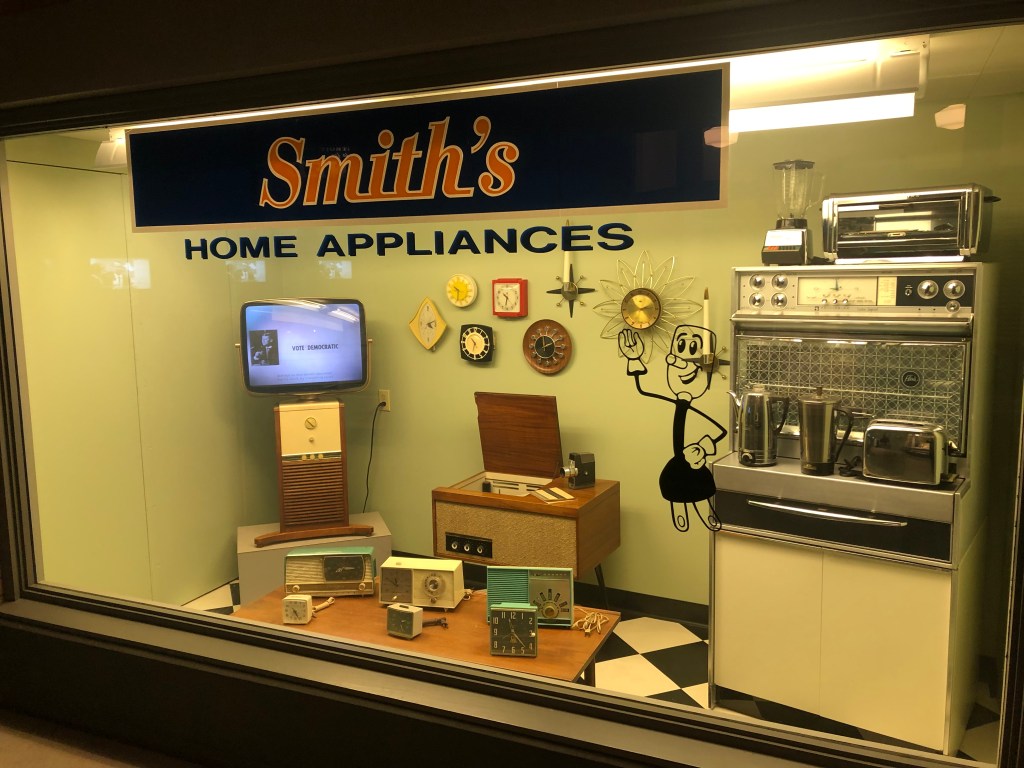

Nice vintage TV set and “space age” clocks.
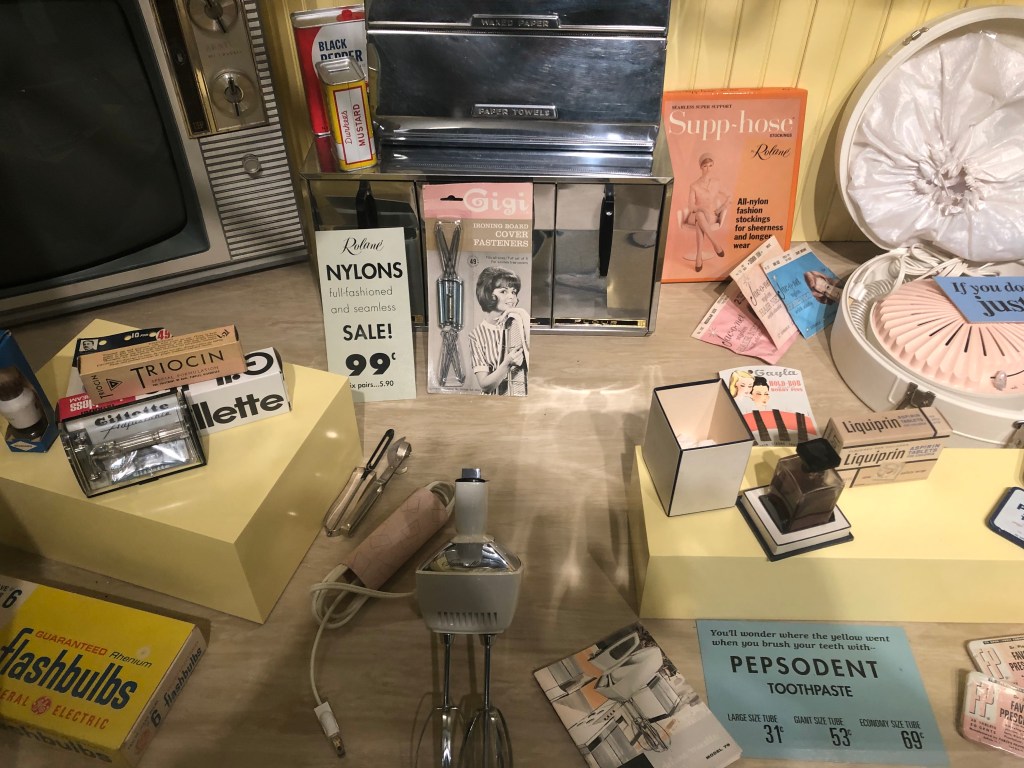
Wow, flashbulbs, I almost forgot about those!
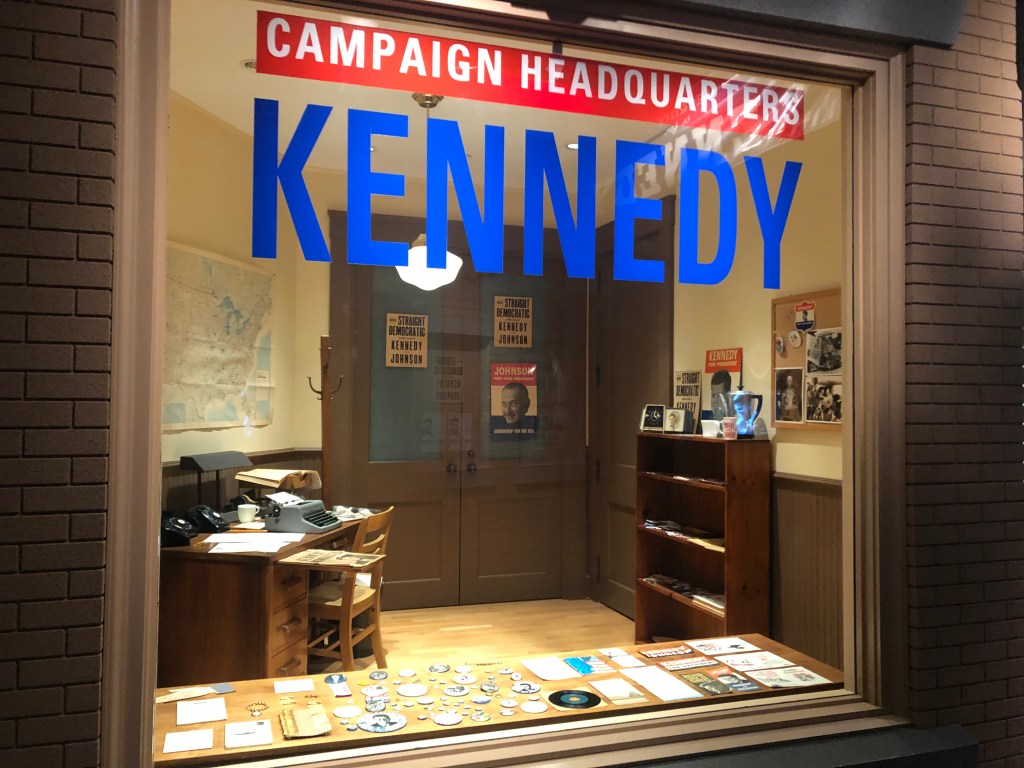
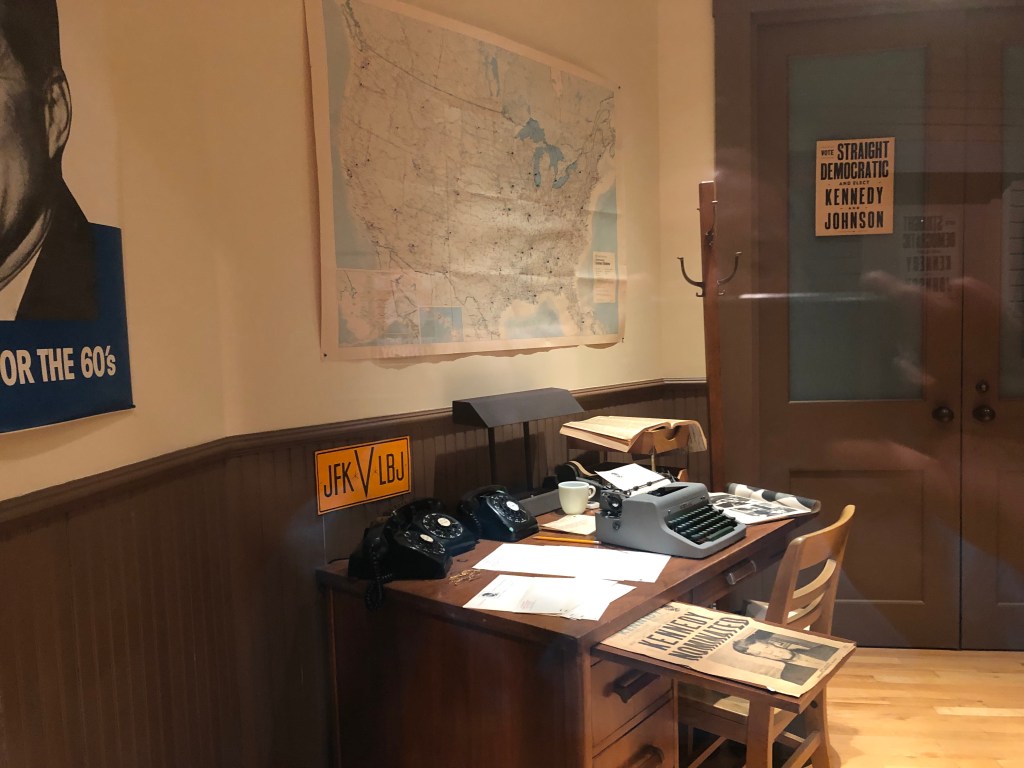
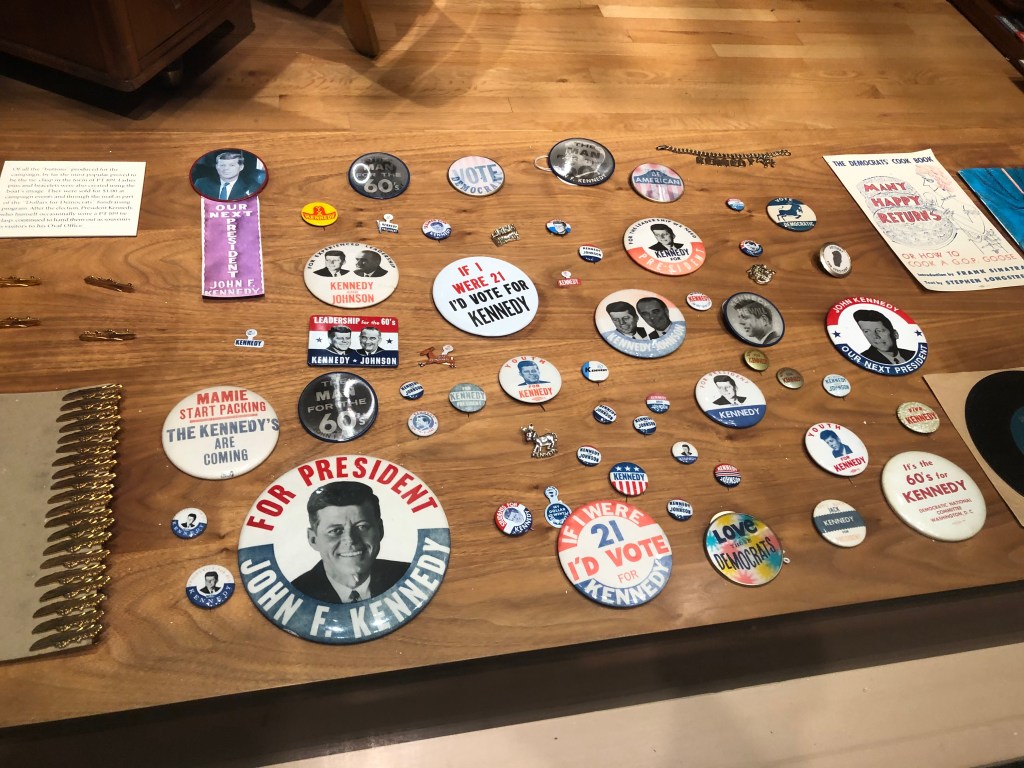
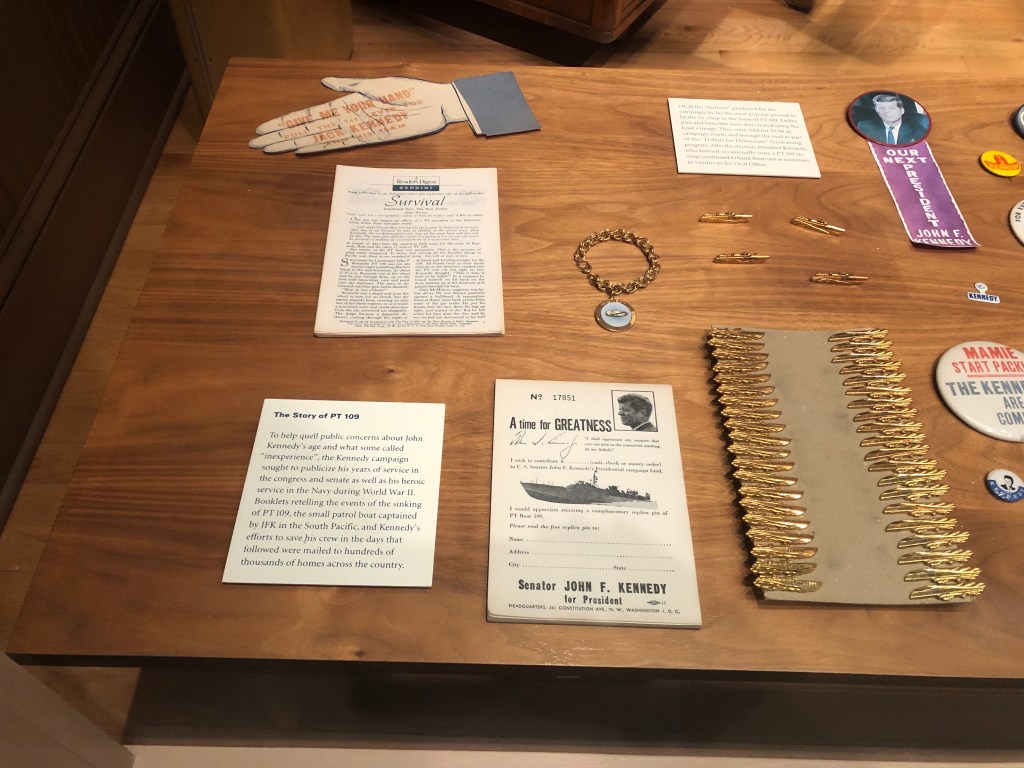
“The Story of PT 109” is an account of Kennedy’s service aboard the PT (Patrol Torpedo) Boat 109 in the Solomon Islands during World War II.
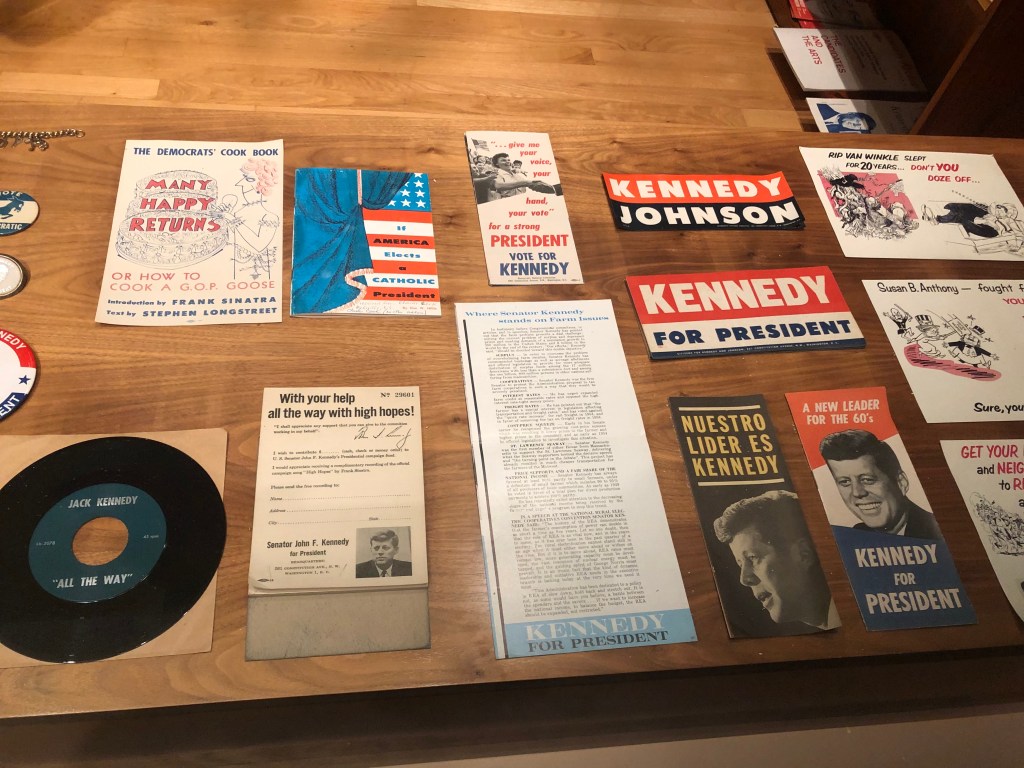
The campaign literature laid out Kennedy’s vision of a “New Frontier” for America.
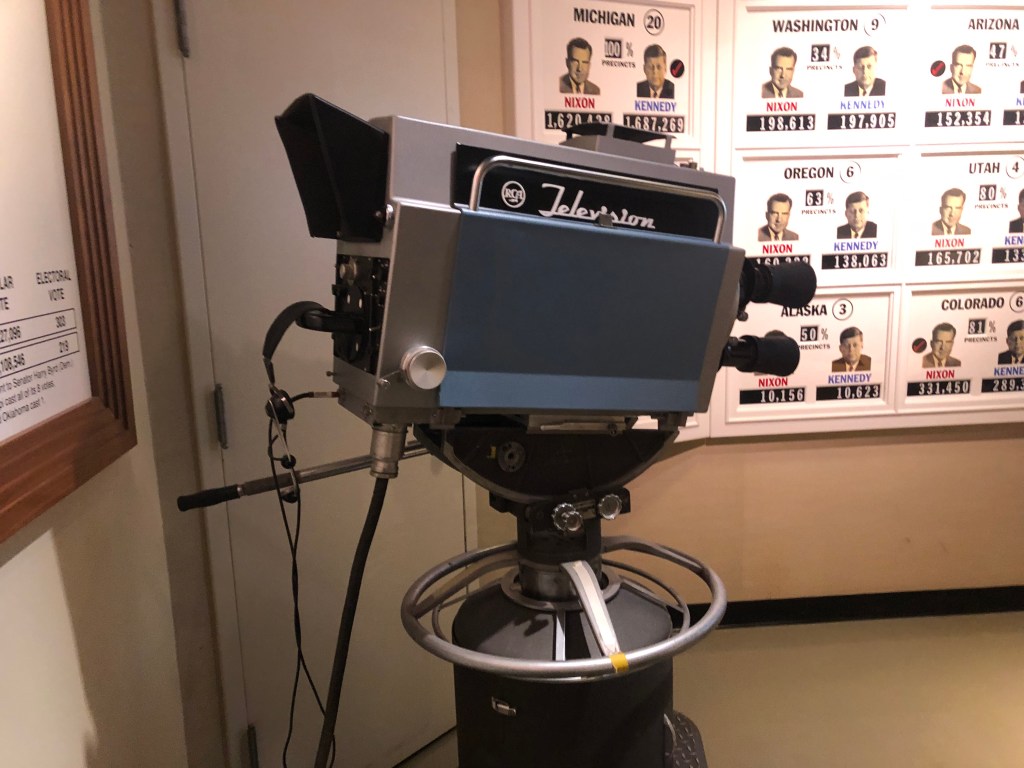
Another exhibit is a recreation of the Chicago TV Station WBBM studio with an original camera and audio panel from the first televised Presidential debate between Kennedy and Nixon.
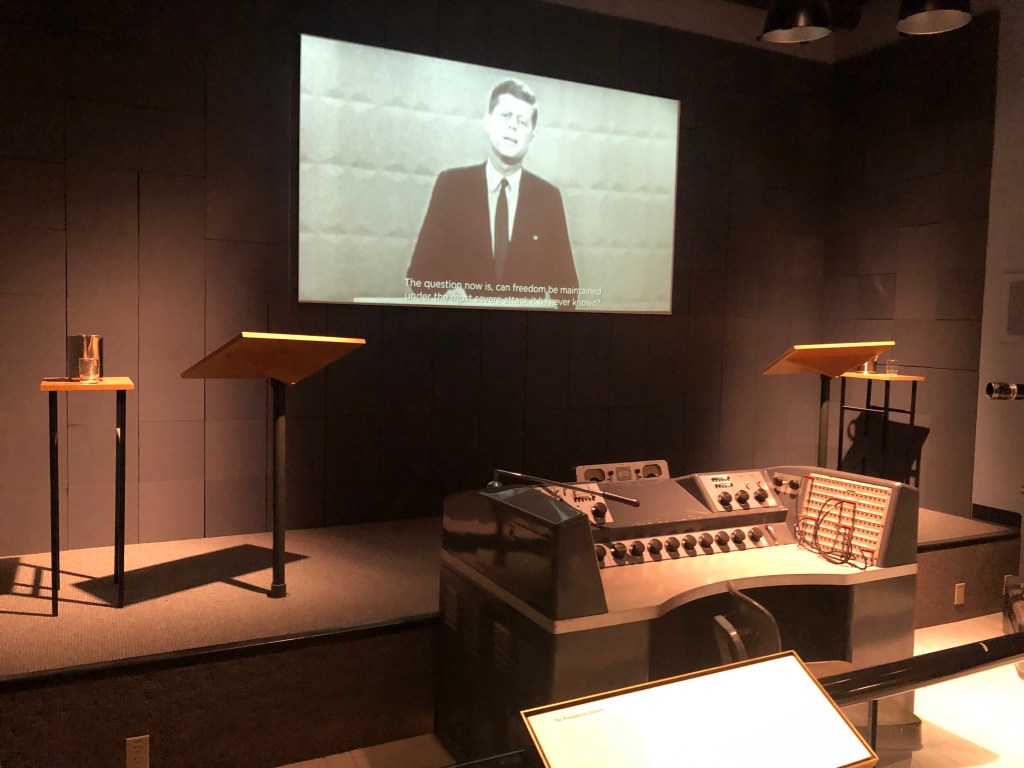
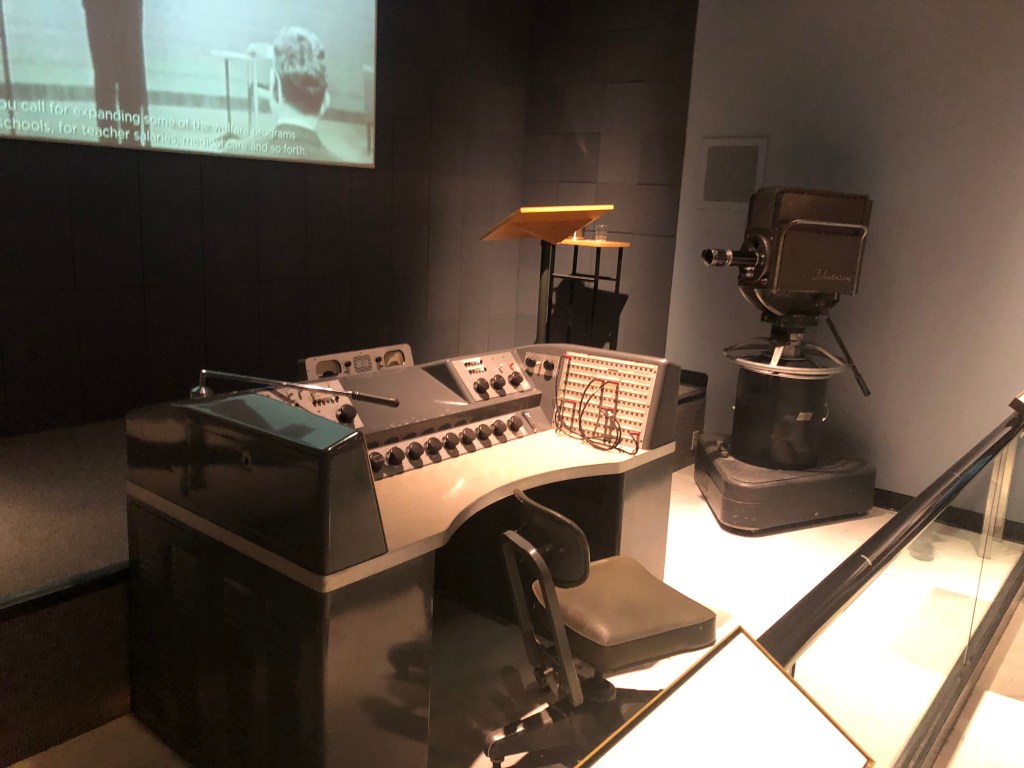
And they have a recreation of the network newsrooms on the eve of the election.
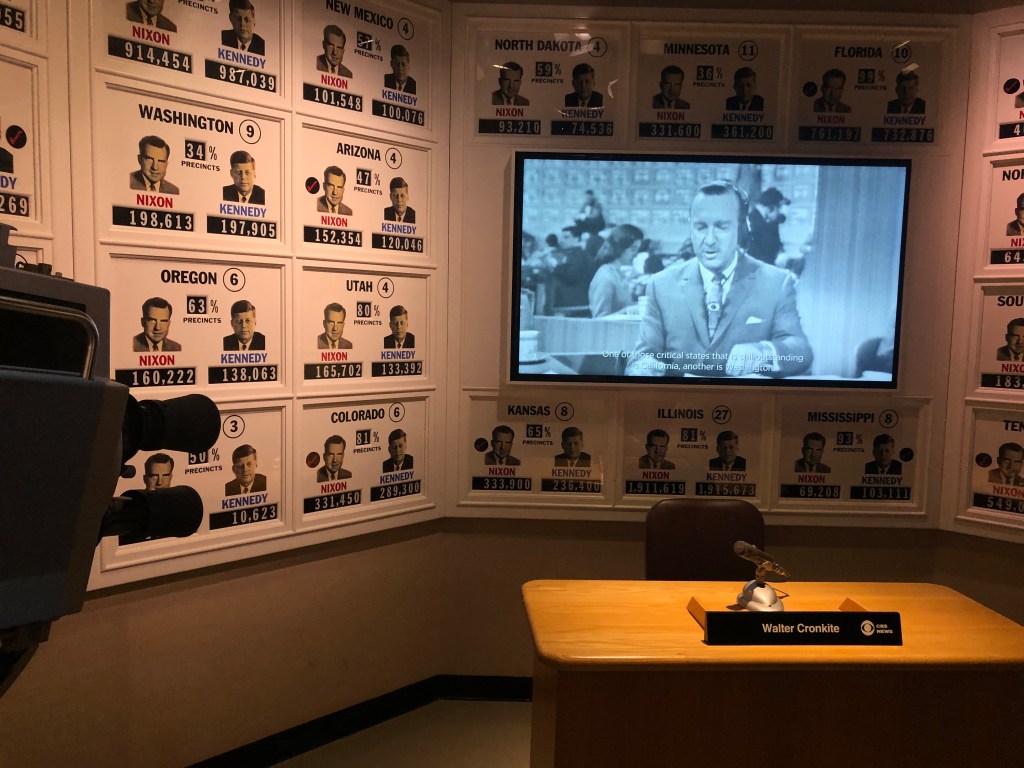
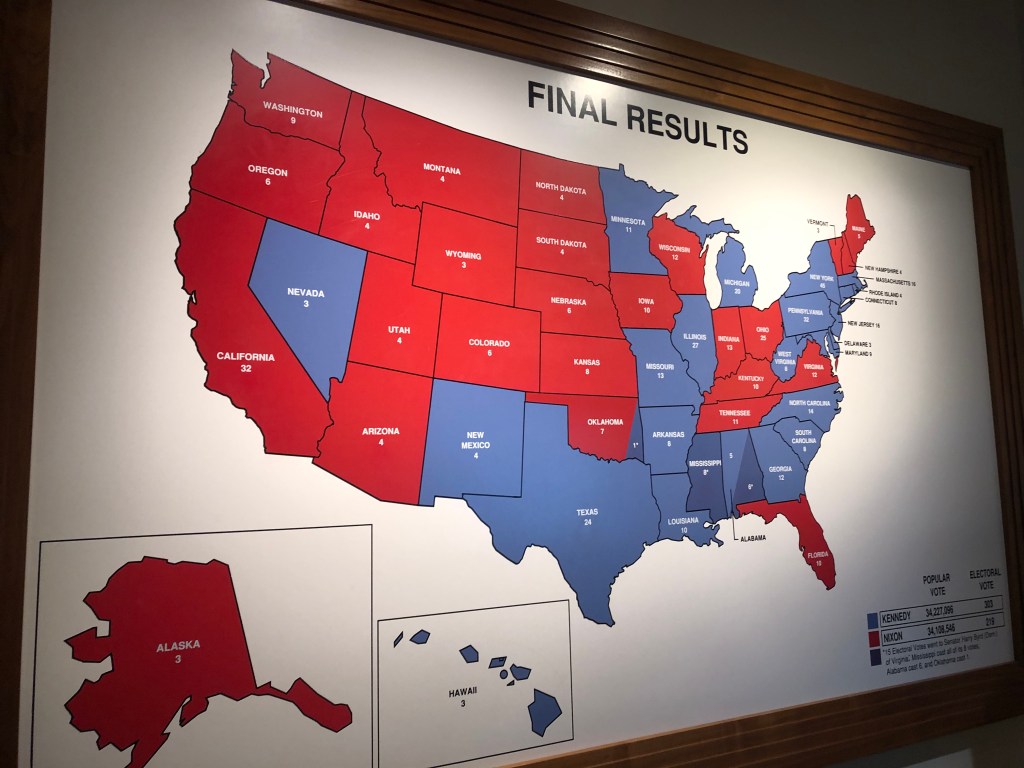
I watched part of Kennedy’s Inaugural Address, in which he urged Americans to take part in their greater destiny. Among the many quote worthy phrases:
And so, my fellow Americans: ask not what your country can do for you—ask what you can do for your country.
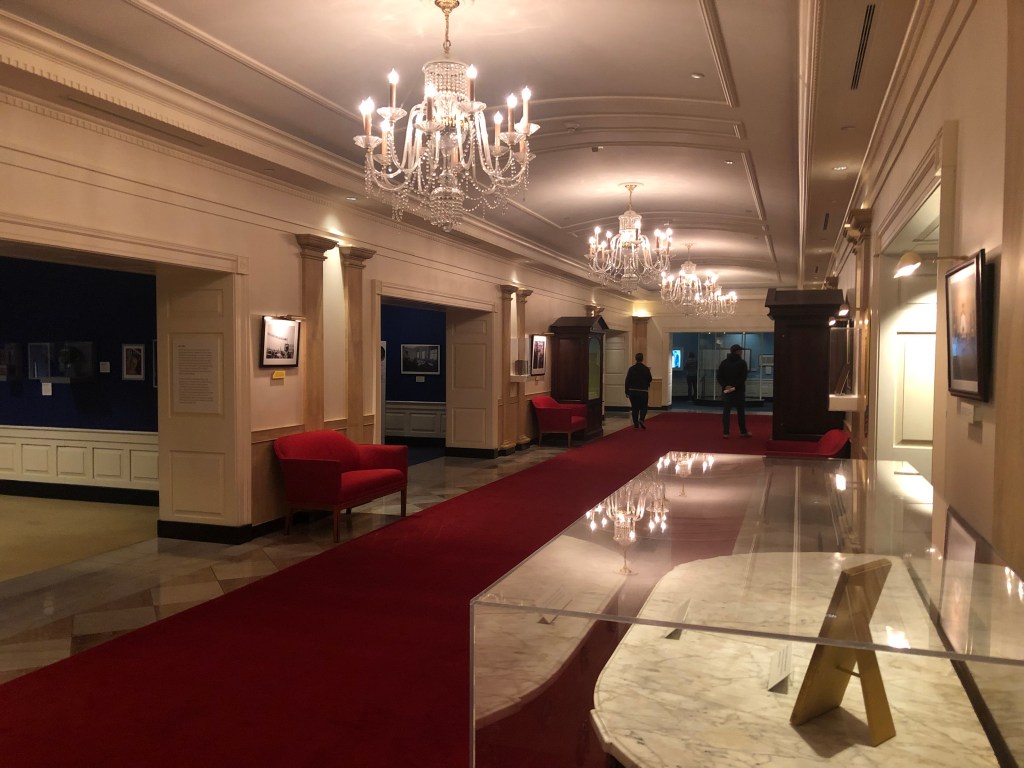
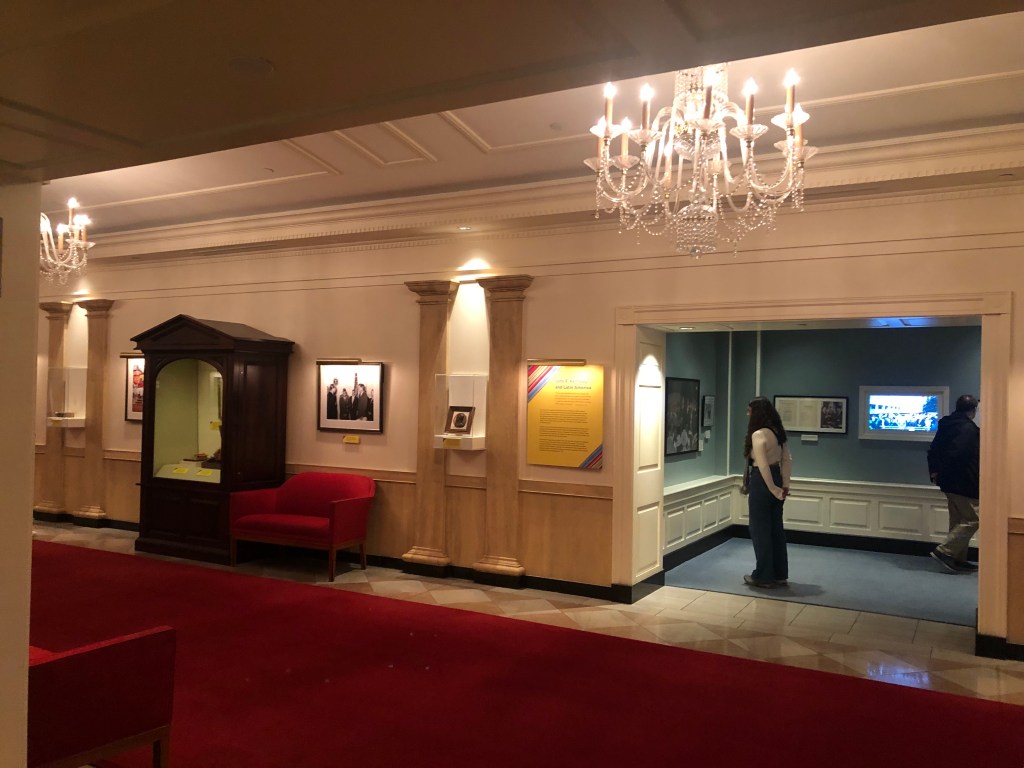
Moving to the next section, you amazingly enter the White House itself, with incredibly accurate corridors.
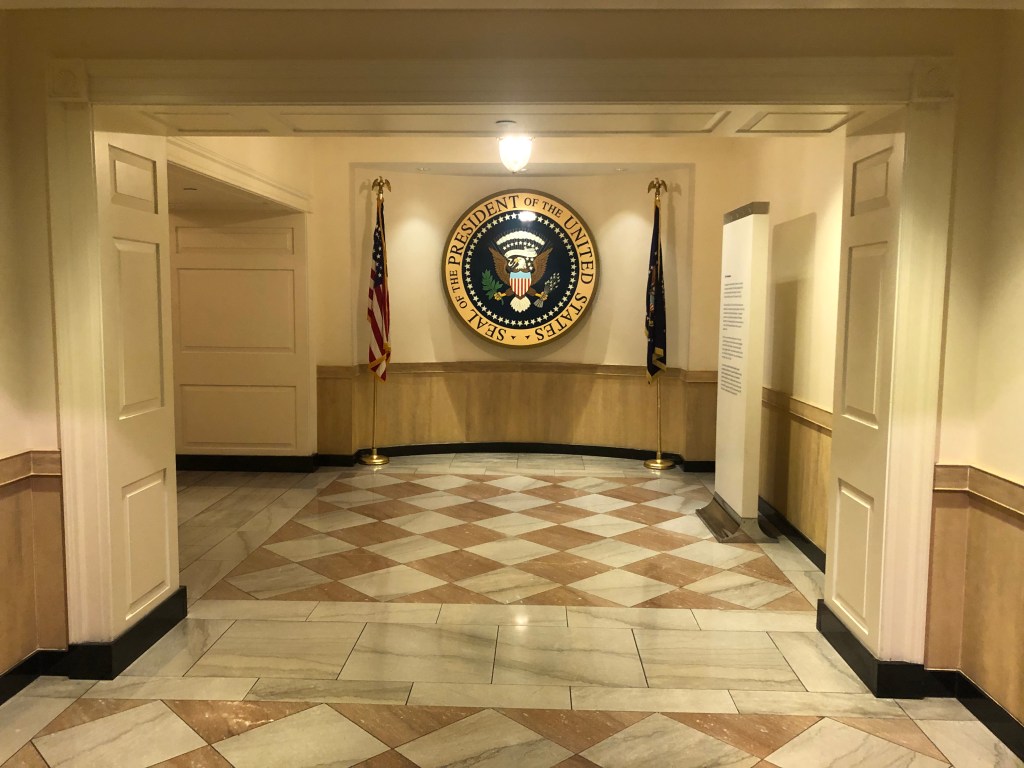

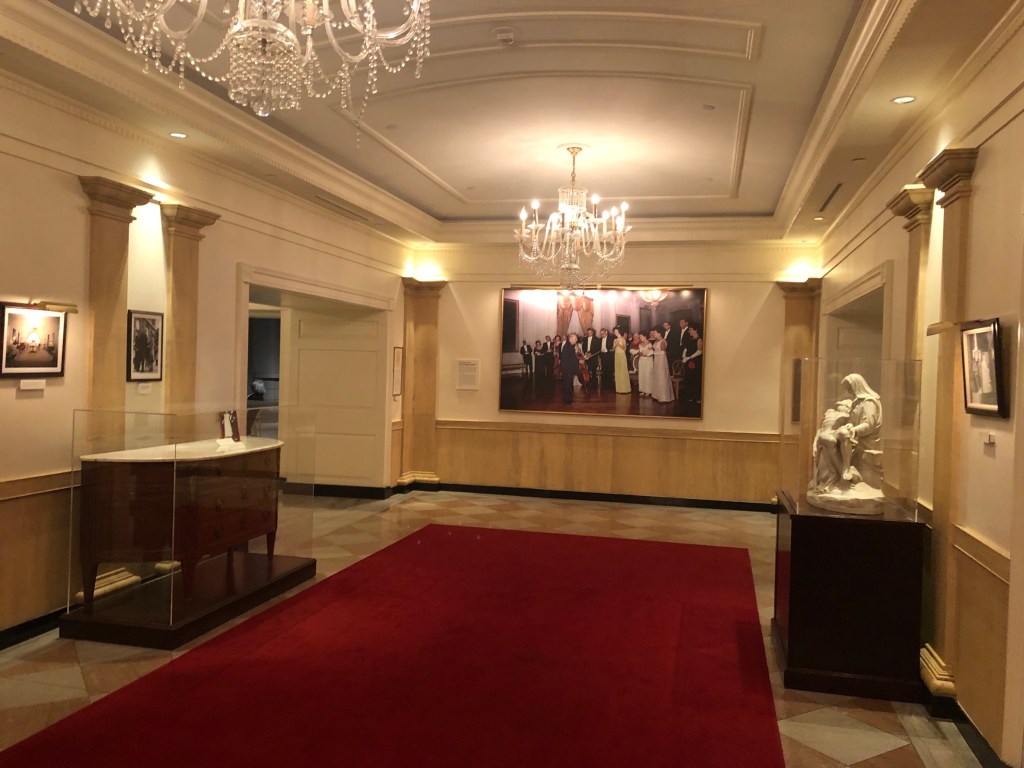
On display are some of the ceremonial gifts presented to the Kennedy White House, as well as pictures and documents from that era.
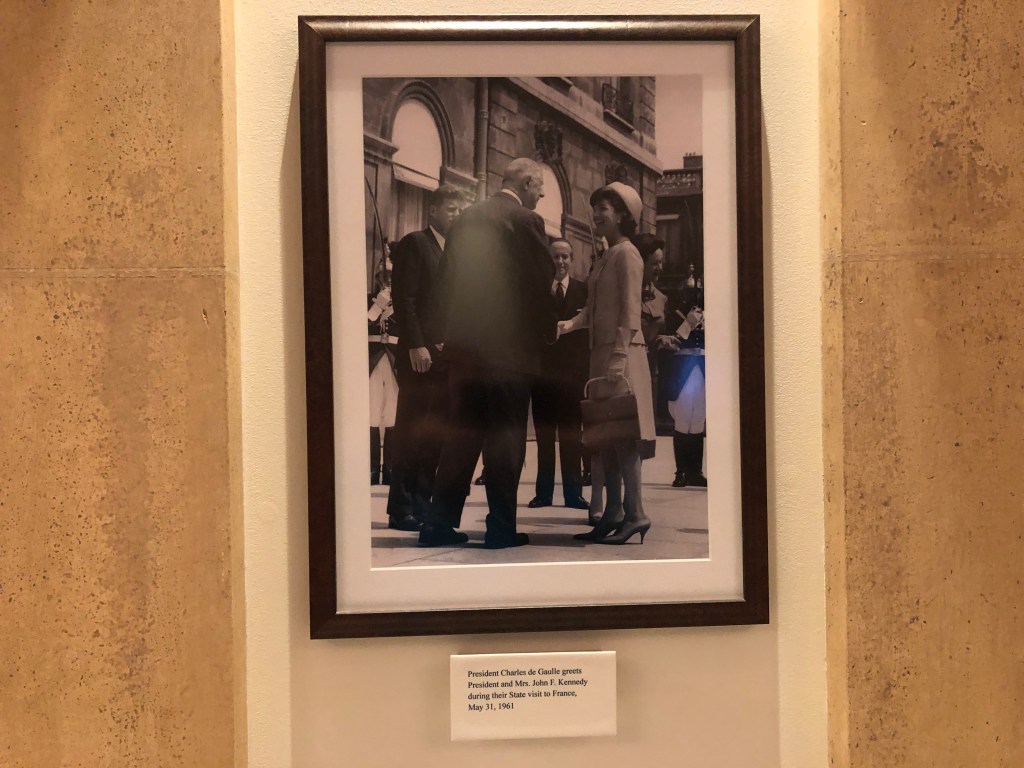
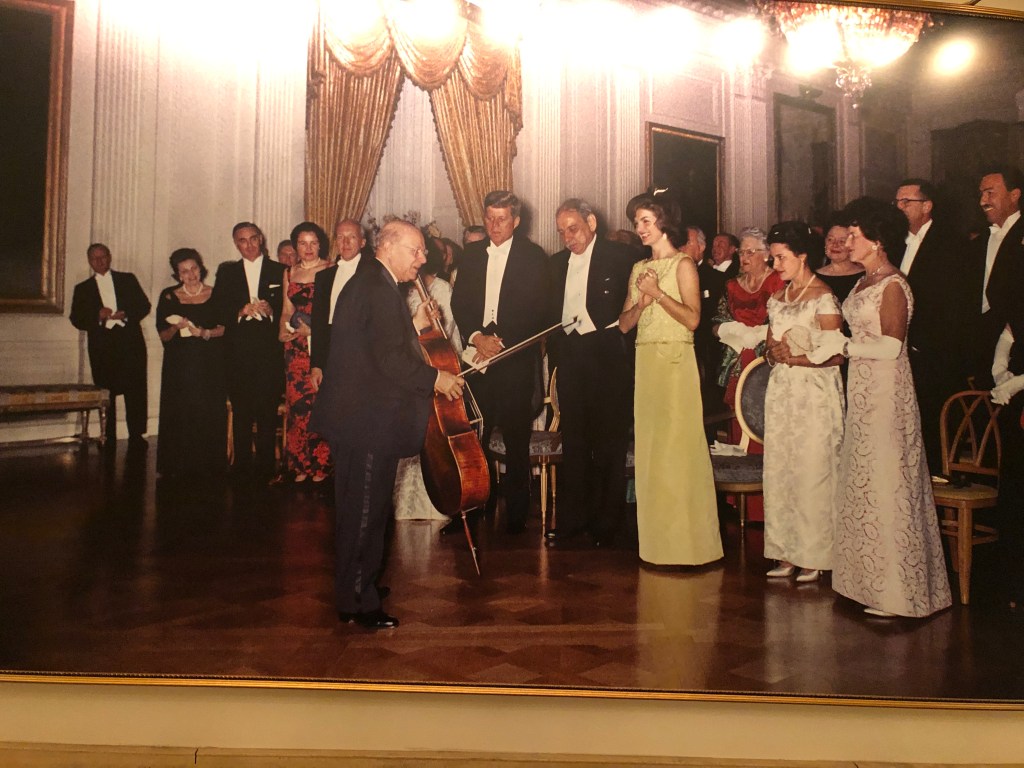
President Kennedy and First Lady Jackie with renowned cellist Pablo Casals in the East Wing of the White House.
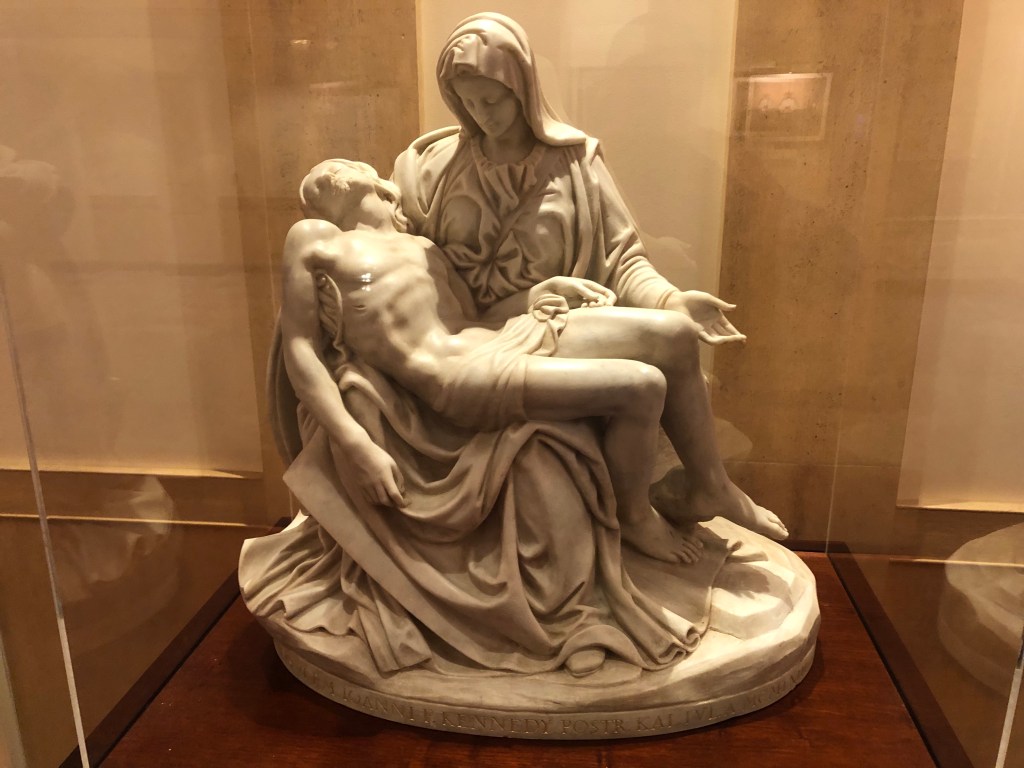
Among the many incredible items is a replica of Michelangelo’s Pieta presented to Kennedy by Pope Paul VI.
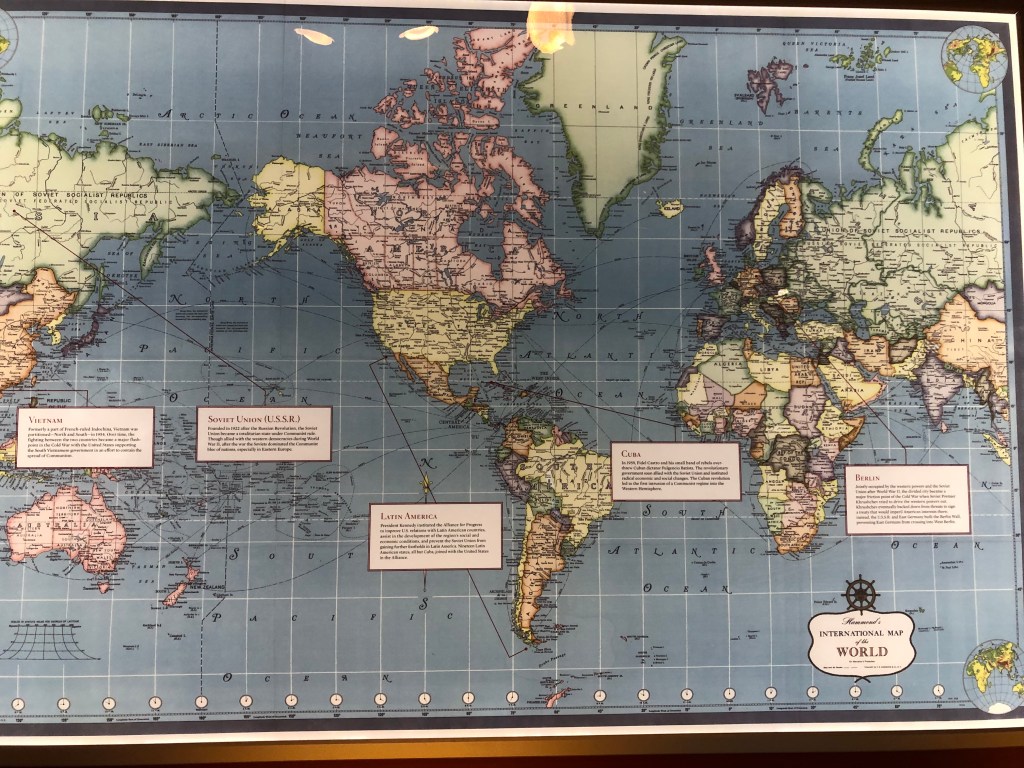
Of course, the Kennedy presidency took place during the height of the Cold War, with crisis hot spots in Vietnam, Cuba, Latin America, Berlin, and of course the U.S.S.R. itself.
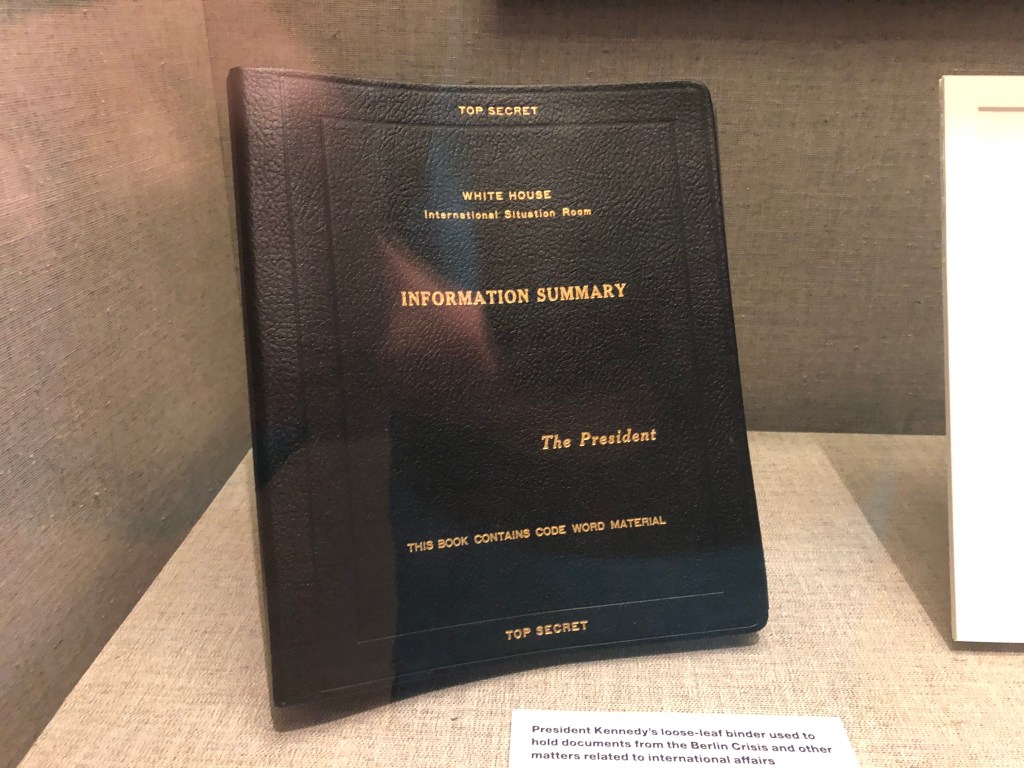
On display is the actual binder that President Kennedy used for his intelligence Information Summaries.
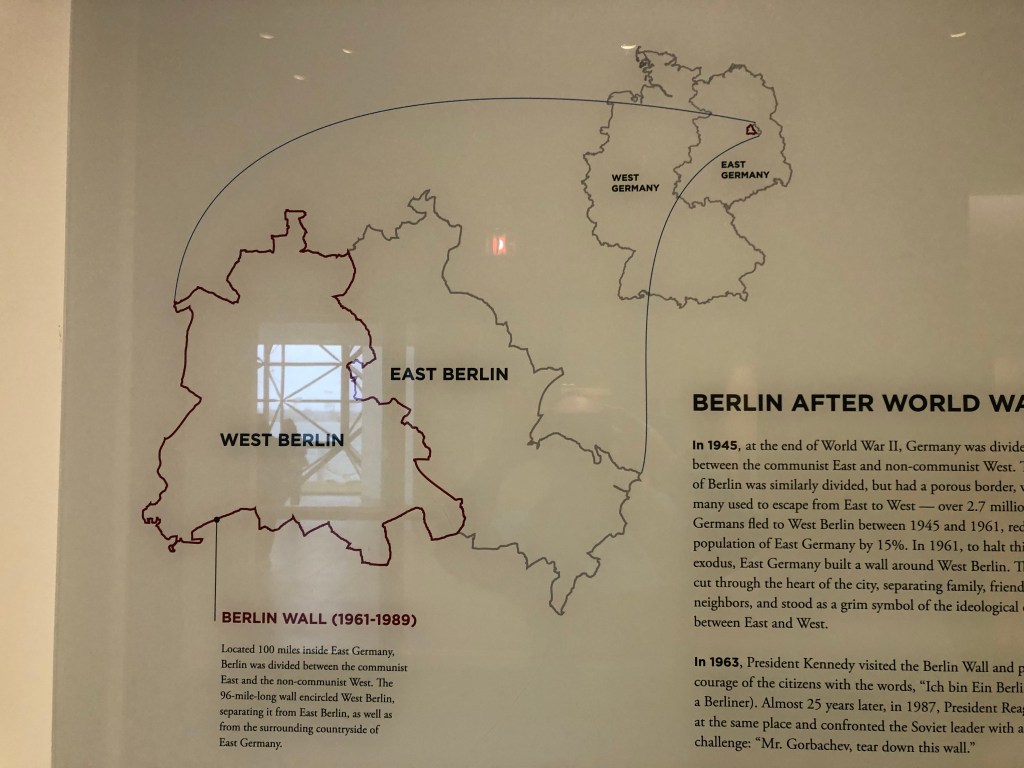
The Berlin Wall was constructed in 1961, a potent symbol of the divide between East and West.
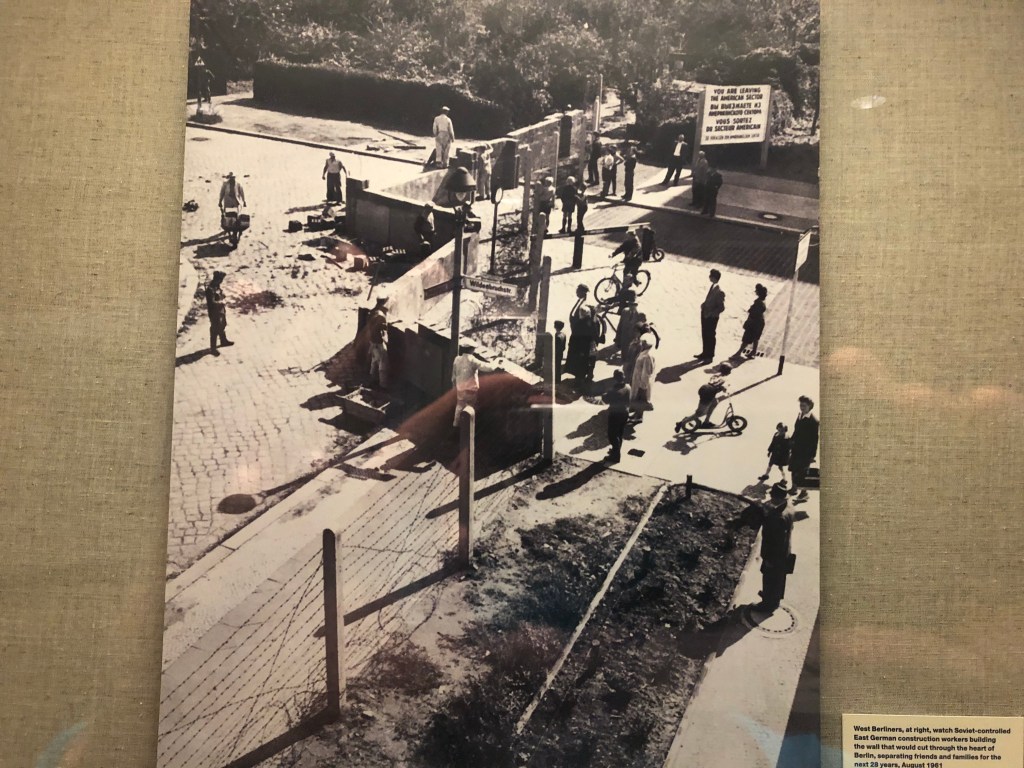
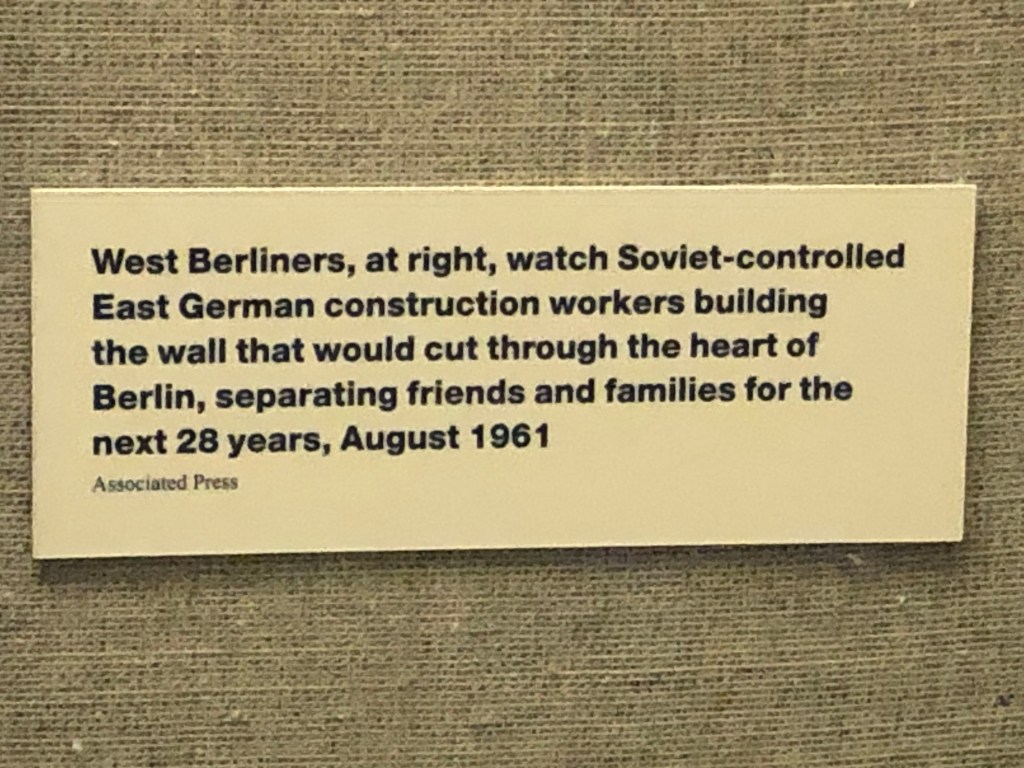
In the JFK Meets the Press section is a good overview of when the president interacted with the press.

Back in those days we had a president who was trying to reduce U.S. tariffs with the rest of the world with the General Agreement on Tariffs and Trade (GATT) act.
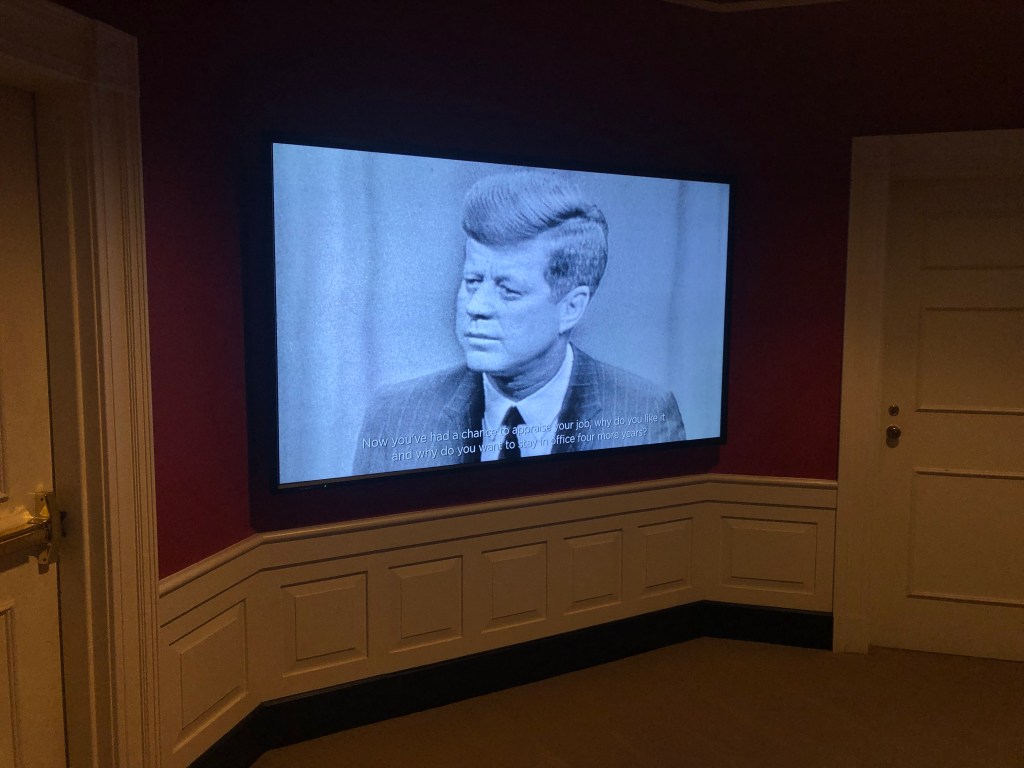
JFK in his many televised press conferences.
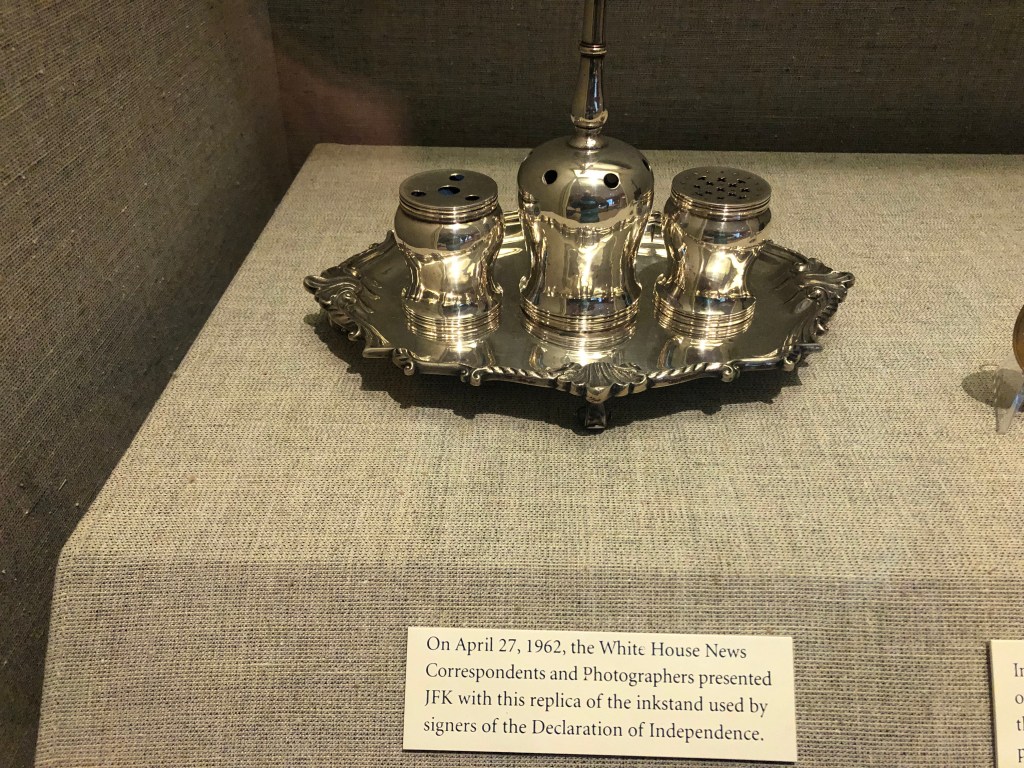
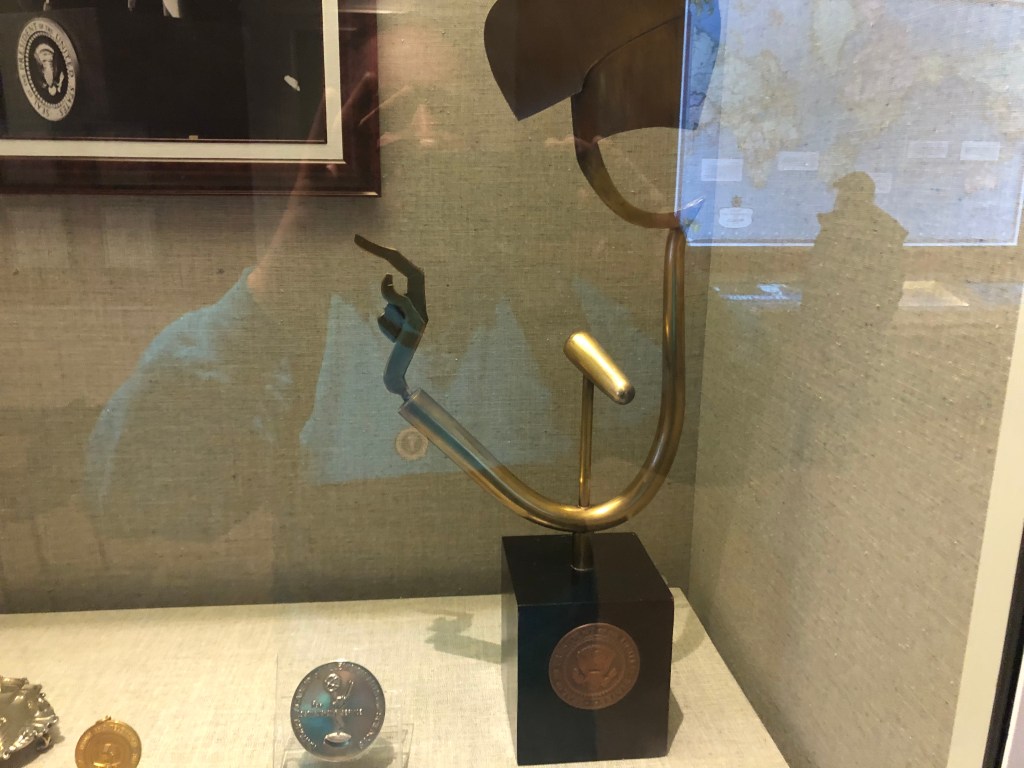
Abstract sculpture of JFK facing press questions created by Herman Perlman.
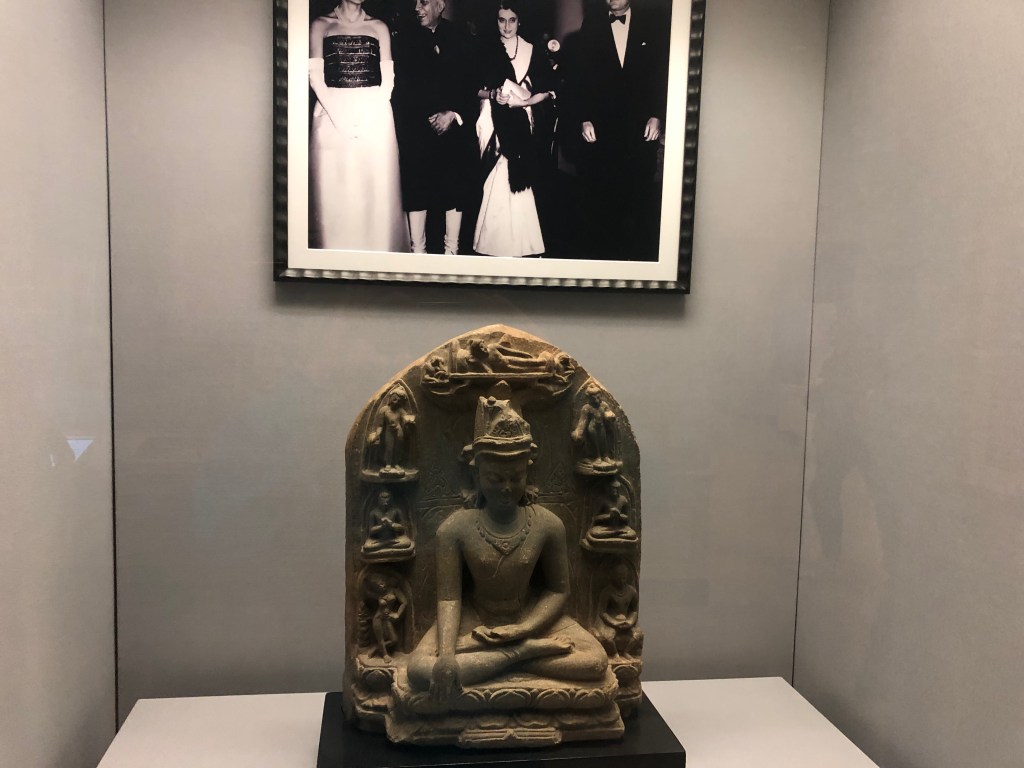
Buddha statue presented to the Kennedys from Indian Prime Minister Jawaharlal Nehru.
Actually I have to admit that the JFK Library and Museum, although something I had wanted to see in my museum list, was actually always on my back burner, so to speak. But actually having now visited it, as you can see from my photos, I’m really glad I did and it was so much better than I was expecting, but of course it is a presidential library! 😃
The dawn of space age is highlighted in the Lift Off! The U.S. Space Program.
… I believe that this nation should commit itself to achieving the goal, before this decade is out, of landing a man on the Moon and returning him safely to the Earth. No single space project in this period will be more impressive to mankind, or more important in the long-range exploration of space; and none will be so difficult or expensive to accomplish.
John F. Kennedy, May 25, 1961
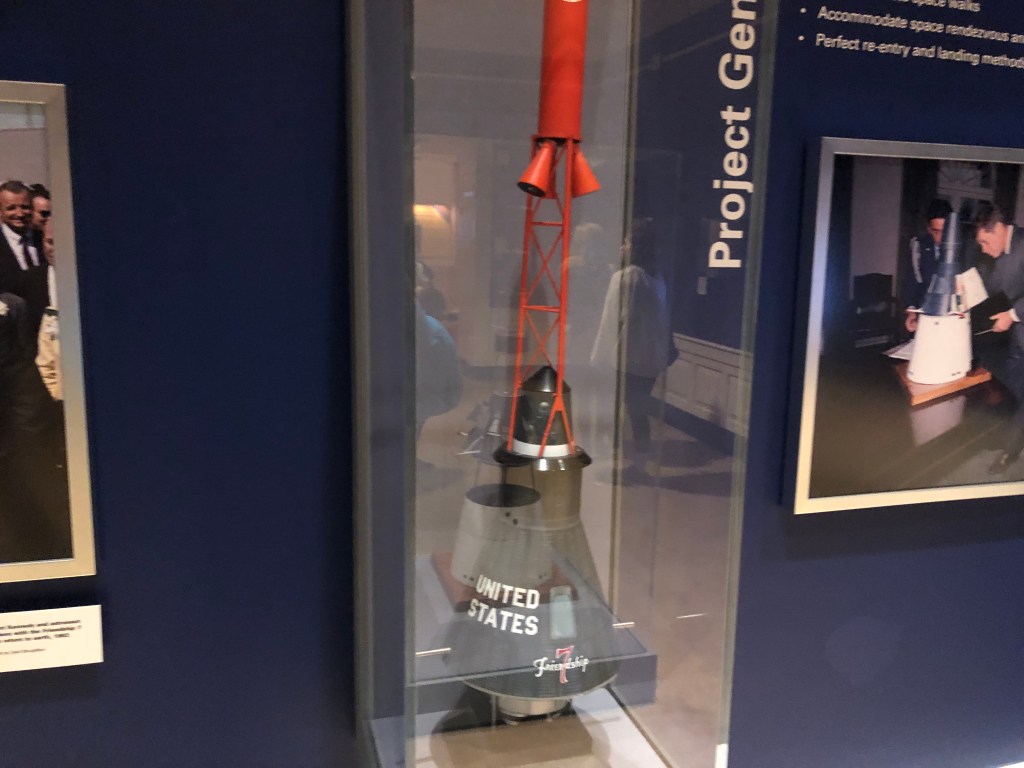
A replica model of the Friendship 7 Mercury capsule that John Glen orbited the Earth with.
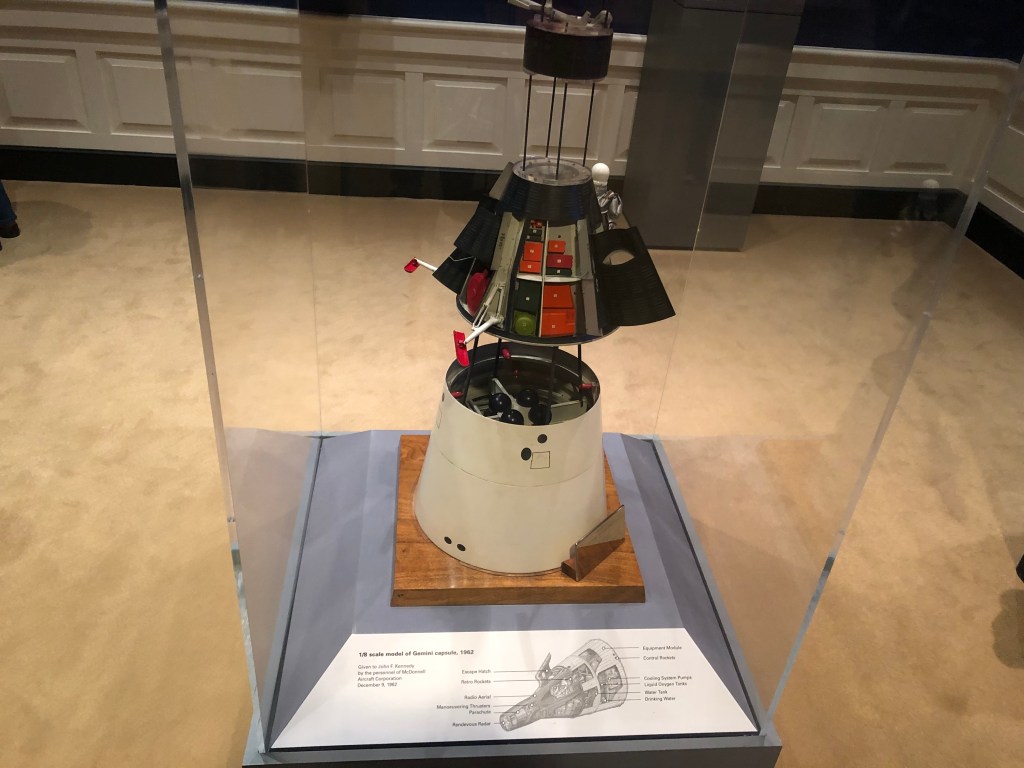
A model replica of a project Gemini capsule.

A model of the Apollo Command Module.

It was Kennedy’s leadership during his time in office that set the wheels in motion for the Apollo program to land astronauts on the Moon. And yes, it was the threat of the Cold War that really drove the impetus of this endeavor. The scientific projects were wedded to this political goal. And it wasn’t until the last Apollo mission, Apollo 17 in 1972, that there was the inclusion of a geologist, Harrison Schmidt, on the team.
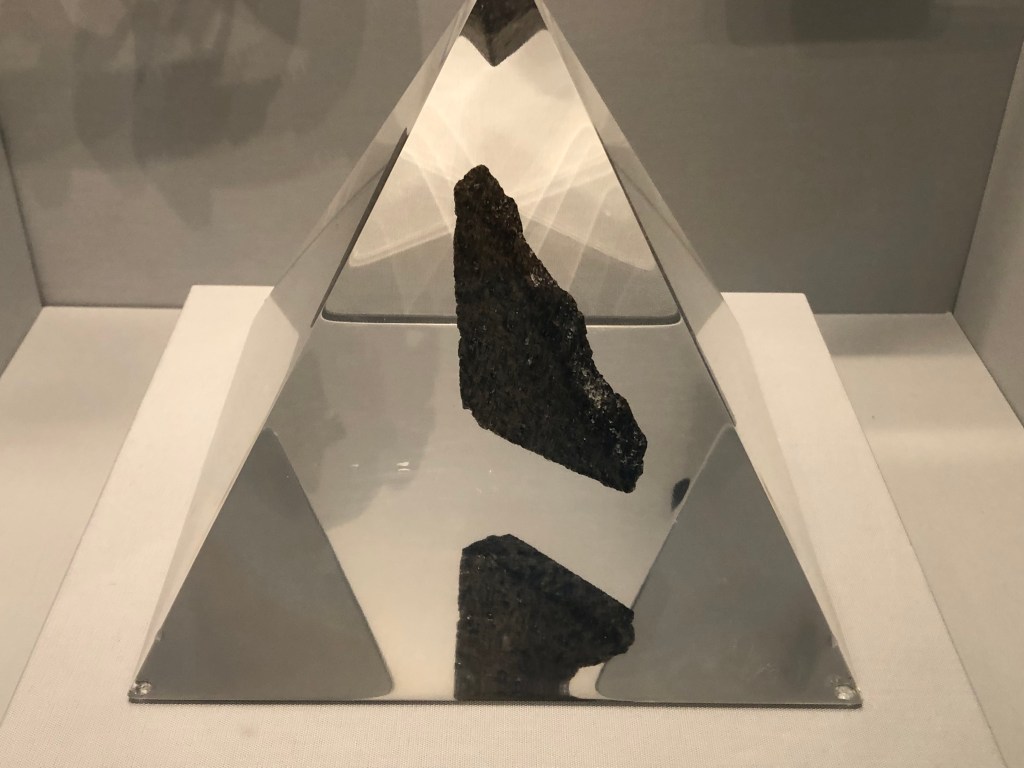
A piece of Moon rock brought back from the Apollo 15 mission in 1971. It was determined to be a piece of mare basalt, that is a piece of igneous rock that was formed during the immense lava flows on the Moon that created the Moon’s mare, or “seas”.
Next I saw The Oval Office exhibit, which is a recreation of Kennedy’s White House Oval Office complete with a replica of his HMS Resolute desk.

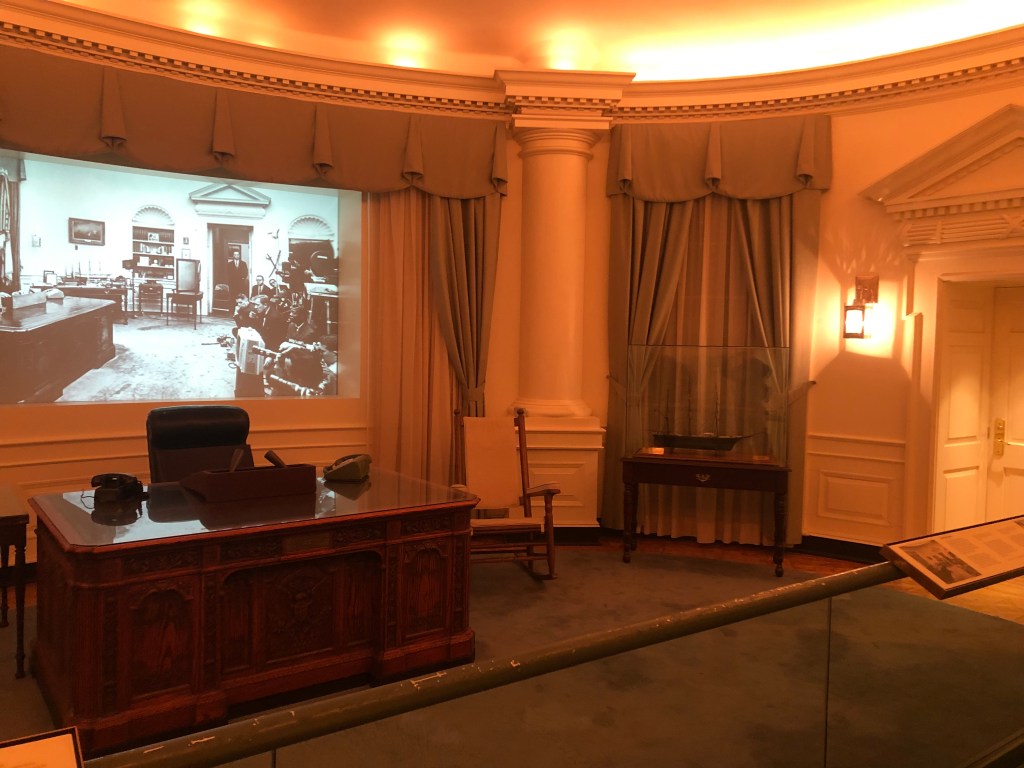
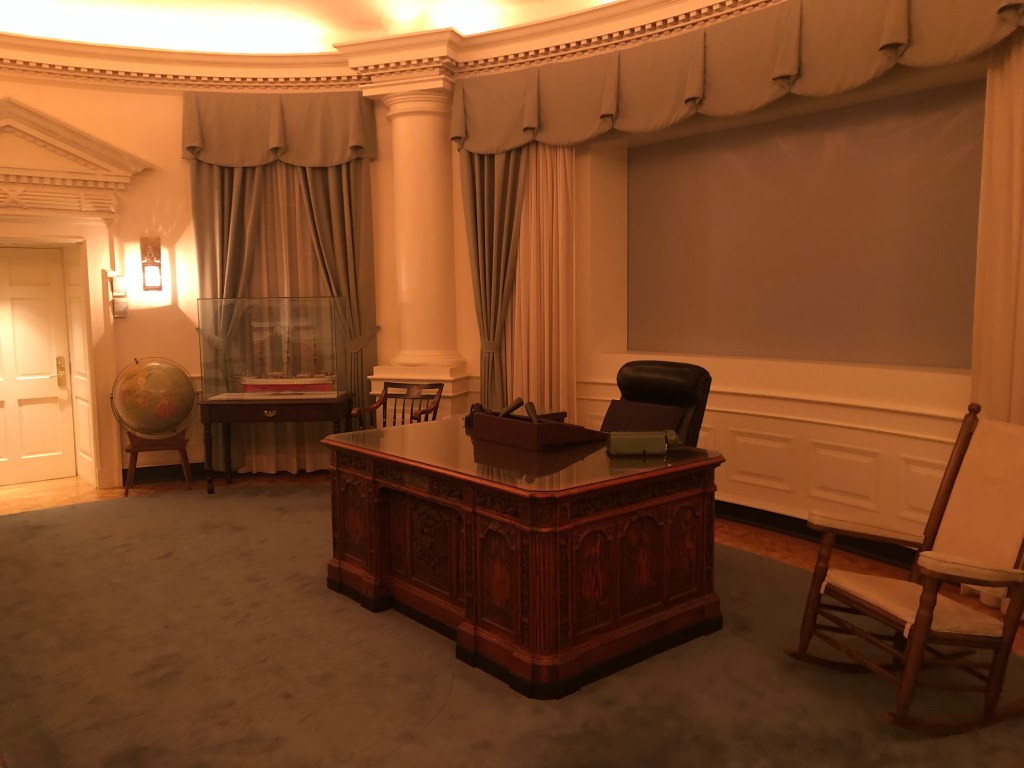
This is insanely cool, at least to someone like me who has never been invited to The White House. Gee, I wonder why?😂

The teletype “Hotline” machine used for communication between the President and the Kremlin, crucial for events like the Cuban Missile Crisis and the Berlin Wall crises.

On October 7, 1963, President Kennedy signed the Limited Test Ban Treaty that banned the nuclear weapon testing in the atmosphere, underwater, and outer space but allowed underground testing to continue.
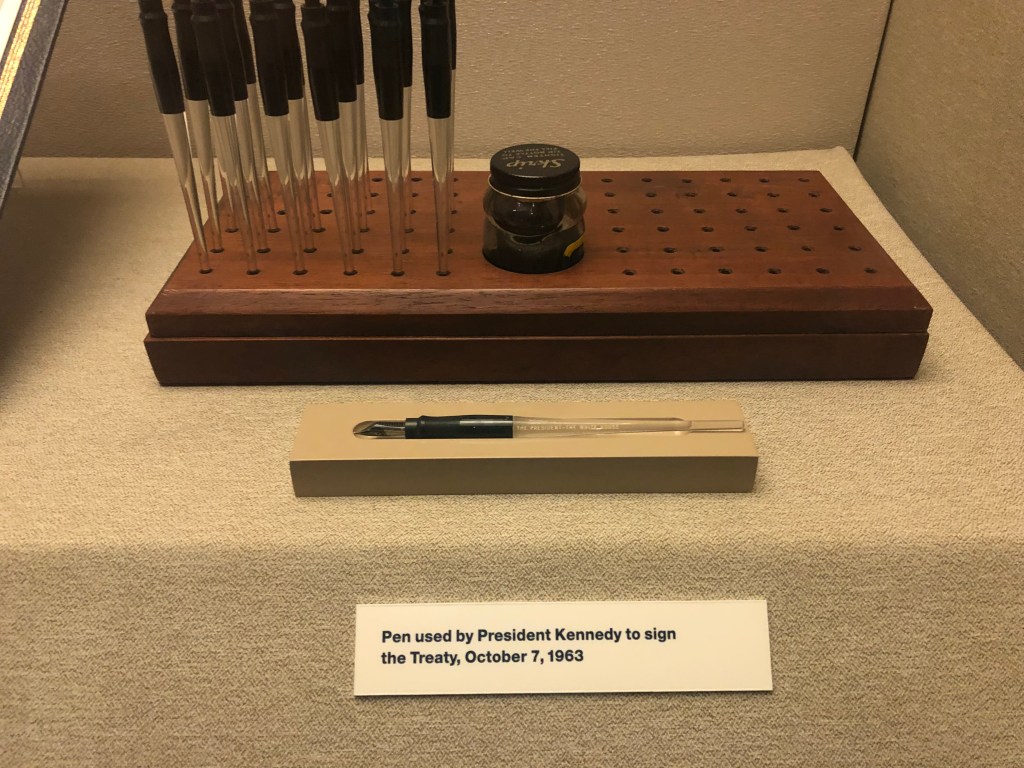
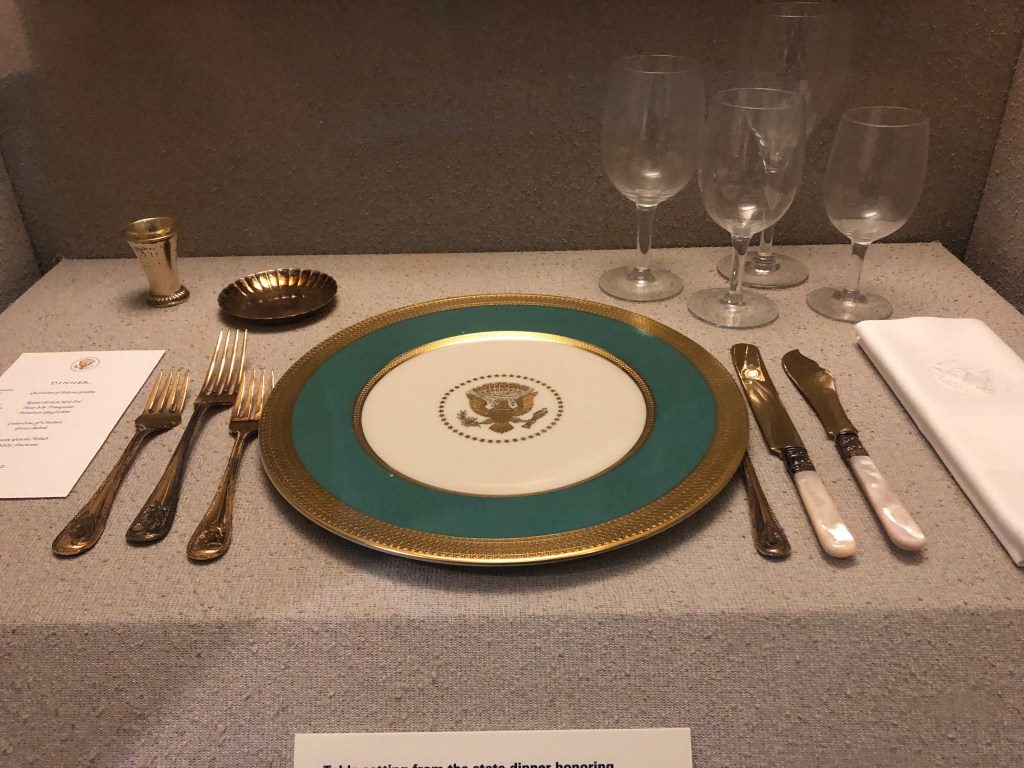
Then in The Ceremonial Room exhibit, I marveled at items from the various events and receptions from the Kennedy White House in which the president and First Lady Jacqueline entertained leaders and dignitaries from all over the world.
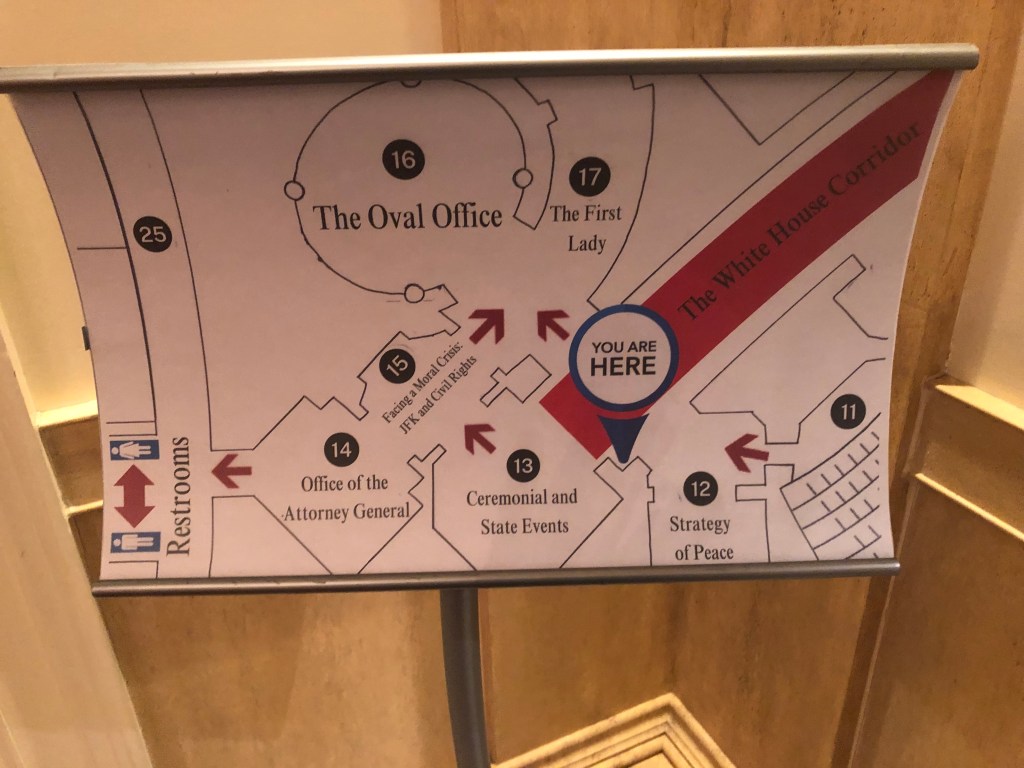
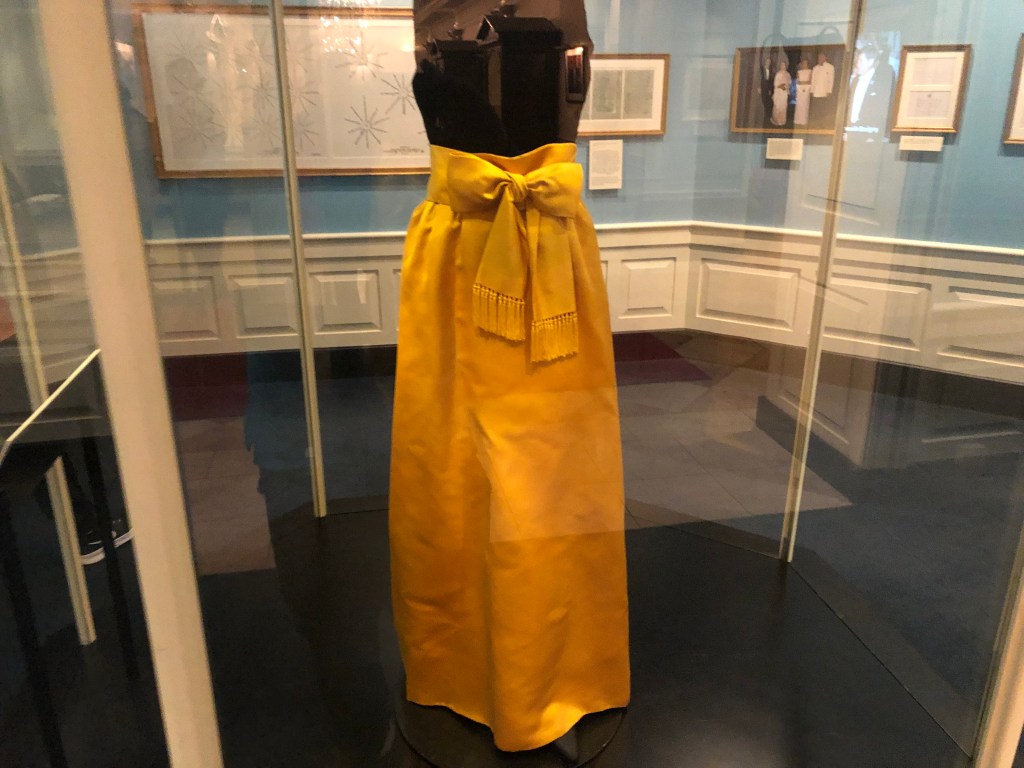
One such event was the reception of the president of the African nation of Ivory Coast, President Félix Houphouët-Boigny and his wife.
On display was the fabulous evening gown worn by the first lady.
A table setting from the dinner.
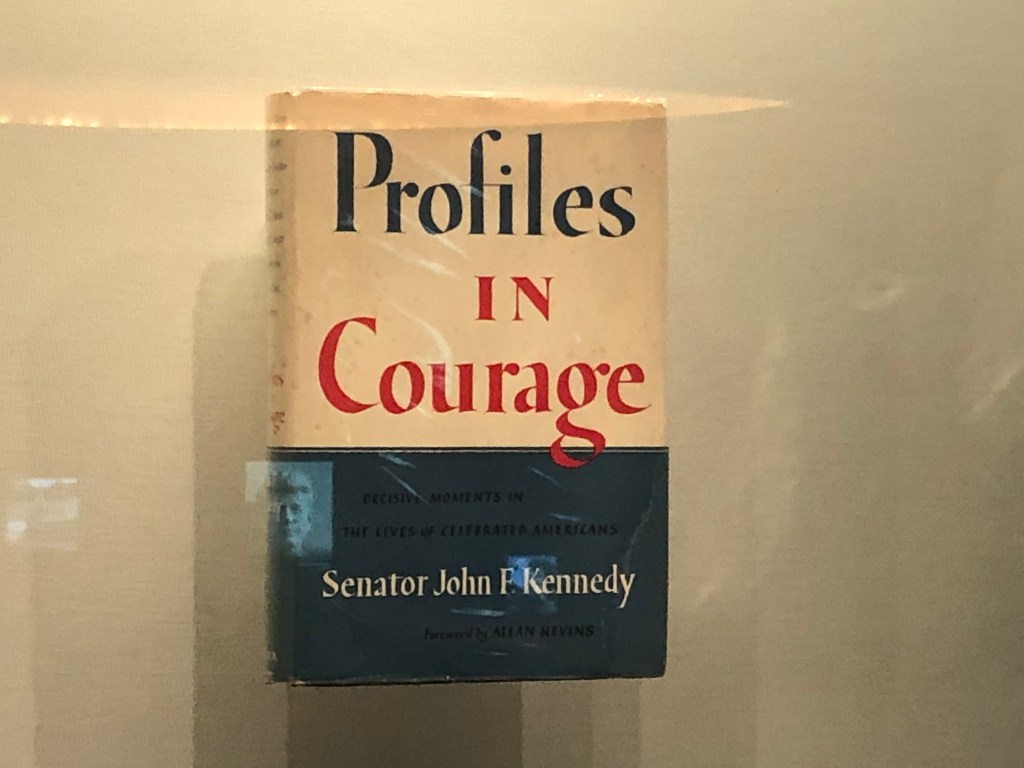
A copy of JFK’s book Profiles in Courage, chronicling the biographies of eight U.S. senators, written in 1956 when he was a senator. It has come to light that his speech writer Ted Sorensen also helped in the writing of this book.
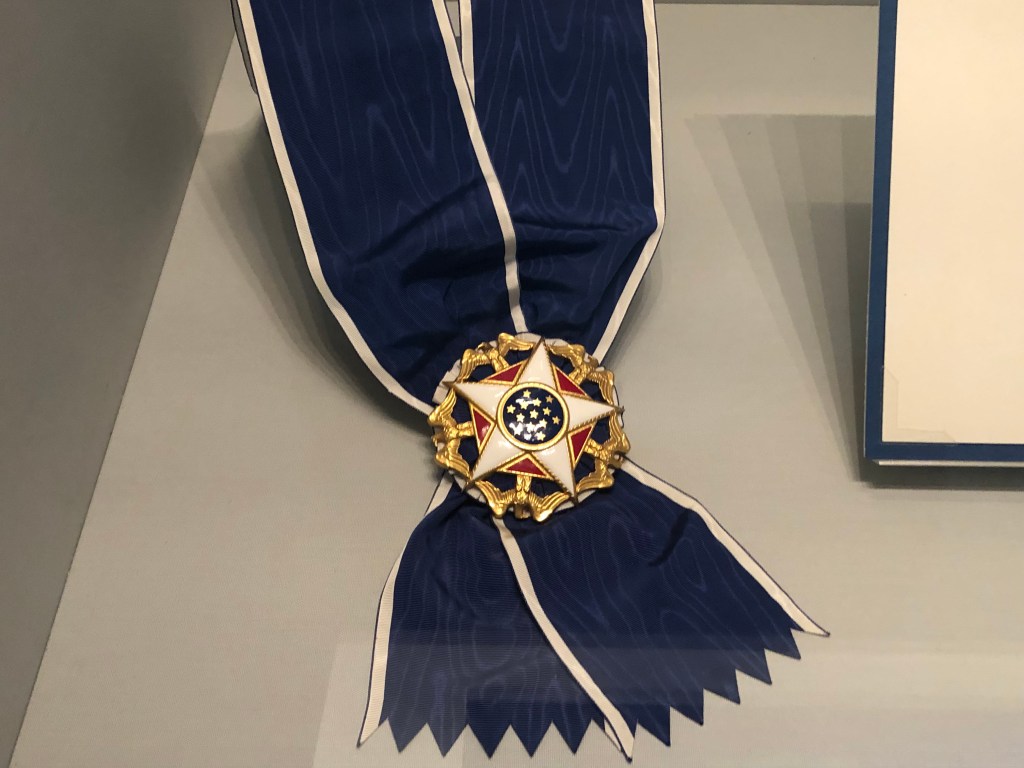
The Presidential Medal of Freedom.

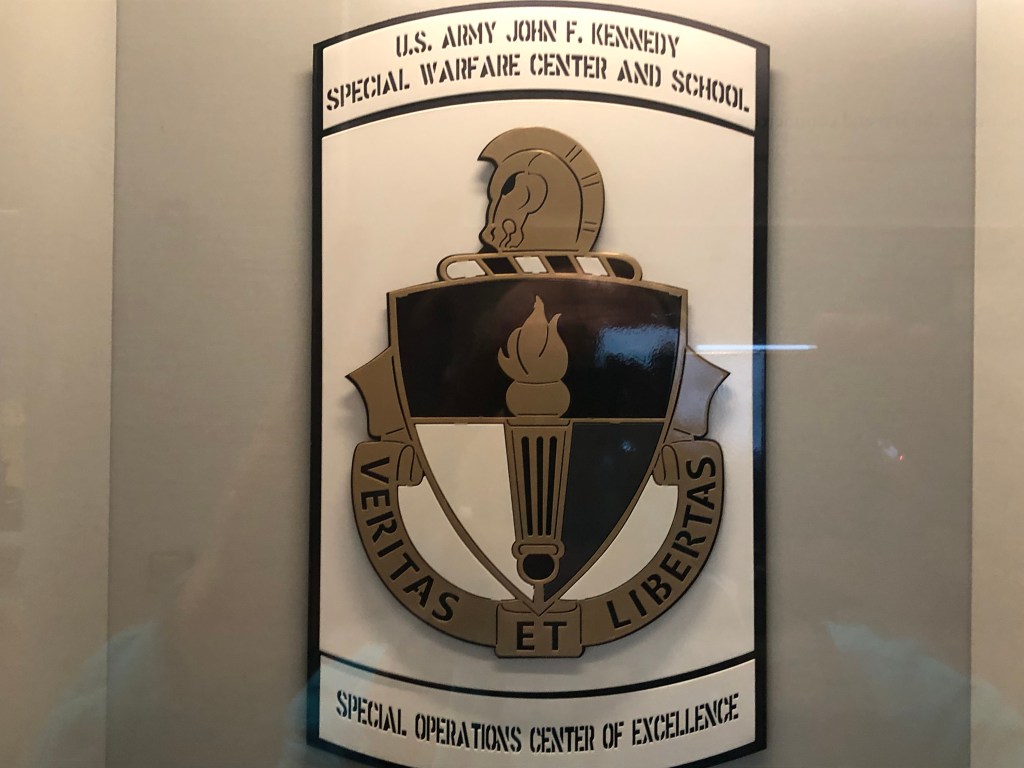
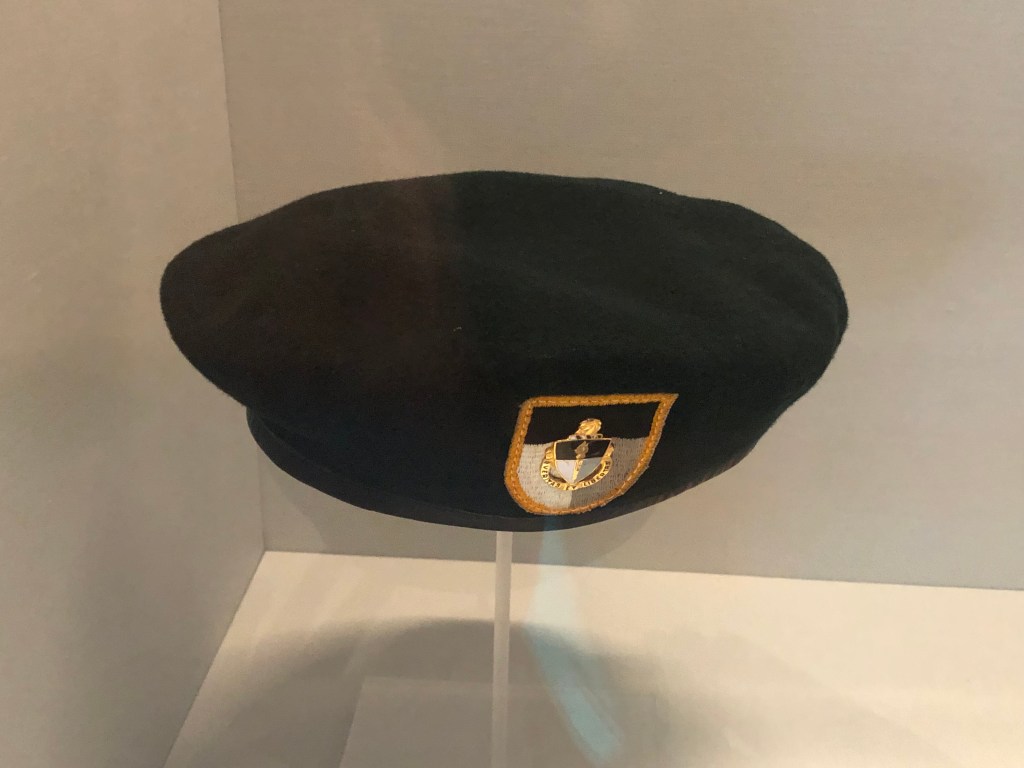
There is also a commemoration of the link between President Kennedy and the Army Special Forces. According to the U.S. Army website:
Following a visit to the Army’s Special Warfare Center at Fort Bragg, North Carolina in October 1961, the president made his vision for a dedicated counter-insurgency force clear in a letter penned to the schools commander, then Brig. Gen. William Yarborough.
He later showed his unwavering support for these “unconventional warriors” by authorizing Special Forces Soldiers to wear a distinctive uniform item as their official headgear. From then on these unique Soldiers would be known as “The Green Berets”.
In April of 1962, the President penned an official White House Memorandum stating, “The Green Beret is again becoming a symbol of excellence, a badge of courage, a mark of distinction in the fight for freedom.” This official document forever joined the legacy of Kennedy with that of Army Special Forces.
Several months later the Green Berets would be called to serve the president as they stood guard over his coffin and participated in the Honor Guard at his funeral. Unaware of the impact it would make, Command Sergeant Major Francis J. Ruddy laid his own beret at Kennedy’s grave in the ultimate gesture of gratitude and respect.
That same beret is now on display at the John F. Kennedy Library as a memory to the president’s vision and to honor all Special Forces Soldiers who have served the Nation, especially those who sacrificed their lives.
There is a really informative exhibit about the Berlin Crisis and the creation of the Berlin Wall.
To symbolize the (supposed) end of the Cold War, there is an actual piece of the Berlin Wall on display, complete with German graffiti.
“Mr. Gorbachev, tear down this wall!”
President Ronald Reagan, June 1987 at the Brandenburg Gate in Berlin.
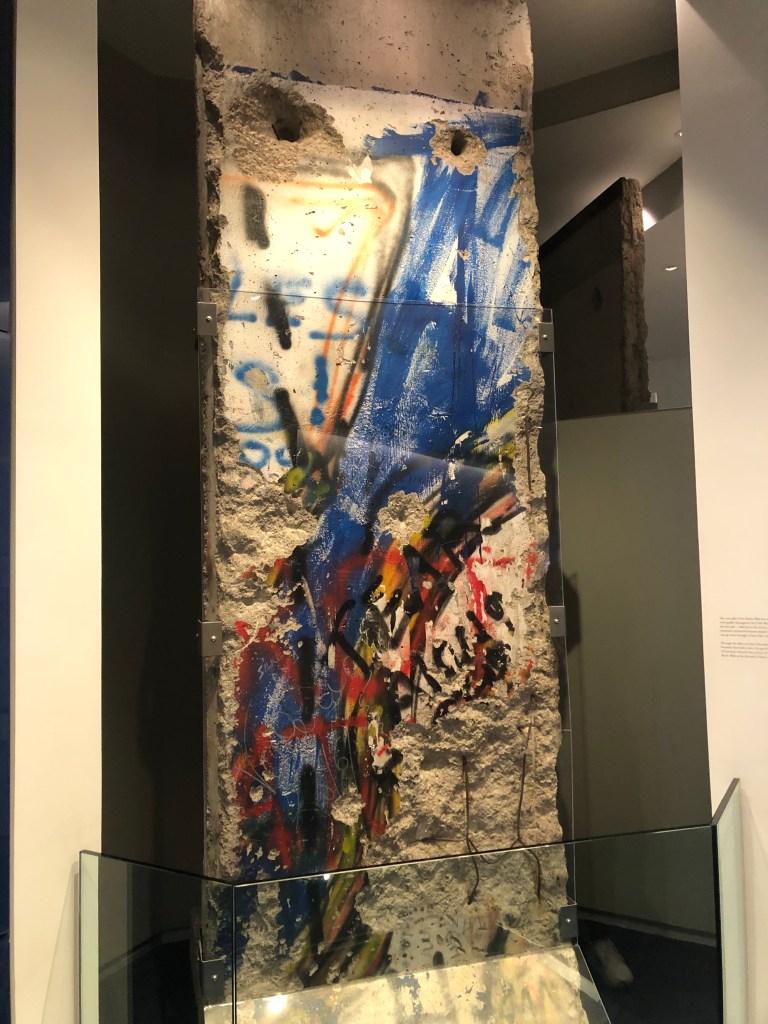
An actual piece of the Berlin wall on display at the museum.
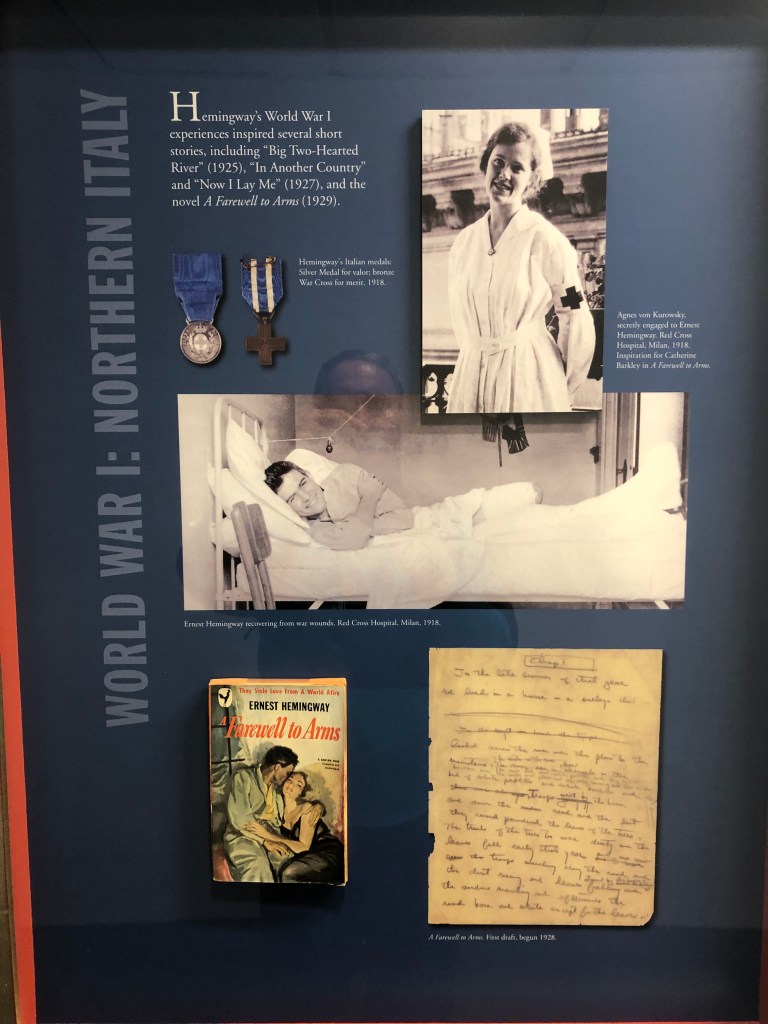
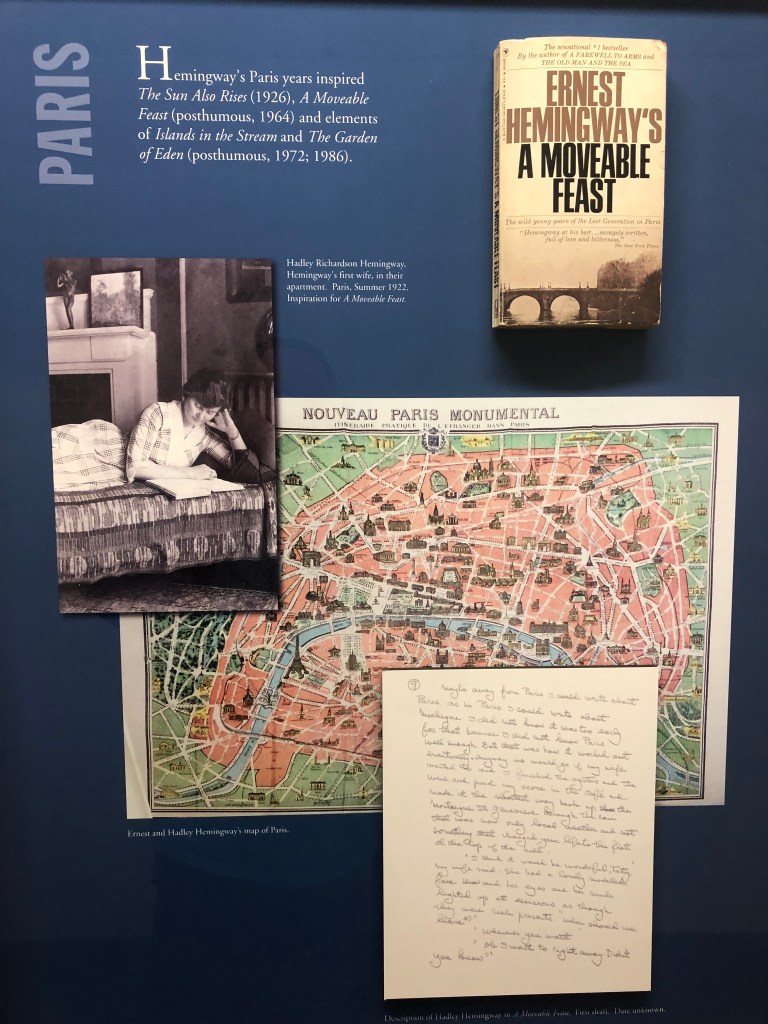
The JFK Library is also home to The Ernest Hemingway Collection, donated by his widow Mary, which contains ninety percent of his manuscripts, letters, and other written and audio materials and is a center for Hemingway research.
They had an exhibit dedicated to Hemingway on the day I went, showing various times of his life that inspired the books that he wrote.



The last part of the museum has a somber and moving tribute to Kennedy’s assassination and funeral; very dignified and well done.

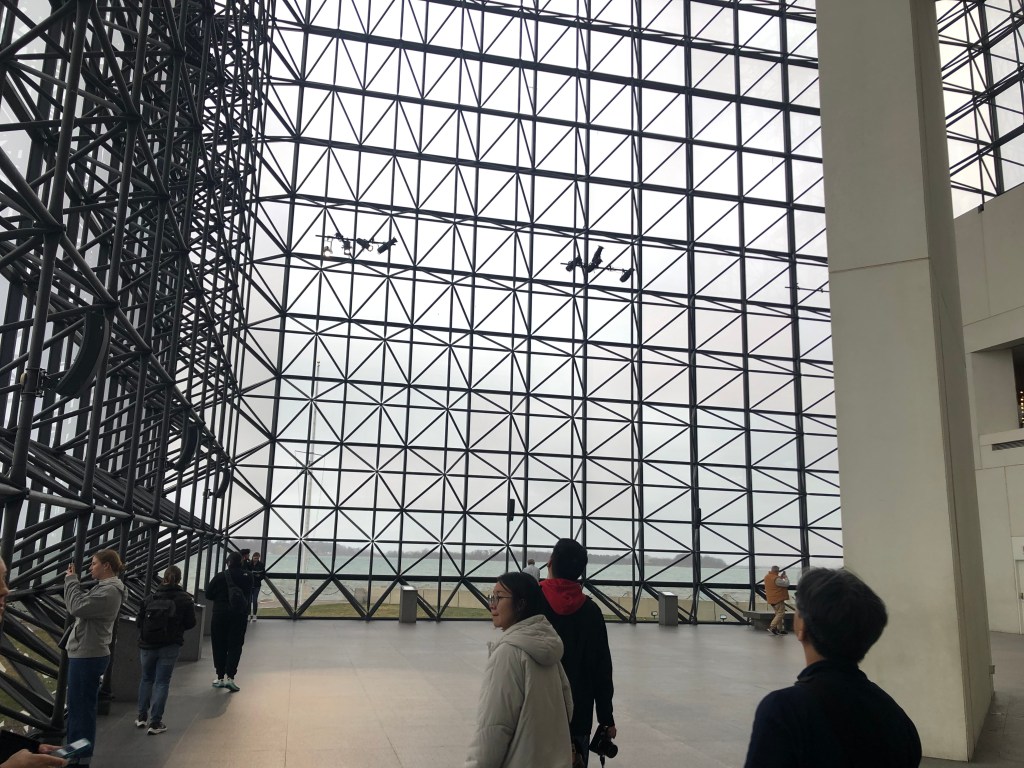
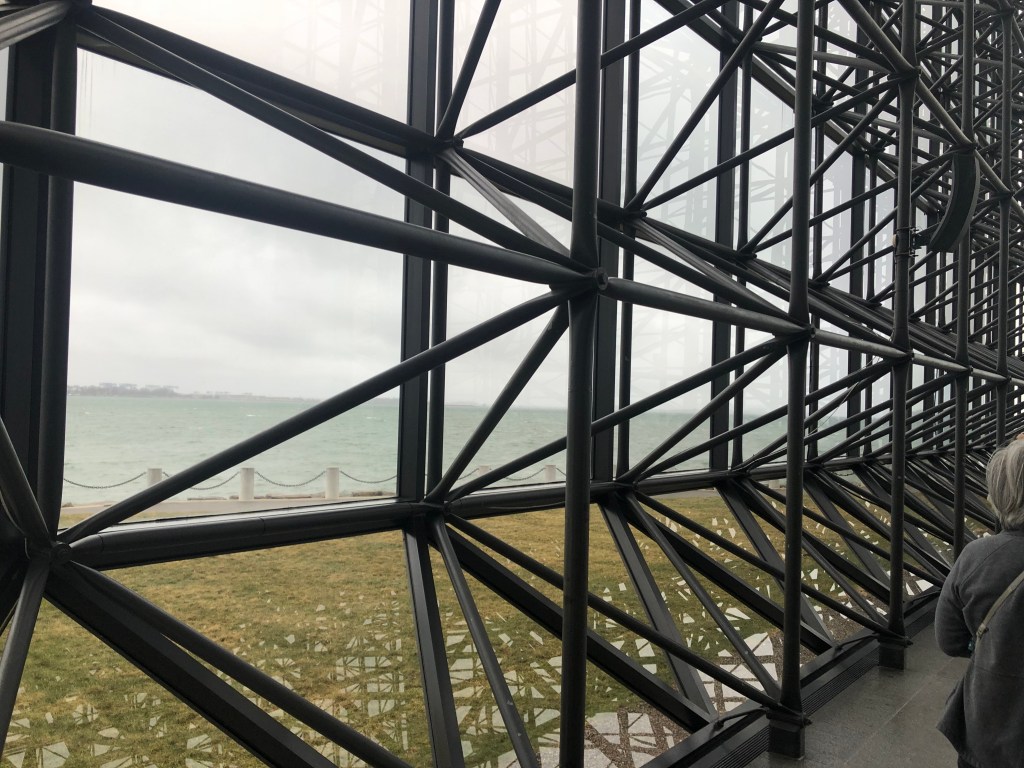
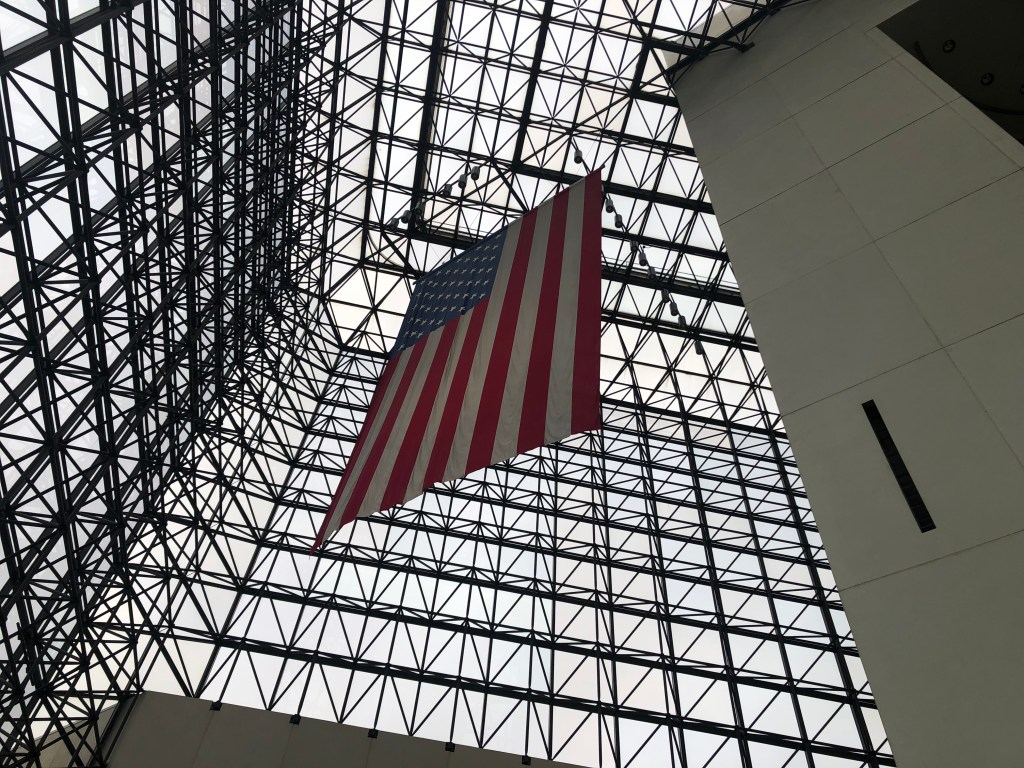
One of the many highlights of the Library and Museum is the nine-story Museum Pavilion atrium which features spectacular views of Boston Harbor, the Boston skyline, and Thompson’s Island.


When I had to go back to the security station to collect my pocket knife from the officers, it caused another minor scene as people looked at me in mild astonishment and shock. Oh well. And I suppose it didn’t help matters when I had to put my balaclava back on to brave the elements. Let’s face it, I basically looked like a full-blown terrorist that day! 🤨
But that was the last “incident” of a rather enjoyable day. 😀
 Munedawg Communications
Leave a comment